
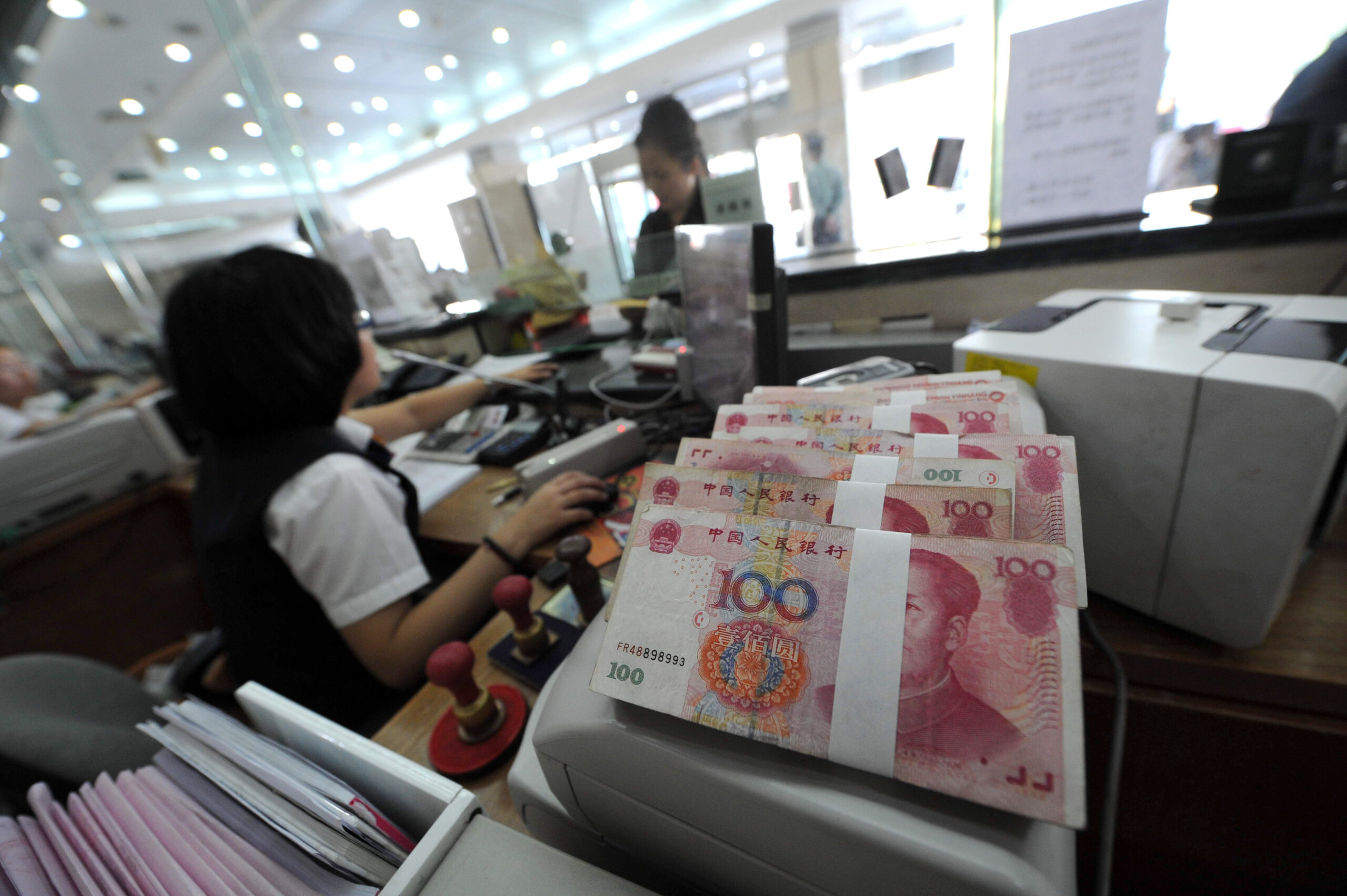
According to calculations by multiple institutions, over 50 trillion yuan of deposits will reach maturity this year, leading to pressures such as peak redemption, quarterly assessment, and competition among large banks for depositors. In response, many small and medium-sized banks have raised deposit rates to attract more funds quickly. However, data on net interest margins indicate that the risks in the banking industry continue to increase.
Since September, many small and medium-sized banks have been increasing deposit rates, in contrast to the general trend of large banks lowering their rates. For example, as of September 21st, WeBank’s App displayed a 3-year fixed deposit rate of 1.75%, up by 15 basis points from before, even surpassing the 5-year rate, resulting in an inverted yield curve.
In addition to WeBank, many small and medium-sized banks have also adjusted rates for large deposits and long-term fixed deposits. For instance, Lanhai Bank raised its 1-year fixed deposit rate from 1.65% to 1.70%; Hubei Jianli Rural Commercial Bank increased rates for large deposits with 1-year, 2-year, and 3-year terms from 1.15%, 1.15%, and 1.55% to 1.30%, 1.40%, and 1.75% respectively; Guangdong Wuhua Huimin Village Bank raised rates for 2-year and 3-year deposits by 11 basis points and 33 basis points to 1.28% and 1.58%.
Furthermore, aside from adjusting deposit rates, banks are also restructuring their deposit product offerings. Such as, the re-release of 5-year fixed deposit products by SuBank, with a rate reaching 2.1%.
According to mainland media reports, Wang Pengbo, a senior analyst at Botong Consulting, believes that the main reason many small and medium-sized banks are raising deposit rates against the trend is the pressure from deposit competition. These banks mostly rely on online channels to attract deposits. Raising deposit rates is the most direct way to attract funds and retain customers.
For small and medium-sized banks, the “siphoning effect” from large banks continues to put pressure on them to attract deposits. Data from iFinD shows that by the end of June 2026, out of 42 listed banks, 11 small and medium-sized city commercial banks and rural commercial banks saw a decrease in personal demand deposits compared to the end of 2025.
According to calculations by Zhongjin Securities, the amount of resident deposits maturing in 2026 is estimated to be around 7.5 trillion yuan, with approximately 6.7 trillion yuan in deposits maturing one year or longer. Huatai Securities estimates that the total amount of deposits maturing one year or longer is around 6 trillion yuan; Guoxin Securities estimates that the maturing term deposits of the six major state-owned banks in 2026 amount to about 5.7 trillion yuan, of which 2-year or longer term deposits range from 2.7 trillion to 3.2 trillion yuan. While there are discrepancies in these estimates, it is generally expected that the total maturing amount for the year will exceed 5 trillion yuan.
After deposits mature, banks can reduce the cost of high-interest liabilities by arranging for continued deposits with different terms and rates. Whether depositors choose to renew their deposits or withdraw them for consumption or transfer to other banks, as well as the rates offered by banks to retain funds, will all influence the final cost reduction effect.
Wang Pengbo mentioned that in the medium to long term, the current widespread offering of high-interest long-term fixed deposit products by small and medium-sized banks is likely to tighten or be withdrawn once the size of bank deposits reaches the target, balancing the supply and demand of funds.
Industry insiders believe that the pressure on large banks to lower long-term deposit rates is mainly related to the pressure on debt costs.
Data from the China Banking and Insurance Regulatory Commission show that in the first quarter of 2026, the net interest margin for ordinary commercial banks was 1.40%, slightly rising to 1.41% in the second quarter; large commercial banks had a net interest margin of 1.31% in the second quarter. The net interest margin remains low, making the pressure on bank profitability from high-interest long-term deposits more evident.
Net Interest Margin (NIM) refers to the ratio of net interest income to the average interest-bearing assets over a certain period, reflecting the overall efficiency of how banks use funds to generate income.
According to the implementation measures for the “Qualified Prudent Assessment” of banks released by the Central Bank of China, a NIM of 1.8% is considered the “health line”, representing the minimum profitability requirement for banks to maintain healthy operations, deal with bad debts, and replenish capital.
Financial reports for the first half of 2026 show that in terms of net interest margins, Construction Bank was at 1.37%, ICBC at 1.28%, Agricultural Bank and Bank of China at 1.27%. The net interest margins of these four major state-owned banks are all below the “health line”.
Political observer Xia Yan pointed out that a significant amount of funds from state-owned banks are invested in China’s government debts, including national and local debts. Compared to the healthy line of the net interest margin, the overall yield from bonds issued by various levels of the Chinese Communist government is relatively low. Under the command of the Chinese Communist Party, banks are forced to bear these “time bombs”.
Public data shows that some small and medium-sized banks have narrower interest margins. In the first half of 2026, Harbin Bank’s net interest margin dropped to 0.98%, Guangzhou Rural Commercial Bank to 1.07%, while Gansu Bank and Zijin Bank were both at 1.09%.