
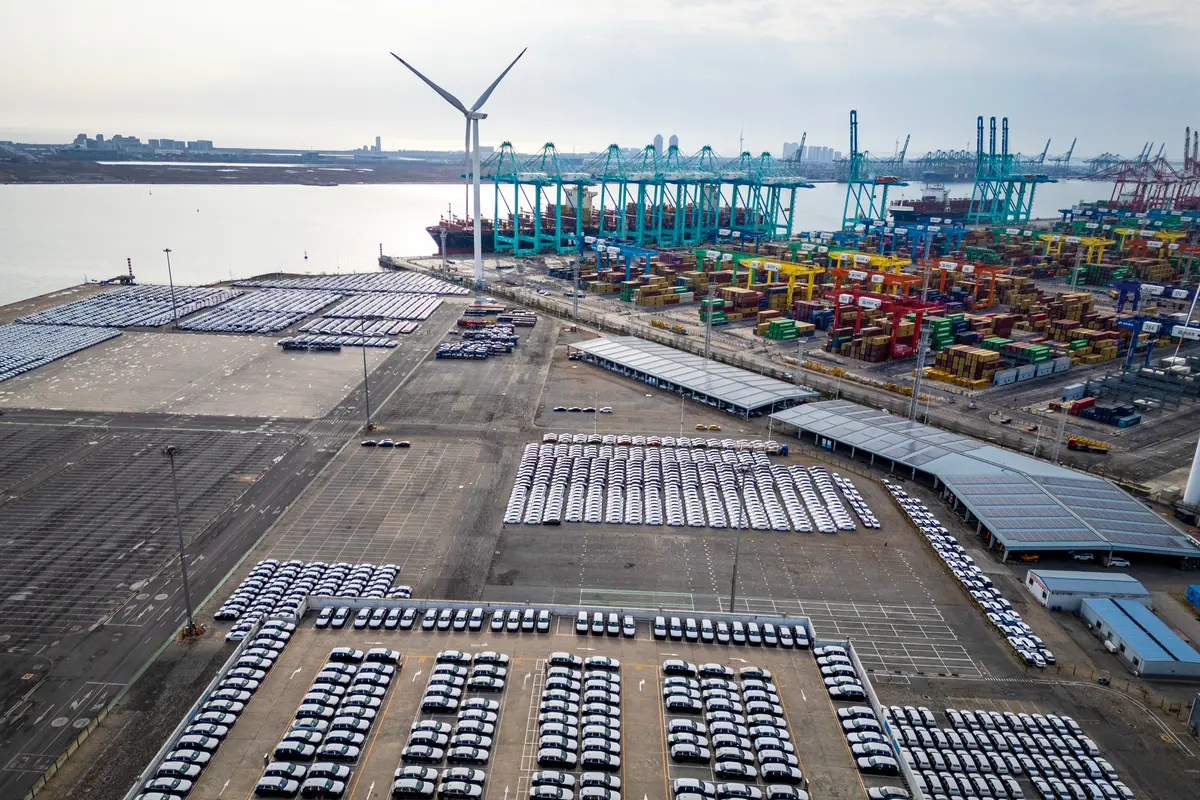
A report indicates that a large number of Chinese goods entering Europe have put a significant strain on the European Union. Data shows that in July, the daily trade deficit between the EU’s imports and exports from China exceeded 1 billion euros.
The report from the Mercator Institute for China Studies (MERICS) has warned that the issue at hand is no longer simply about the EU buying more Chinese goods, but rather China exporting more to Europe while EU exports to China are decreasing.
According to the report, EU consumers and businesses’ expenditures on imports from China are three times that of Chinese consumers and businesses importing goods from the EU.
Negotiations are ongoing between China and the EU to avoid a trade war, with EU Trade Commissioner Maroš Šefčovič scheduled to meet with Chinese officials in Beijing before October 8th.
The report suggests that the escalating trade imbalance is likely to become a key topic of discussion at the EU-China meeting in October.
Analysis of Chinese customs data by the research center reveals that the EU’s trade deficit in July alone reached 36.5 billion euros, higher than the 32.2 billion euros in July 2025. From January to July this year, the total trade deficit has accumulated to 234 billion euros, about 21 billion euros higher than the same period in 2025.
The report also cites Chinese customs data indicating that the EU-China bilateral trade deficit has surpassed 1 billion euros per day. This is equivalent to Europe sending 1 billion euros to China every day.
“The trade deficit has exceeded three to one. In July, for every 1 euro worth of goods the EU exported to China, it imported 3.10 euros worth of Chinese goods. The deficit amounts to 1.18 billion euros per day,” the report stated.
The UK’s The Guardian cites sources claiming that the EU is considering implementing quotas on hybrid cars and certain types of chemicals imported from China.
The EU has already imposed additional tariffs on Chinese electric cars, but the tariff plan effective from 2024 does not include hybrid cars, causing concerns in the EU automotive industry. Subsequently, the sales of hybrid cars have surged.
Recent data shows that the number of plug-in hybrid cars imported into the EU has increased by ten times, from less than 4,000 vehicles in October 2024 to 50,000 vehicles in July 2026.
The Financial Times reported last week that the EU has requested China to voluntarily reduce its exports of hybrid cars.
While Beijing has warned of readiness to respond to a trade war with the EU, it also maintains a diplomatic stance, attempting to appease the European Union.
Just a few days ago, President of the European Commission Ursula von der Leyen emphasized the need to curb the trade imbalance between the EU and China.