
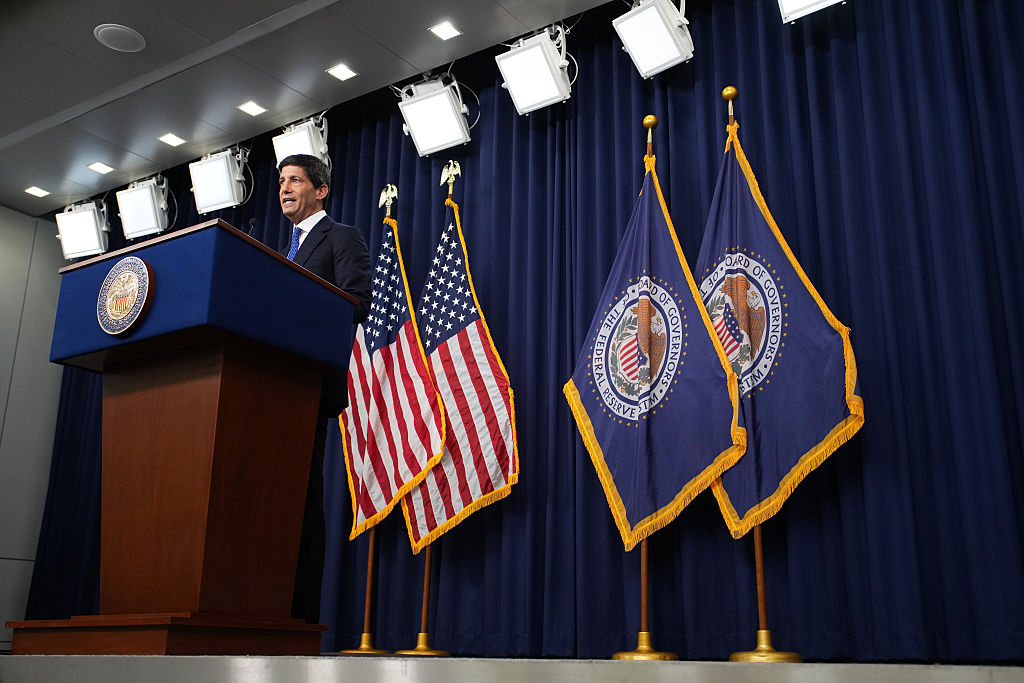
In a report by The Epoch Times on September 22, 2026, Albert Musalem, President of the Federal Reserve Bank of St. Louis, stated on Monday, September 21, that the United States, with strong demand and the impact of rising commodity prices, may need to further raise interest rates to bring inflation back to the 2% target set by the Federal Reserve.
Musalem is currently not a voting member of the Federal Open Market Committee (FOMC), the Federal Reserve’s interest rate decision-making body. He did not predict when the next rate hike might occur or how high rates might ultimately need to rise. However, his stance on continuing to tighten monetary policy is quite clear.
“It is important for policy to have a substantive dampening effect on inflation,” Musalem told Reuters, emphasizing that this would allow the Fed to bring inflation back to target within about a year and a half.
Musalem believes that “tightening policy earlier and gradually is better than taking larger and potentially more abrupt policy actions later on.”
In the United States, the recent moderation in inflation progress has been limited. The Personal Consumption Expenditures (PCE) price index, a key metric for the Fed, rose by 3.7% year-on-year in July, higher than the 2.3% in April 2025 and significantly above the Fed’s 2% target.
Regarding the current inflation situation, Musalem bluntly stated, “It’s not a risk, it’s already here.” He indicated that even excluding the impact of oil and other supply factors, potential underlying inflation in the U.S. may still be about 1 percentage point higher than the Fed’s target and is evolving “in the wrong direction.”
This year, in addition to rising fuel prices, prices of bulk commodities such as copper have also been on the rise. Musalem suggests that the fever of artificial intelligence investments is also one of the factors driving up copper prices. Meanwhile, domestic consumption and investment in the U.S. remain robust. “We have strong demand forces and supply forces at play in the economy,” Musalem said.
The Fed raised its benchmark interest rate by 0.25 percentage points last week, with the current target range set at 3.75% to 4.00%. Musalem believes that even after this rate hike, current rates are still “accommodative” and have not yet reached a level sufficient to restrict economic activity.
Market expectations for rate hikes are more aggressive than the forecasts published by Fed officials last week. Investors anticipate that in the five interest rate meetings from now until April next year, the Fed may raise rates three more times, each time by 0.25 percentage points; the expectations for whether there will be another rate hike in October are roughly split. This is the market pricing at the time of the Reuters report and is subject to change based on economic data.
The median forecast released by Fed officials last week suggests that there may be one more rate hike this year; officials’ views on whether another rate hike is needed in 2027 are evenly split.
Musalem believes that further tightening of monetary policy does not necessarily have to come at the expense of rising unemployment or economic recession. “The labor market is not the source of inflation,” he said, noting that slowing or cooling down the labor market is not necessarily required to achieve the inflation target, as the current job market is “stable, balanced, and close to full employment.”
In contrast, business costs are rising. Musalem stated that companies in the St. Louis Fed district have reported significant increases in costs for fuel, other raw materials, transportation, insurance, and technical workers. “They are planning to raise prices,” Musalem said, adding, “There is ample evidence to suggest that inflation is the primary issue we are facing right now.”