
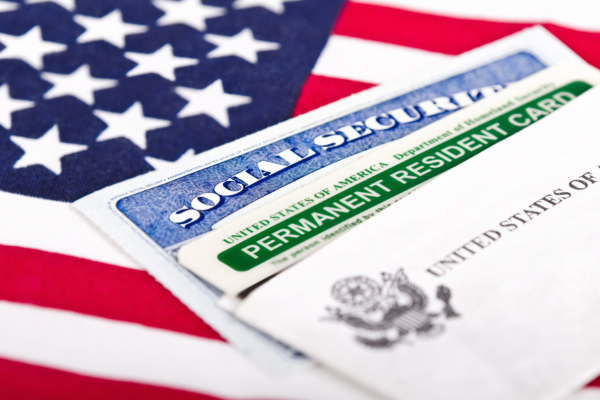
A DS-160 visa application form filled out many years ago has caused a genuine marriage applicant to ultimately be denied a green card and possibly face immigration court.
Manager Wang of the Qin Susan Law Firm recently shared a case: a client who later married a U.S. citizen, with a genuine marital relationship and no issues with their asylum application, still faced a rejection from the immigration authorities after submitting an I-485 application for a marriage green card. The problem stemmed from their responses on the DS-160 form filed years ago when applying for a U.S. visa.
When the applicant applied for a U.S. visa, they answered “No” to questions in the DS-160 regarding past arrests, detentions, or related criminal records. However, when later applying for asylum in the U.S., they truthfully disclosed in the I-589 form that they had been detained in China and provided a detailed account of the incident.
Upon applying for the marriage green card, USCIS compared the applicant’s past immigration records and found significant discrepancies between the DS-160 and the I-589. Consequently, their I-485 application was ultimately denied.
Manager Wang indicated that the client is likely to receive a Notice to Appear (NTA) and have the case brought to immigration court.
This case demonstrates that when USCIS processes the I-485, they will compare the DS-160, I-589, and other historical application materials.
Moreover, this case is particularly noteworthy at present because since April 28th, the U.S. State Department has added two questions directly related to future asylum applications in non-immigrant visa interviews: “Have you ever been harmed or abused in your country of nationality or last habitual residence?” and “Are you afraid of being harmed or abused if you return to your country of nationality or last habitual residence?”
These two questions are not officially part of the DS-160 form currently but are verbally asked during non-immigrant visa interviews, and the answers are recorded in the consular case file.
According to the guidelines issued by the State Department on April 28th, non-immigrant visa applicants must answer “No” to both questions for the consular officer to proceed with visa issuance. If the answers are “Yes” or if the applicant refuses to answer, they may face visa denial.
This situation places some individuals who may seek asylum in the future in a very practical dilemma.
If an applicant has indeed experienced persecution in China or was already afraid to return home at that time, answering “Yes” truthfully may hinder obtaining a non-immigrant visa. However, if they answer “No” to secure the visa and later express in the I-589 form that before applying for the visa, they were detained, assaulted, or persecuted for political or religious reasons and were already afraid to return to China, the conflicting statements made to the U.S. government may arise.
Manager Wang advises individuals preparing to apply for a marriage green card, employment-based immigration, or other status adjustments to thoroughly review their immigration history before submitting the I-485.
Especially crucial is to check past submissions of DS-160, DS-260, I-589, and other critical forms to ensure consistency regarding arrests, detentions, political or religious experiences, marriage, employment, addresses, and travel history.
If significant discrepancies are discovered, it is best to seek professional legal evaluation before submitting the I-485, rather than waiting until immigration authorities detect issues, leading to a green card denial or receiving a Notice to Appear (NTA) in immigration court.