
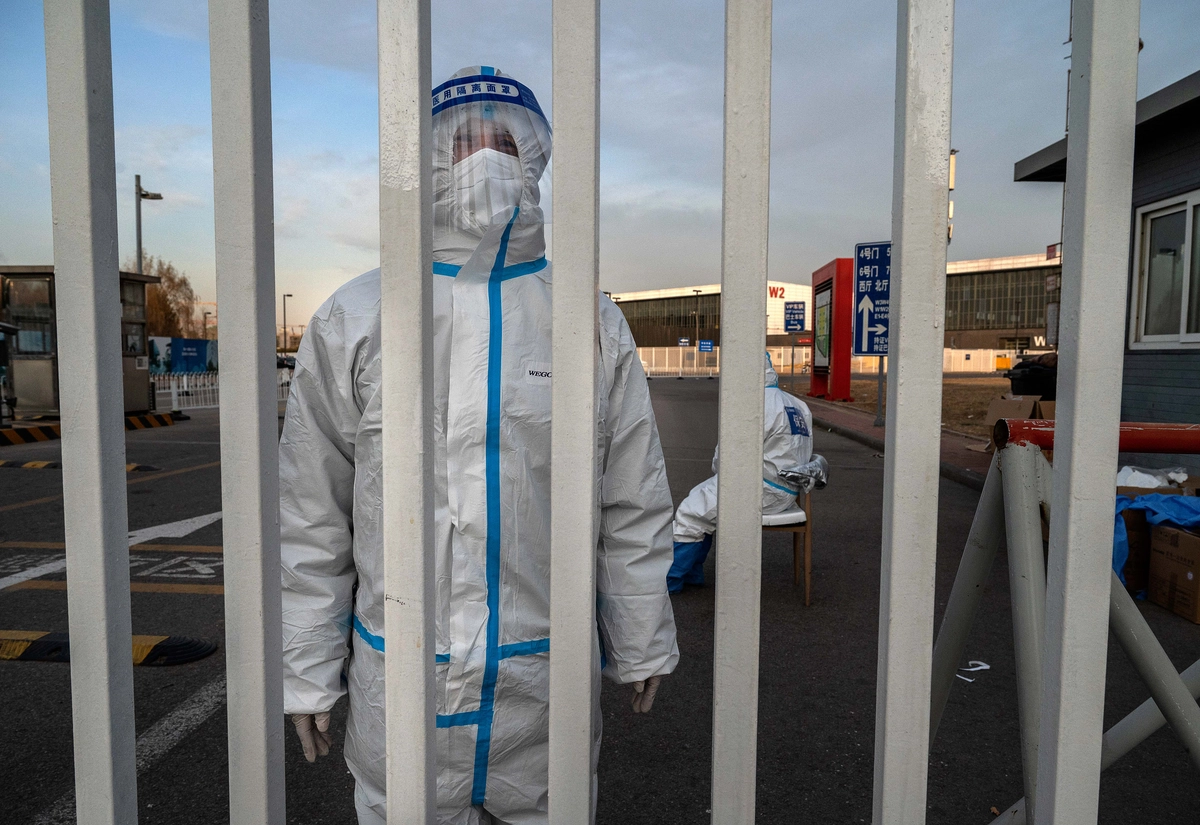
Recently, the mainland China’s COVID-19 infection rate has been continuously rising, but due to old regulations, many pharmacies are not allowed to sell COVID-19 medications, resulting in many infected individuals not being able to receive timely medication treatment.
According to a report by Economic Observer on August 4th, Xiao Qing, who works in Beijing, found that after being infected with COVID-19 last month, offline pharmacies did not have the necessary medication. She was also unable to purchase from online platform pharmacies and had to either go to the hospital for a prescription or purchase through e-commerce platforms. However, the delivery generally takes 1 to 2 days or even up to 5 days in remote areas. Even by going to the hospital, going through the registration, waiting in line, testing procedures, and getting the medication could take half a day to a full day.
After visiting multiple pharmacies in Beijing, the reporter found that the majority of retail pharmacies do not have COVID-19 medications in stock.
A department head at a leading listed pharmacy stated that although the official restrictions on purchasing over-the-counter medications such as fever-reducing, cough-relieving, antiviral, and cold medications were lifted by the end of 2022, retail pharmacies have not been given the distribution rights for COVID-19 oral medications. Currently, only a few specialty pharmacies that comply with prescription regulations in her company are authorized to sell COVID-19 medications, while the vast majority of stores do not have the privilege to sell them.
A responsible person from a related pharmaceutical retail department stated that although the medications have been approved for routine inspections, the policies have not been updated, and pharmacies are still unable to sell them. The person also mentioned that in 2025, some pharmacies in several provinces and cities began to shelf COVID-19 medications, but were later instructed by local pharmaceutical regulatory authorities to remove them. Only a few provinces and cities allow the relevant medications to be put on shelves for sale.
According to the monitoring data released by the Chinese Center for Disease Control and Prevention for the 30th week (July 20th to 26th), in respiratory samples of flu-like cases at sentinel hospitals across the country, the positivity rate for COVID-19 virus ranked first at 20.3%.
Dr. Li Dong, Director of the Respiratory and Infectious Diseases Department at Beijing Youan Hospital affiliated to Capital Medical University, confirmed that the number of COVID-19 patients at the hospital has increased this year. He stated, “During last year’s outbreak, we had about two to three patients per week, but now it’s two to three patients per day. Some large tertiary hospitals in Beijing used to have over 20 patients a day, and now the trend is still increasing.”
Dr. Li Dong predicted that in the next 1-2 weeks, the number of COVID-19 infections may continue to rise.
Due to the lack of access to COVID-19 medications through conventional channels, the reporter found that pharmacy staff often recommend flu medications like Oseltamivir to COVID-19 patients. However, Dr. Li Dong mentioned that influenza virus and the COVID-19 virus are different, stating that “flu medication cannot be used to treat COVID-19.”
Vice President Liu Shuang of Zhongsheng Pharmaceuticals estimated that after COVID-19 becomes a normalized pandemic, millions of patients may be affected each year, with at least half of the COVID-19 patients mistakenly taking other medications.