
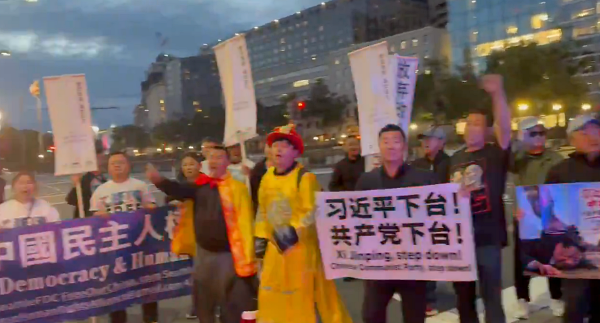
On September 24th, protestors gathered outside the Chinese Embassy in Washington D.C., amid Chinese leader Xi Jinping’s state visit, later marching towards the United States Capitol building. Demonstrators voiced their opposition to Xi Jinping’s visit, raising concerns over various issues related to China’s government policies. The protests witnessed a strong public backlash against the Chinese government.
The demonstration attracted a diverse group of participants, including activists, human rights advocates, and individuals from the Chinese diaspora community. Many protesters were seen holding banners and chanting slogans demanding respect for human rights and democratic freedoms in China. The atmosphere was charged with emotion as speakers addressed the crowd, sharing personal stories of repression and injustice.
The protest march towards the Capitol building symbolized the protestors’ call for action from the U.S. government and lawmakers to address human rights abuses and authoritarian practices in China. Demonstrators expressed their hope that the U.S. would take a stronger stance in promoting democracy and freedom on the international stage.
The event drew attention from various media outlets, with New Tang Dynasty and Epoch Times providing live coverage and Chinese subtitles for a broader audience. The online broadcasts allowed viewers worldwide to follow the developments in real-time and understand the messages being conveyed by the protestors.
As the demonstration continued through the day, solidarity among participants grew stronger, reflecting a shared commitment to advocating for change and raising awareness about the challenges faced by individuals living under oppressive regimes. The protestors’ determination to speak out against injustice was evident in their united efforts to make their voices heard.
The presence of protestors outside the Chinese Embassy served as a powerful visual reminder of the ongoing human rights violations and political repression faced by many in China. The protestors’ peaceful assembly highlighted the importance of standing up for fundamental rights and principles, even in the face of adversity.
In the era of global connectivity, events like these resonate beyond geographical boundaries, sparking conversations and raising awareness about the plight of individuals living under repressive regimes. The protest in Washington D.C. underscored the significance of solidarity and activism in combating injustice and advocating for positive change in societies around the world.
The demonstration concluded with a call to action, urging governments and organizations to uphold universal values of democracy, human rights, and freedom. The legacy of the protest will continue to inspire others to speak out against oppression and work towards building a more just and equitable world for all.