
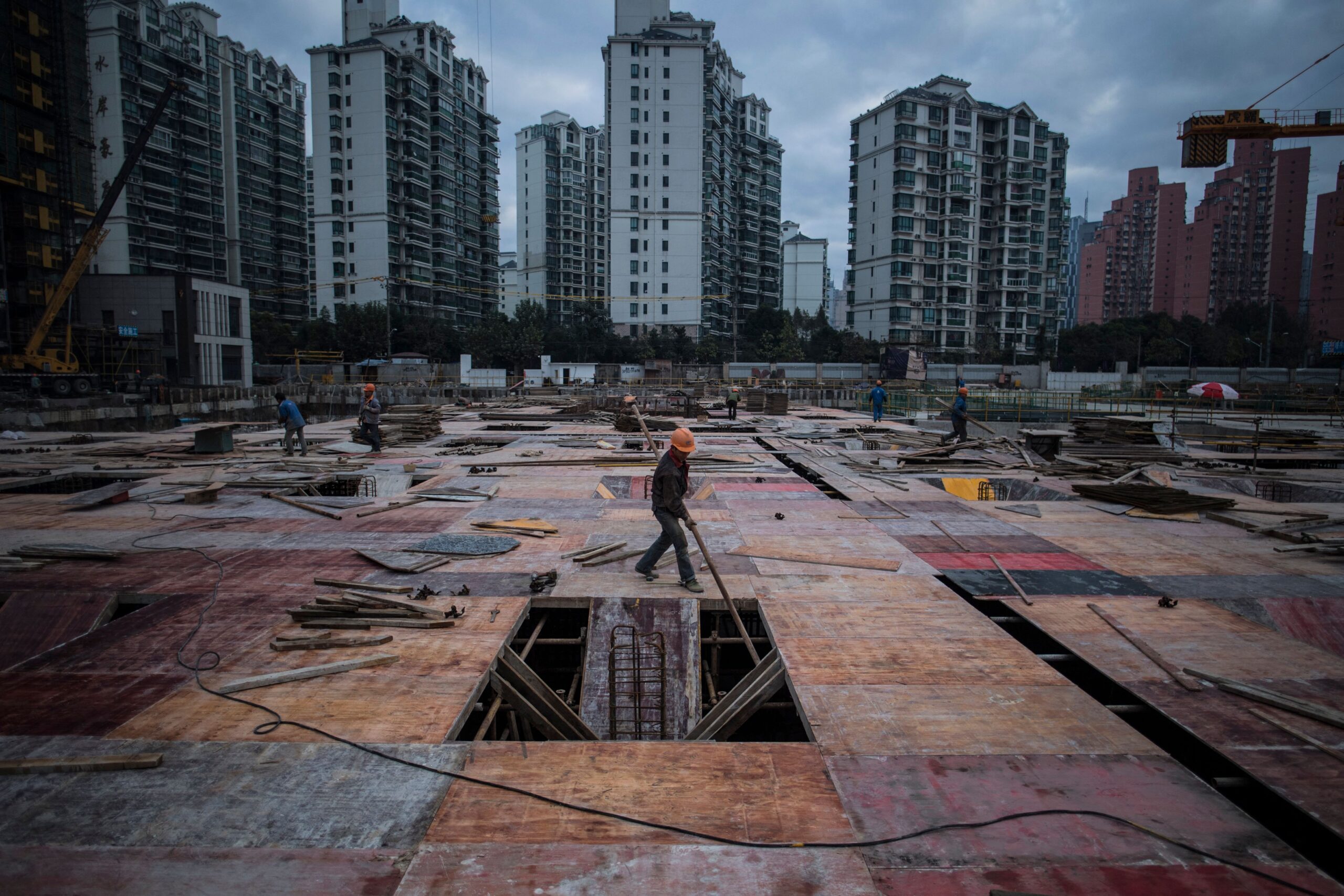
The Chinese Communist Party has extended the maximum term for personal housing loans from 30 years to 40 years. However, after the policy was implemented, people’s willingness to apply for a 40-year mortgage was not enthusiastic. Several banks quickly launched relevant services and even shortened the approval process, but potential homebuyers showed a lukewarm response.
Some analysts believe that extending the mortgage term may not effectively boost residents’ willingness to buy houses amidst the continuous decline in housing prices, weakening income expectations, and the background of deleveraging. The top-level design seems to have failed.
On August 28, the People’s Bank of China and the China Banking and Insurance Regulatory Commission jointly issued the “Opinions on Reforming and Improving the Management of Real Estate Credit to Promote Faster Construction of a New Model for Real Estate Development,” stipulating that the “maximum loan term for personal housing loans shall not exceed 40 years.” This extension comes nearly 27 years after the term was extended from 20 to 30 years in 1999. The People’s Bank of China explained on August 31 that this move aims to provide greater flexibility to both borrowers and lenders, promoting a healthy cycle between finance and real estate.
However, a report by Bank Net on September 20 stated that after the policy took effect, various media outlets found that the willingness of buyers to voluntarily apply for a 40-year mortgage was weak.
According to the report, while banks were proactive after the policy was announced, with several mainstream banks like Postal Savings Bank, Bank of Nanjing, Changsha Bank, and Hankou Bank quickly releasing official announcements on the platform, the responses from potential buyers were cautious, showing a stark contrast.
Postal Savings Bank calculated a scenario for homebuyers: Repaying a loan over 40 years would result in higher total repayments compared to a 30-year loan. For example, for a loan of 1 million yuan with an annual interest rate of 3%, the monthly payment over 40 years would be around 3,580 yuan, which is 636 yuan less than the 30-year term’s 4,216 yuan per month. However, the total repayment over 40 years would increase to around 1.71 million yuan, approximately 200,000 yuan more than the 30-year total repayment of 1.51 million yuan.
Bank Net mentioned that this simple arithmetic showed that homebuyers were more aware than the banks: a lower monthly payment of 636 yuan but an additional interest payment of 200,000 yuan. A homebuyer in Hangzhou commented that buying a house at 25 and paying off until 65 means being tied to the house throughout their entire career, with an extra 200,000 yuan to pay back – not worth it.
For ordinary salaried workers in Beijing, the data shows that a 40-year mortgage would create a high burden on monthly installments compared to their income.
According to data released by the “China Housing Market” platform for the Beijing housing market in 2025, the average unit price of new housing in Beijing was 62,385 yuan per square meter.
In 2025, official data from Beijing showed that the average annual disposable income per capita in the city was 89,090 yuan for all residents, 96,292 yuan for urban residents, and 42,012 yuan for rural residents. Taking the example of a dual-income family in the city – with an average annual disposable income of 96,300 yuan – their annual disposable income is approximately 192,600 yuan, equivalent to a monthly disposable income of around 16,100 yuan.
Considering the average unit price of new housing in Beijing at 62,400 yuan per square meter, a 90-square-meter new house would cost around 5.616 million yuan. This is equivalent to 29.2 years’ worth of disposable income for this family. With a 30% down payment, 70% loan (around 3.931 million yuan), a 40-year term, and a 3.5% hypothetical interest rate, the equal principal and interest monthly payment would be approximately 15,200 yuan. This monthly payment equals 95% of the average monthly disposable income of 16,100 yuan for a dual-income family.
Thus, even with the extension of the mortgage term from 30 to 40 years, under the same loan amount and interest rate, the monthly installment could only decrease to around 15,200 yuan. This still represents approximately 95% of the family’s average monthly disposable income.
At the same time, the total interest paid over 30 years would be around 2.42 million yuan, while over 40 years, it would increase to about 3.38 million yuan, with an additional 960,000 yuan.
In essence, extending the mortgage term can reduce the monthly repayment pressure but cannot change the significant disparity between housing prices and residents’ incomes in Beijing. It will significantly increase the long-term interest burden.
Chinese affairs expert Mike Li told Dajiyuan that this policy adjustment has been mocked as “promise 3, deliver 4.” The Chinese authorities aim to alleviate economic pressure by extending the repayment period for borrowers, but this only delays the pressure without substantial relief.
Citing experts, Bank Net stated that extending the mortgage term from 30 to 40 years will further highlight the mismatch between the deposit term on the asset side and the liability term on the loan side in banks, thereby increasing both interest rate and credit risks.
The same experts believe that the fundamental drivers of the mortgage market lie in residents’ income expectations and the trend in housing prices. If these two aspects do not improve significantly, merely loosening the term would be unlikely to reverse the trend. A 40-year mortgage is just a tool and not a short-term miracle fix.
Bank Net pointed out that the cooling reception to the 40-year mortgage is due to residents’ cautious attitude in avoiding debt in the current economic downturn. Instead of leveraging up, people want to deleverage actively, indicating a fundamental shift in consumer behavior.
Official data from the People’s Bank of China show that household loans decreased by 1.03 trillion yuan in the first eight months of 2026. In the first half of 2026, household loans decreased by 366.8 billion yuan.
In the first half of 2025, medium and long-term loans for residents increased by 1.17 trillion yuan, while in the first half of 2026, it only saw an increase of 221.2 billion yuan, a decrease of over 900 billion yuan.
Bank Net reported more concerning data on the outstanding balance side. By the end of the second quarter of 2026, the total balance of personal housing loans was 36.29 trillion yuan, a year-on-year decrease of 3.8%, with a reduction of 716.3 billion yuan in the first half of the year. This marked the 13th consecutive quarter of negative growth. The total balance of housing loans from the six major banks decreased by 508.284 billion yuan in the first half of the year, nearly 4.7 times the decline in the same period in 2025.
The report also highlighted another issue: in April alone, residents’ repayments on medium and long-term loans exceeded the volume of new loans issued, reaching a record high for early repayments.
Jin Tao’s Finance called the phenomenon of eager repayments on medium and long-term loans “the loan-abstinence change,” where homeowners collectively abstain from taking out loans. This is because housing loans have become a burden for everyone, and residents are becoming more conscious about their relationship with debt. For example, in the first quarter of 2026, about 25.1% of second-hand homes in Shenzhen were bought in full, with the percentage reaching 34.1% for essential small units priced below 2 million yuan.
Bank Net argued that when a family struggles to cover interest and principal payments with their entire annual disposable income, the appeal of extending the term to lower monthly installments diminishes. Residents would prefer a way out sooner rather than later.
Official figures show that by the end of the second quarter of 2025, the outstanding balance of household loans in China was around 84.01 trillion yuan, with residents’ debt-to-income ratio at 59%, close to the internationally recognized debt risk threshold. The comparison of Chinese residents’ debt-to-income ratio, which has remained around 142%, far exceeds that of the United States at 114%, Japan at 103%, and the European Union countries at 88%.
According to Jin Tao’s Finance, calculations based on nationwide data in 2025 revealed that the proportion of monthly housing loan installments to disposable household income had risen to 42.3%, reaching as high as 58.7% in first-tier cities.
Mike Li pointed out that this ratio exceeds the internationally recognized red line of 30% when housing loan installments account for disposable income. If a homebuyer’s 30% down payment made at the peak in 2017 has been entirely wiped out, leading to negative net assets, it means that the wealth accumulated with hard work has been consumed.
In such circumstances, aside from covering basic living expenses, consumers tend to cut down on other expenditures. Regardless of the measures the Chinese Communist Party takes – such as interest rate cuts, price reductions, or consumer incentives – it all seems futile in the eyes of those burdened with debt.
Official data from August 2026 showed that property prices had not fully stopped falling. According to statistics from China International Capital Corporation, based on data from the National Bureau of Statistics, prices for new homes in 70 cities have been declining for 39 consecutive months, and for second-hand homes, it has been 40 months.
The Chinese real estate market has been in a downturn since 2021. Research published in March 2026 by the Chinese Financial Forum showed that compared to the base year of 2021, second-hand house prices in China had fallen by about 40%, with various calculations indicating an actual cumulative drop of around 30%.
Mike Li stressed that the real risk emerges when borrowers are unable to repay their loans. In cases of default, banks might face challenges as property values decline, collateral falls short, disposal costs rise, recovery rates decrease, and banks need to increase reserves or confirm credit losses.
“The policies implemented by the Chinese authorities have been largely ineffective so far. The real estate market remains unboosted, and consumption has not improved,” Mike Li said. “This shows that the top-level policy design of the Chinese Communist Party is severely disconnected from the market, and its control measures are ineffective.”