
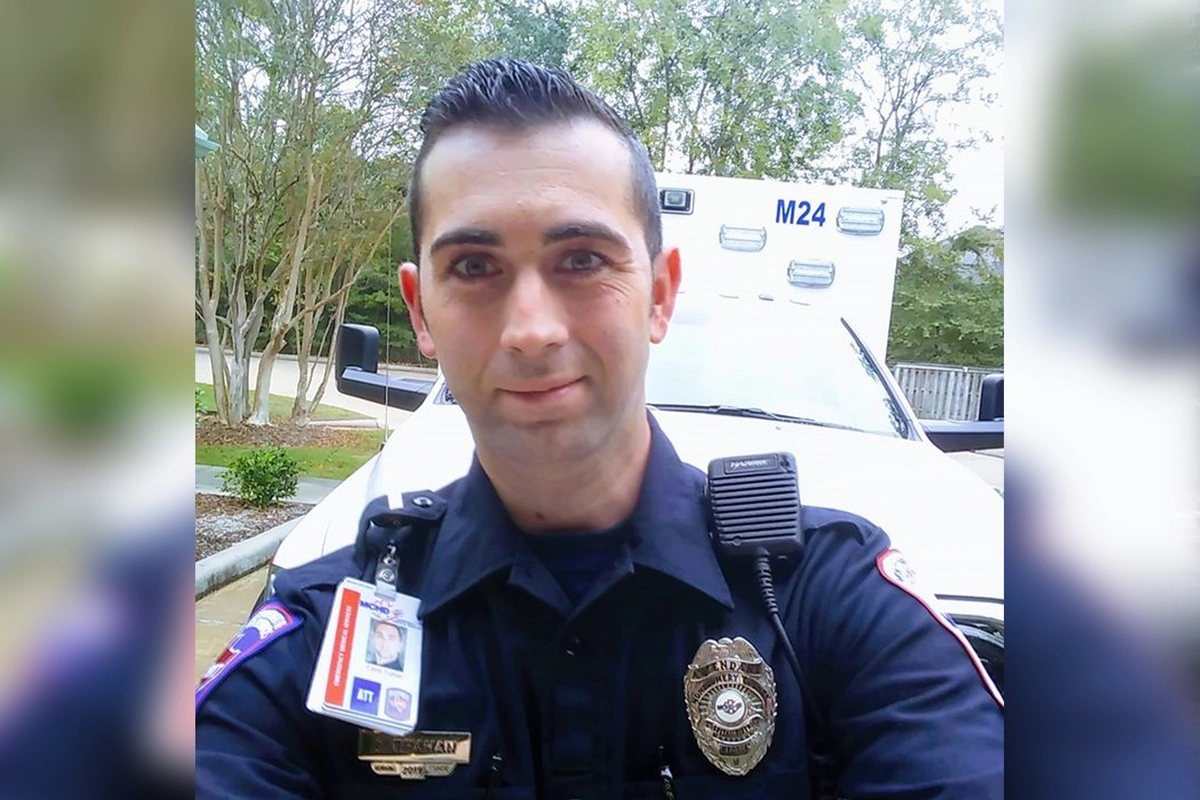
Caleb Trahan, who was once bedridden with a body broken in multiple places and deeply mired in severe depression, lay in his home in Houston, staring at the .45 caliber handgun on his bedside table. At 25 years old, he was enduring the physical and mental trauma of a life-threatening car accident, with doctors giving him less than a one percent chance of survival.
Now, at 34, Trahan has become a full-time paramedic, wearing a uniform identical to the one worn by the first responders who pulled him from the smoky wreckage of a Ford Expedition in 2017.
His transformation from a trauma patient to a lifesaving hero has made him a prominent advocate, dedicated to raising awareness about a commonly overlooked hazard on highways: drowsy driving. While public safety campaigns often focus on drunk driving or distracted driving, according to data from the AAA Foundation for Traffic Safety, sleep deprivation remains a “silent killer” on American roads, accounting for about 10% of all vehicle collision incidents.
This is the message that Trahan has been spreading in high school gyms across Texas, warning teenagers about the dangers of pushing human limits.
“We talk about cellphone use, we talk about drunk driving, but we rarely truly discuss the issue of drowsy driving. We rarely talk about what happens if one day you’re feeling down, you’re not all there,” Trahan told The Epoch Times.
Before the accident, Trahan was searching for his life’s path, transitioning into adulthood after an honorable discharge at 19. He juggled various construction jobs, toured Texas as a country music drummer, and often slept only one or two hours a night. Despite the busy and passionate days, it left him utterly exhausted.
Trahan’s routine of working outside all day and sleeping only an hour and a half at most had become a norm. Whether building spiral staircases on construction sites, editing music videos, or grabbing a beer at a bar, he rarely rested.
On the night of May 13, 2017 (Mother’s Day weekend), the relentless pace of his life finally took its toll. Trahan had worked a long day on a construction site and, after only 90 minutes of sleep, received a call for help from a friend in a drug crisis.
As he left his house, his mother warned him that he looked too fatigued to drive.
Trahan recalled shrugging it off at the time, saying, “I’ll be fine.”
He has no memory of the collision that ensued. Driving at 60 miles per hour, his vehicle veered off the road and collided with a utility pole. The massive impact compressed his chest against the car’s engine block, resulting in severe third-degree burns on his torso.
His survival was solely due to off-duty emergency room doctor Dr. Julie Schaferling happening to pass by the smoke-filled accident scene. Despite warnings from onlookers to stay back, Dr. Schaferling immediately began rescue efforts on-site and accompanied Trahan in the ambulance. She assisted in performing a radical on-scene thoracostomy, which involved cutting open his chest wall, inserting a tube to reinflate his collapsed lung, preventing brain death due to oxygen deprivation.
A week later, Trahan awoke from a coma with a rigid neck brace. The first sensation he felt was his mother’s hand brushing through his hair.
The following months of recovery brought heavy psychological burdens. Bedridden and with his gun on the bedside table, Trahan described the encouragement notes scattered around the room by his family as turning points in his life. Among them was a note from his uncle, saying, “It’s time to write a success story.”
In a quest for emotional healing, Trahan later organized a meeting with Dr. Schaferling and the emergency personnel who had saved his life. This meeting changed the course of his life.
He told them that he wanted to become a paramedic, to do what they did, to pay forward the kindness shown to him.
Through community support, Trahan raised $15,000 for his paramedic training. He was promoted to a full-fledged paramedic a few months later, and now, Trahan works alongside the healthcare professionals who once saved him, collectively treating dozens of critically ill patients.
Recently, inspired by traffic safety advocates like Candace Lightner, the founder of Mothers Against Drunk Driving, Trahan has been dedicated to writing about his transformative recovery journey over the past year. His upcoming book “Dying Saved My Life” is set to be published in May 2027, marking the tenth anniversary of the accident, and coinciding with Mother’s Day.
Reflecting on his journey, Trahan sighed, “I essentially turned this tragedy into a mission. Now, my goal is to prevent such tragedies from happening again.”