
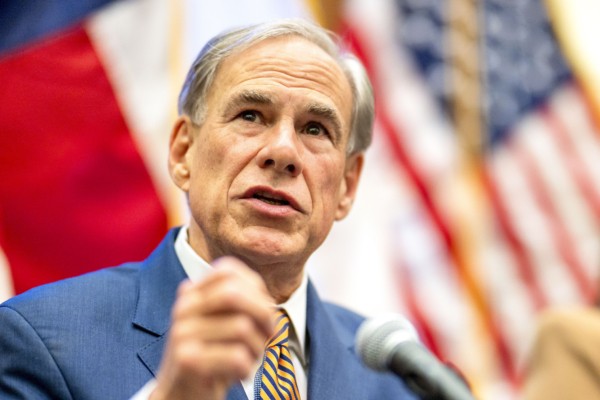
On Monday, September 21, Texas Governor Greg Abbott instructed the Texas Commission on Environmental Quality (TCEQ) to stop issuing permits to all data centers to strengthen the state’s enforcement of data center standards.
The governor ordered a comprehensive halt to the approval and issuance of related environmental permits until the relevant regulatory agencies complete a comprehensive review of the impact on the electricity grid and water resources. This action follows Texas’s suspension of grid connection approvals in August, marking a further escalation.
Governor Abbott emphasized in his statement that “simply put, the interests of Texas residents must come first. Data centers must bear the corresponding costs, protect our electricity grid and water resources, and undergo various reviews. The state government will not issue relevant permits until they meet these requirements.”
This directive clearly requires the TCEQ, Public Utility Commission of Texas (PUCT), Electric Reliability Council of Texas (ERCOT), and Texas Water Development Board (TWDB) to conduct a joint review. Only after the review is completed will the TCEQ unfreeze environmental permit issuance and submit an implementation report to the governor by October 19.
Abbott also stated that he will work with the state legislature in the next session to completely eliminate financial incentives policies such as tax breaks for data centers.
Since the rise of the AI boom in 2023, Texas has attracted a large number of tech companies to build data centers due to its abundant power supply, land resources, and favorable business environment, making it one of the fastest-growing data hubs globally. According to Data Center Map, there are currently a total of 544 operating, under construction, and planned facilities in the state, second only to Virginia.
However, the total electricity consumption for data centers and large facilities awaiting access to the Texas grid now exceeds 470 gigawatts (GW), over five times the state’s historical peak electricity demand of approximately 91 GW. About 90% of the applications come from data center projects.
Data centers are also causing significant water resource consumption in the area. The directive also mentioned that Abbott had already requested the TWDB on September 14 to mandate these data centers to report their water usage and to hold them accountable for past and future violations, while also requiring TWDB to collaborate with ERCOT to obtain more water usage data.
“Data centers must share the responsibility of protecting Texas water resources,” Abbott stated at the time. His office stated that some operators may have violated civil and criminal laws by concealing information required by TWDB to develop state water resource plans.
Additionally, the letter was also sent to TWDB Chairman L’Oreal Stepney and Executive Director Bryan McMath. The committee has been ordered to brief the governor’s office on their enforcement measures by October 14 and to continue reporting on audit progress and completion to the governor.
According to the state government’s approval conditions, data center projects must bear all costs related to electricity infrastructure. They must pass an audit by ERCOT, report their projected electricity and water usage, and ensure they do not impact the community.
Furthermore, these projects must submit reports on ownership and tax incentive measures, and comply with relinquishment requirements to ensure minimal distance from neighboring residents.
The Texas Commission on Environmental Quality (TCEQ) must align its permit issuance decisions with the governor’s directives and audit results.
Local residents have previously expressed concerns to The Epoch Times about the development plans of data centers. Clayton Tucker, the secretary of the Texas Farmers Union, voiced his worries about irrigation water wells.
“The cost of drilling a new well can be as high as $40,000, and some of these data centers are ‘big water users,’ consuming staggering amounts of water in this ‘dust bowl area,'” Tucker said. The water level in some wells has already dropped by 25 feet.
In June, Abbott stated that he would work with lawmakers in the next legislative session to incorporate the data center standards he has developed into law.
State Attorney General Ken Paxton proposed another legislative bill requiring data centers to adopt closed-loop cooling systems and prohibiting them from being located in rural communities; the proposal also mandates these facilities to raise their own power funds and increase power capacity rather than consuming existing capacity.
This policy could impact the layout of data center development across the United States. BloombergNEF analysis indicates that with Texas halting permit issuance, approximately 20% of data center projects under construction and in reserve face risks of being put on hold, affecting nearly 50 gigawatts of capacity. If the delays persist, industry losses could reach up to $8 billion by the first quarter of 2027.
Industry advocacy group Data Center Watch also revealed that in just the previous quarter (April to June), data center projects worth $68 billion in the United States were forced to be postponed or canceled due to local opposition.