
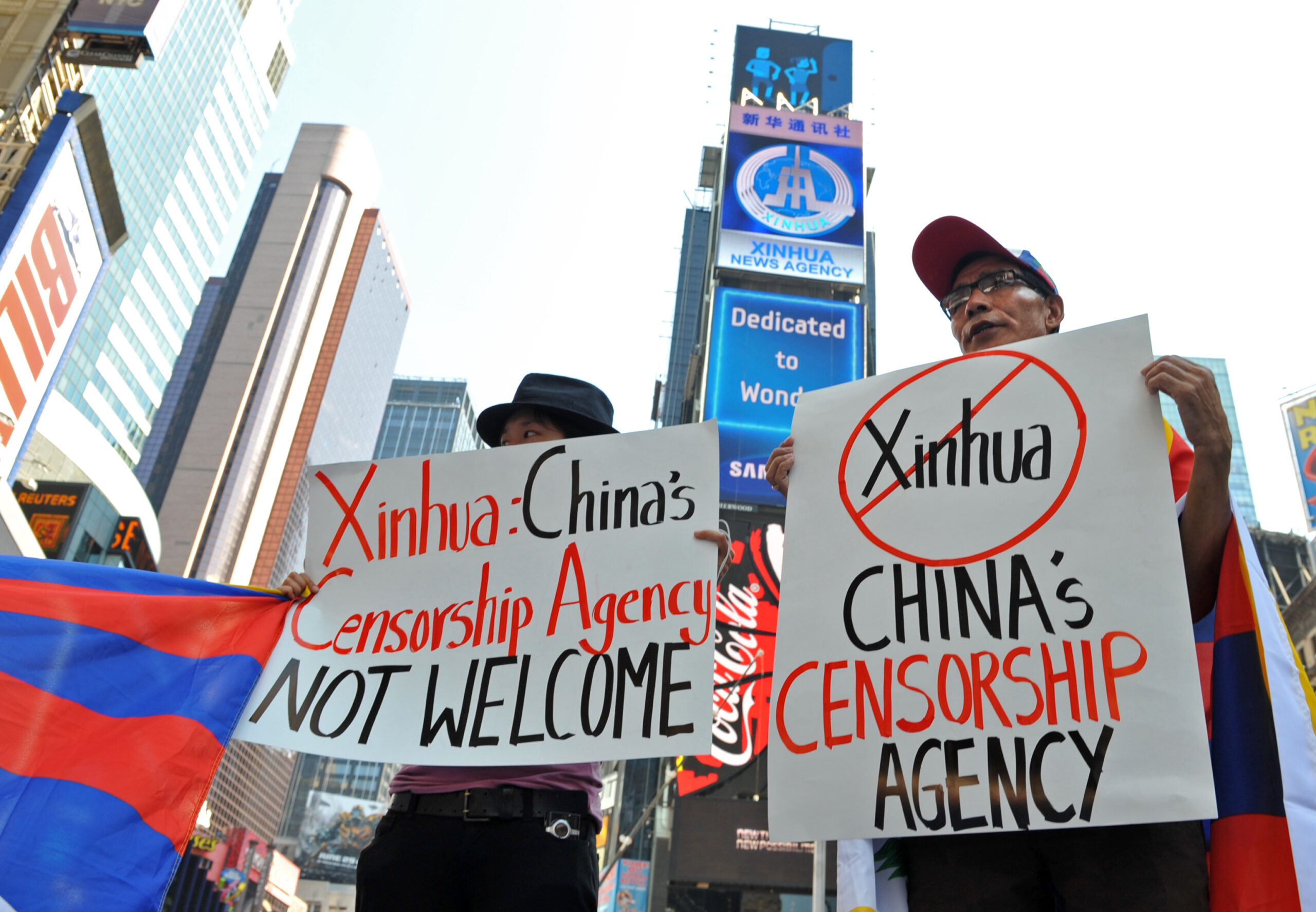
According to public records from the United States federal government, in 2025, the Communist Party of China (CCP) spent over $100 million through government agencies, state media, as well as Chinese and Hong Kong-related enterprises in the U.S. The funds were primarily used for operating CCP’s state media outlets in the U.S., policy advocacy, and trade promotion.
Fox News reported on July 26th that documents from the U.S. Department of Justice under the Foreign Agents Registration Act (FARA) revealed that CCP government-related expenditures amounted to nearly $80 million, while Chinese and Hong Kong private entities accounted for over $20 million in FARA expenses. Additionally, several companies disclosed lobbying fees amounting to millions of dollars to the U.S. Congress under the Lobbying Disclosure Act (LDA).
It is emphasized in the report that these figures only reflect activities that have been registered and publicly disclosed, and do not represent the full extent of CCP’s influence activities in the U.S.
Among the CCP government-related expenditures, the largest portion was allocated to CCP’s state media operations in the U.S. Fox News found in documents from the U.S. Department of Justice that from February to November 2025, China Central Television (CCTV) provided $66.8 million in funding to China Global Television Network America (CGTN America).
Other registered CCP media outlets included Xinhua News Agency North America, which reported expenses of approximately $7.29 million in 2025, and China Daily Distribution Corporation, which reported around $3.89 million in expenses.
According to South China Morning Post, China Global Television Network America registered as a foreign agent in response to a request from the U.S. Department of Justice as early as 2019. At the time, the organization stated that it did not agree with the U.S.’ characterization of its political activities and government relationships, but out of caution and in compliance with regulation, it completed the registration process.
The U.S. government and some academic researchers believe that CCP’s state media not only engage in news reporting but also undertake tasks such as external propaganda, shaping China’s image, and influencing foreign public opinion.
In addition to CCP’s state media, Chinese companies have invested significant amounts of money in Washington to lobby the U.S. government and Congress. Companies involved in lobbying activities include Huawei, Hikvision, BOE Technology America, Yangtze Memory Technologies, and JinkoSolar.
Tencent, for example, has reported lobbying expenses exceeding $10 million since 2025. The U.S. Department of Defense previously classified Tencent as a “Chinese military company.”
Hikvision faced procurement, export, and investment restrictions in the U.S. due to allegations concerning its surveillance equipment’s involvement in human rights issues in Xinjiang. Fox News reported that the company paid lobbyists millions of dollars in an attempt to persuade the U.S. government to lift these restrictions.
In the U.S., it is not illegal for companies to engage in lobbying activities for their commercial interests. General commercial lobbying activities are disclosed under the Lobbying Disclosure Act; however, if representing a foreign government or political entity and engaging in policy, political, or public opinion activities, registration under the more stringent Foreign Agents Registration Act may be required.
Furthermore, organizations such as the China Council for the Promotion of International Trade (CCPIT) regularly report their activities in the U.S., including engaging with Chinese and American companies, chambers of commerce, and industry associations to promote bilateral trade, investment, and economic cooperation.
Fox News quoted research from the Jamestown Foundation, stating that the CCPIT may serve a dual purpose: ostensibly promoting economic and trade exchanges while also establishing a network of relationships for CCP’s broader economic and diplomatic goals by contacting U.S. officials and business groups.
The Foreign Agents Registration Act and congressional lobbying records can only display registered activities. Fox News pointed out that campus organizations like the Chinese Students and Scholars Association (CSSA) and certain groups and networks purportedly linked to the CCP’s United Front Work Department often do not appear in relevant public records.
Due to different statistical time frames and classification criteria, various institutions report different figures for accumulated amounts. According to data from Open Secrets cited by the Quincy Institute for Responsible Statecraft, CCP-related FARA expenses have exceeded $418 million since 2016, with the majority of funds flowing to China Central Television and China Daily. More recent estimates aggregate the cumulative amount to around $560 million.
The U.S. State Department estimated in 2023 that CCP spends “billions of dollars annually on foreign information manipulation worldwide.”
Existing federal records revealed that activities disclosed by CCP-related entities and enterprises in the U.S. involve media dissemination, corporate lobbying, and trade promotion. However, these documents only reflect registered activities and cannot illustrate the actual scale of unreported activities. Senators like Tom Cotton have raised concerns that some Chinese entities may exploit the lower disclosure requirements of the Lobbying Disclosure Act to circumvent the stricter regulations of the Foreign Agents Registration Act.