
A faraway strait in the Middle East, how does it quietly affect our wallets?
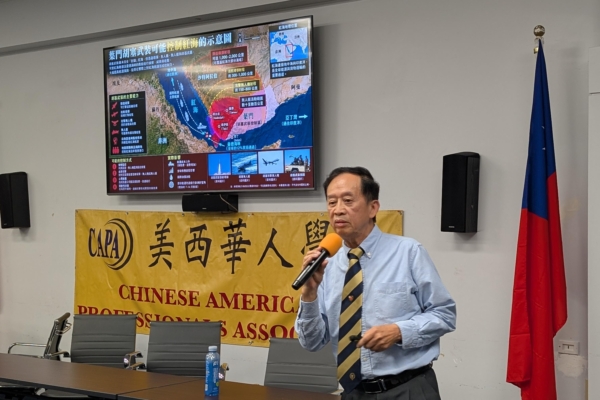
On September 20th, the Chinese-American Professionals Association held a financial seminar at the Los Angeles Overseas Chinese Center, inviting economist Dr. Xu Yongtai, lawyer Deng Hong, and mergers and acquisitions consultant Hu Zaihua to analyze the current most concerning economic and investment issues. Dr. Xu Yongtai dissected the military situation in the Hormuz Strait with the topic “How does a strait affect our wallets?”, explaining how through oil prices, global logistics, and tariff transmission, it ultimately transforms into daily financial pressure for every household.
Dr. Xu Yongtai pointed out that the Hormuz Strait, as a crucial passage for global energy transport, is at the forefront when the situation in the Middle East escalates, especially impacting shipping and logistics. Increased military threats leading to soaring insurance premiums and higher shipping risks will directly cause a drop in transportation volume. The difficulty of finding alternative sources of oil and natural gas will increase freight and energy costs, ultimately transferring all these burdens to the prices of end-products.
Many people mistakenly believe that the United States, with its abundant energy production, can isolate itself from this crisis. Dr. Xu Yongtai clarified that the global energy market is highly interconnected, and prices cannot be detached. Even with strong production capabilities, U.S. businesses will still trade based on international market prices. Therefore, when international oil prices surge, American consumers will also face rising gasoline and living commodity prices.
Apart from the dual impact of energy and logistics, tariffs are another significant driver of inflation. Dr. Xu Yongtai used the example of the automotive parts industry to explain that when import tariffs increase and supply chain costs rise, it is challenging for businesses to fully absorb these costs, ultimately leading to higher retail prices that regular consumers have to bear.
Regarding the Federal Reserve’s (Fed) monetary policy, Dr. Xu Yongtai reminded the public not to simply determine the economic trend based on “rate hikes” or “rate cuts”. While rate adjustments can control inflation, their effects are lagging, and their impact on real estate, stock markets, and corporate financing costs varies, requiring comprehensive and sustained observation.
Facing skyrocketing prices and economic uncertainties, how should the general public manage themselves? Dr. Xu Yongtai’s advice is not about blindly “cutting back on clothing and food” but establishing a new concept of “practical consumption”.
“If you don’t pursue brand names, the essential function of a handbag is to carry things; similarly, choose a car based on actual needs.” Dr. Xu Yongtai emphasized that in the face of changing economic environments, the key is to learn to consume more intelligently and consciously – by satisfying basic living needs, eliminating unnecessary extravagant spending, and spending money on truly valuable items, which is the most stable financial strategy.