
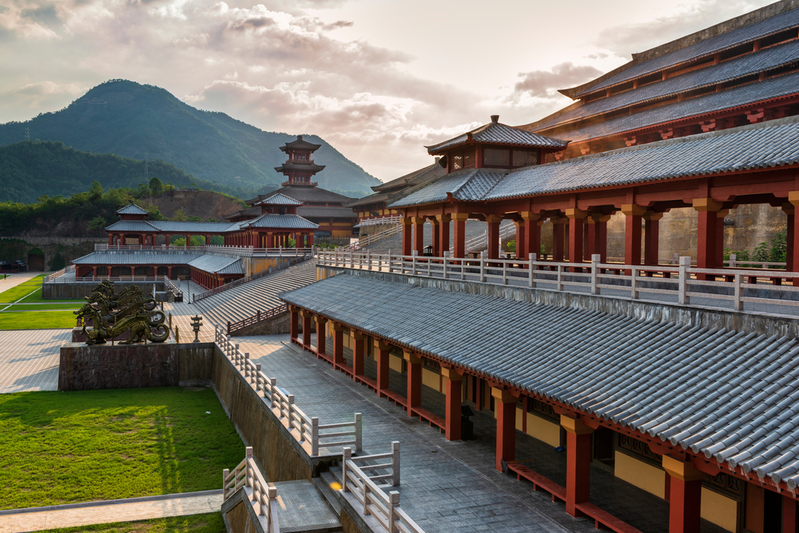
Since the prevalence of AI, the traditional model of real-life shooting has been challenged, with actors, crew members, and filming locations facing survival pressure. The renowned film and television shooting base, Hengdian World Studios in mainland China, recently launched the “Tourists Self-Shooting Short Drama” project, allowing tourists to play the role of a short drama protagonist for about 300 Chinese yuan.
According to reports from “Kankan News,” the project offers more than 20 scripts including palace intrigue, spy warfare, martial arts, and Republic of China settings. The cost includes costumes, makeup, as well as a complete shooting team including directors and cinematographers. From selecting scripts, makeup styling to on-site shooting, the entire process takes less than an hour, and tourists can receive a personalized short film lasting 1 to 2 minutes.
The report stated that since its launch in the summer, many tourists have come to experience it, even attracting foreign tourists. After placing an order on the mini-program, tourists must make a phone reservation one day in advance, and the business is booming. The project has been launched for more than ten days, with nearly 200 participants, averaging between ten to twenty groups of customers shooting per day.
AI short dramas have rapidly gained popularity this year, replacing live-action short films as the mainstay of short film production. According to data from the China Internet Audiovisual Association, out of the 128,000 newly released web series in the first quarter of this year, 122,000 were AI short dramas, equivalent to over a thousand AI short dramas being released every day, with almost one being released every 20 seconds during peak times.
Compared to live-action short films, AI short dramas cost two-thirds less and production time is reduced by two-thirds. The cost of a live-action short film ranges from tens of thousands to millions of yuan, while an AI short drama only costs between one hundred thousand to five hundred thousand yuan, prompting many industry players to enter the AI short drama production scene.
Previous visits by mainland Chinese media to Hengdian revealed that some actors found themselves without roles after the Chinese New Year. Some turned to delivering takeaway meals, hosting live sales, or selling snacks at stalls.
For example, 32-year-old short drama actor Xu Mengqiang from Hengdian switched to selling cold skin noodles due to the lack of acting roles – each serving priced at 10 yuan. His business peaked at a daily revenue of only 200 yuan, with a monthly net income of 3,000 to 4,000 yuan, equivalent to only one-third of what he used to earn from acting in short dramas, barely covering rent and basic living expenses.
An actor who had previously acted in short dramas in Hengdian disclosed that in the past, production crews used to “scramble for actors,” but now it has turned into “actors competing for production crews”; once production commences, individuals are chosen from a large pool of actors, leading to a decline in remuneration.
The impact of AI is not limited to actors; the entire industry chain, including directors, assistant directors, producers, set crew, lighting technicians, actors coordinators, and filming locations, are all affected by the decreasing demand for live-action short films. Some industry insiders have mentioned that some companies have shifted towards producing AI short dramas as they no longer need to bear the significant costs of hiring actors and renting locations.