
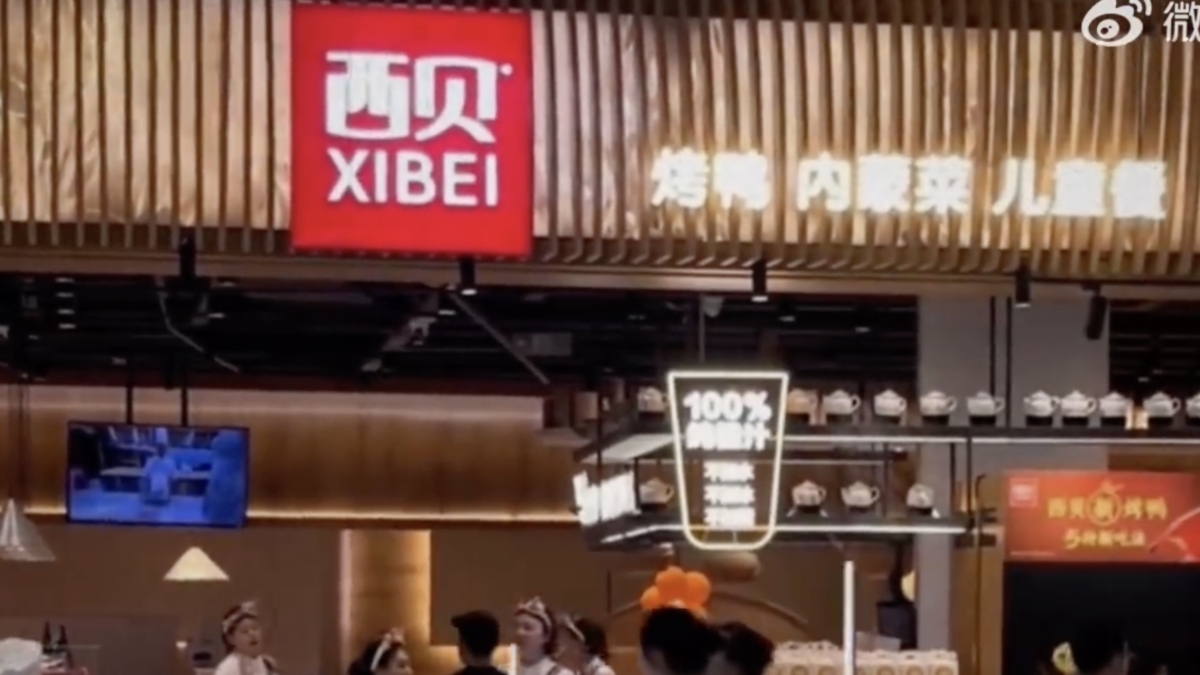
After a year-long aftermath of the West Bay “pre-packaged food controversy,” the focus of the dispute has shifted from dining processing methods to online influence and legal matters. Founder of West Bay, Jia Guolong, recently called for clarification of the boundaries of high-traffic account speech. A prominent internet user alleged that West Bay has sued Luo Yonghao and “apologize and settle” over rumors, with Luo Yonghao denying the claims.
On September 19th, the online account “Reasonable Records” claimed that West Bay “may completely shut down in the next two to three months,” sparking a hot search trend. West Bay responded by stating that all its stores across the country are currently operating normally, refuting the rumors of imminent closure.
However, there is indeed operational pressure on West Bay. According to reports by mainland media, West Bay accumulated a loss of over 600 million RMB from September 2025 to March 2026, and closed 102 stores in the first quarter of 2026. Data from Narrow Door Catering showed that as of September 19, West Bay had reduced its number of stores significantly to around 226 from over 370 in 2024.
A year ago, in September 2025, well-known Chinese entrepreneur, internet celebrity, and former English teacher Luo Yonghao posted on Weibo, “it’s been a long time since I’ve eaten at West Bay… it’s almost all pre-packaged food, still so expensive, it’s really disgusting…” This post sparked a huge public opinion storm. In response, West Bay’s founder Jia Guolong stated that West Bay “does not have any pre-packaged dishes” and took measures such as implementing open kitchens and adjusting menu items.
After West Bay opened its kitchens to the public, the media and netizens noticed some frozen ingredients and pre-processed products from central kitchens, including frozen sea bass labeled with an 18-month shelf life. The controversy did not dissipate, and West Bay continued to adjust some products and production methods.
A year later, the dispute shifted to the legal realm. “Reasonable Records” revealed on the 19th that West Bay had sued Luo Yonghao, with the case “about to go to court,” and claimed that “Jia Guolong demanded that Luo Yonghao kneel down to settle.”
Currently, West Bay, Luo Yonghao, and the relevant courts have not publicly confirmed whether the above lawsuit has gone to trial. On the 21st, Luo Yonghao denied the rumors of “apologizing and settling,” saying “do not believe rumors,” and stated that he has evidence and will file complaints or lawsuits as appropriate.
On the 20th, Jia Guolong once again addressed the controversy. He stated that West Bay has learned a “painful lesson” from the incident and urged regulatory authorities to clarify the boundaries of speech for high-traffic online accounts, differentiating between normal public opinion supervision, opinion debates, and malicious defamation, commercial vilification, and online cyber-violence.
Regarding whether the dispute should be blamed on Luo Yonghao, ZEALER Founder Wang Ziru recently stated in a live broadcast that even without Luo Yonghao’s public criticism, the accumulated operational issues of West Bay could have eventually erupted, albeit at a different time and manner. He said, “I don’t think this is Lao Luo’s problem.”
However, a commentary on the Hu Xiu website presented a different view. The article argued that West Bay’s later closures and losses were not necessarily directly linked to Luo Yonghao’s statement a year ago about “almost all pre-packaged food.” Even if West Bay is currently under pressure, it does not prove that Luo Yonghao’s statement at that time was factual. The article, therefore, believed that if West Bay did file a lawsuit, the judicial process may help clarify the dispute from that year.
Behind this controversy lies the policy arrangements of the Chinese Communist Party in recent years to promote the development of pre-packaged food industry.
In 2023, the CCP’s Central Document No.1 proposed to “cultivate and develop the pre-packaged food industry.” In 2024, the CCP’s State Administration for Market Regulation and five other departments issued a document that, for the first time at the national level, defined the scope of pre-packaged food, and proposed to strengthen food safety supervision, promote high-quality development of the industry, and improve related regulations on the use of pre-packaged food in the catering industry.
It is noteworthy that the official definition of pre-packaged food by the CCP differs from the common understanding of consumers as “pre-prepared and reheated.” The document clearly stated that semi-processed and ready-to-eat dishes made by central kitchens and distributed to their own stores are not included in the scope of pre-packaged food.
The West Bay and Luo Yonghao dispute not only involves how much pre-processed food a catering company actually uses but also touches upon consumers’ understanding of the concept of “pre-packaged food” and the difference between official industry definitions and market perceptions.
Another significant background to the West Bay controversy is in January of this year when the party’s media “People’s Daily” published a series of articles discussing this dispute.
At that time, after the announcement of West Bay’s closure of 102 stores, a commentary on the “People’s Daily” WeChat public account article stated that the online public opinion environment has become an important factor affecting the survival and development of enterprises, criticizing phenomena such as “black mouths” and creating hot topics on the internet, meanwhile suggesting that mainstream media should “join the battleground of public opinion.”
The next day, the party’s media once again commented on the West Bay incident, criticizing Jia Guolong’s previous response as “seemingly tough but actually stubborn,” and stating that criticism from internet celebrities towards companies could also be an opportunity for companies to improve, pointing out that what consumers truly dislike may be the concealment of food processing methods rather than just pre-packaged food itself.
These two articles were reposted by multiple media outlets, discussing the online public opinion environment and the ways companies should deal with crises. Subsequently, the controversy gradually cooled down.
Now, with the resurgence of the West Bay and Luo Yonghao dispute, Jia Guolong has once again called for the clarification of the boundaries of speech for high-traffic accounts, while Luo Yonghao has stated that he has evidence for the related rumors. Whether the party’s media will intervene again this time has also become one of the key points of attention in the aftermath of this controversy.