
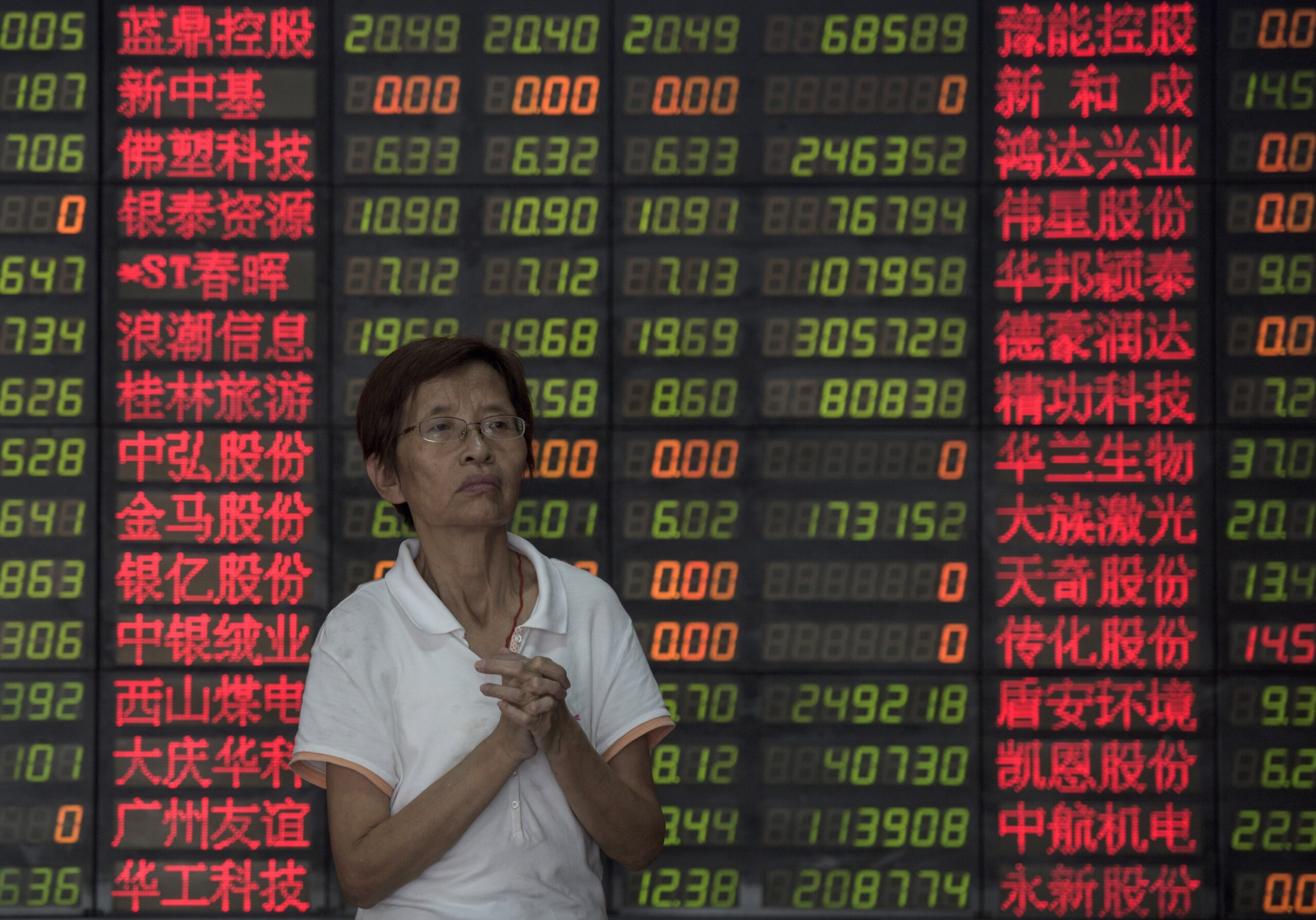
In July, the technology sector of the A-share market experienced a sharp decline, with more than 40% of the 431 stocks falling by over 40%. Among these, nearly half were from the electronics and communications industries. Companies in other sectors that saw significant drops in stock prices were also found to have their core operations closely tied to the electronics industry. Opinions on the future trends of the A-share technology sector vary among different institutions.
On Monday, August 3, major Chinese technology stocks continued the downward trend from July, with the Sci-Tech Innovation 50 Index, including industry leaders such as AMEC, SMIC, and ZW Micro, dropping by 5.08%, marking the largest decline in a month.
The technology sector in the A-share market took a significant hit in July. According to a report by “First Financial,” out of the 5,534 listed stocks, there were 136 stocks with a decline of over 50% and 431 stocks with a decline of over 40%. Among these, 185 were from the electronics industry and 24 from the communications industry, accounting for nearly half of the total.
Looking at the overall performance of industries, the average cumulative decline in the electronics industry in July reached 31.64%, while the communications industry saw an average decline of 17.68%, ranking them at the top two spots in the Shenwan first-level industry decline list. Following a concentrated retracement, the electronics sector almost gave back two-thirds of its gains from the second quarter of this year.
Despite not belonging to the electronics or communications industries in Shenwan’s industry classification, many companies that experienced significant declines also had their main business operations closely related to the electronics industry.
Reportedly, both Honghe Technology and China Giant Stone are listed companies with market values exceeding one hundred billion yuan, and their declines in July were around 50%. While categorized under the first-level industry of building materials, their main operations focus on the research and production of high-end electronic-grade glass fiber cloth, which is essential for manufacturing AI chip packaging substrates and printed circuit boards (PCB).
Ruihuatai, with a 59.73% decline, falls under the first-level industry of basic chemicals and specializes in the research and production of high-performance polyimide (PI) film. The PI film is widely used in special insulation and electronic fields such as flexible displays, aerospace, and nuclear energy.
With a 60.28% decline, Far East Group belongs to the first-level industry of power equipment, with its flagship products, intelligent cable networks and smart batteries, mainly used in the construction of AI computing centers.
“Shenwan First-Level” refers to the highest and broadest-level industry classification standard conducted by Shenwan Hongyuan Securities for Chinese A-share listed companies.
The report suggests that the high congestion in the “silicon-based trading” reached a historical peak in July, and the stock prices in the secondary market had negative feedback on financial performance, indicating that at that time, performance was no longer the core factor in sector pricing. The focus of the market had shifted from “capital expenditure growth” to the ability to realize capital returns. Global AI congestion began to decline rapidly, leveraged funds concentrated on liquidation, and valuations of AI-related companies plummeted significantly.
In August, opinions on whether the A-share technology sector will continu… (text shortened)