
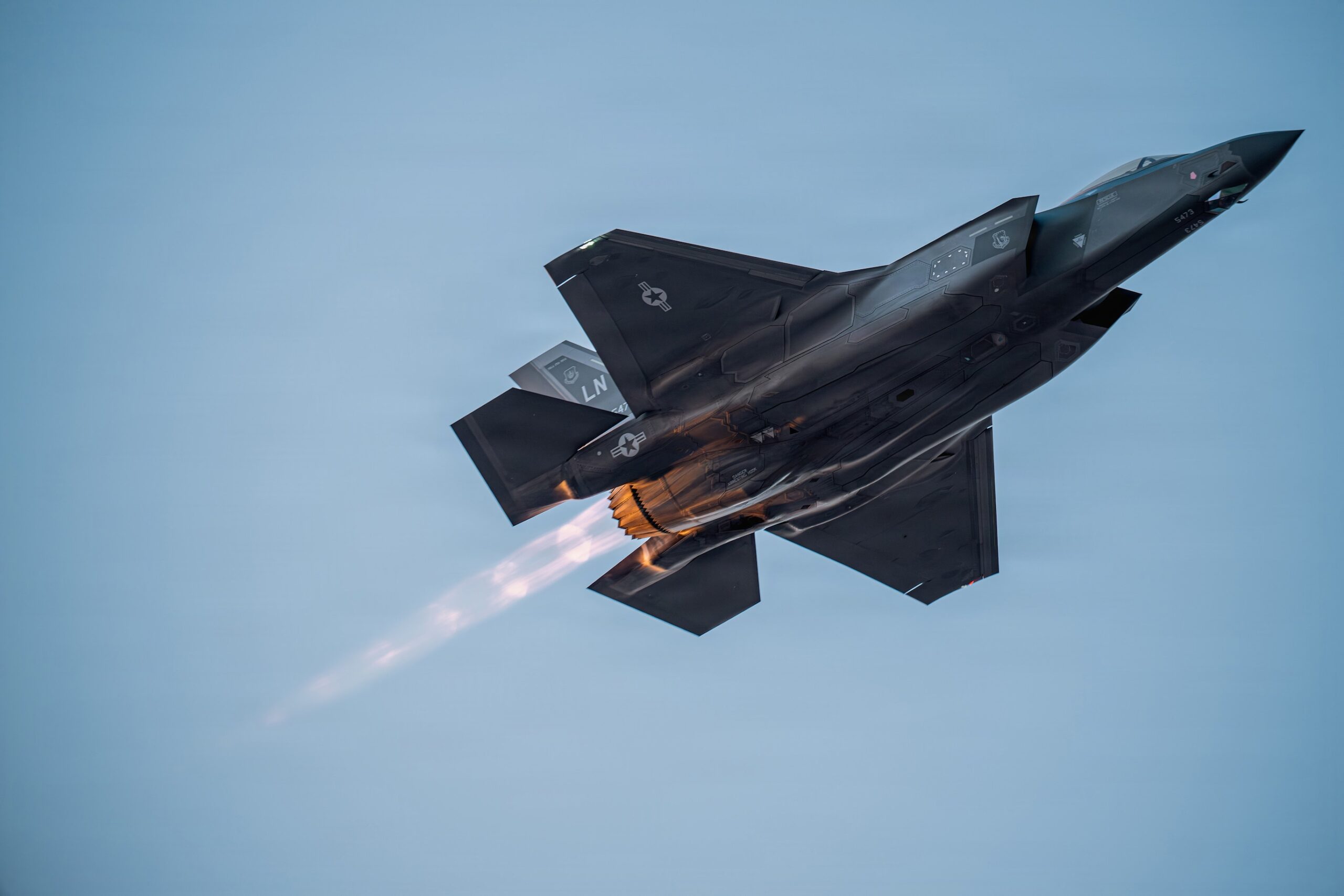
This summer, a batch of sensitive F-35 fighter jet technical equipment was unexpectedly diverted to Hong Kong, triggering a congressional investigation and raising concerns that the Chinese Communist Party (CCP) may have the opportunity to access crucial components of highly classified US military weapon systems. The Pentagon’s F-35 Joint Program Office has acknowledged the incident and is investigating while taking measures to prevent similar events from happening again.
According to a report by Politico on September 18th, three anonymous sources revealed that a shipment of F-35 parts originally intended for maintenance in the US after being transported from Australia changed course during its Pacific transit. The Pentagon has confirmed that some parts are missing.
These parts were being transported by an intermediary on behalf of the F-35 manufacturer Lockheed Martin, but ended up in Hong Kong instead of their intended destination. It is still unclear why the equipment was rerouted and who currently has control over it.
This previously unreported incident prompted relevant departments to brief staff from the National Security Subcommittee on the situation. State Department and Pentagon officials reportedly informed the Subcommittee as early as June, with multiple briefings scheduled in the coming weeks.
Two informants disclosed that among the cargo was a fighter jet cockpit canopy, which not only covers the cockpit but also incorporates stealth technology restricted to the US and its allies. If adversaries were to obtain this canopy, they could study it and potentially attempt to reverse-engineer the valuable technology.
In a statement, the Pentagon’s F-35 Joint Program Office acknowledged “an issue with a shipment of unusable F-35 Lightning II parts during transport.”
The office added that they are collaborating with US agencies and industry partners to “recover these parts, investigate the situation, and take precautionary measures to prevent similar incidents in the future.”
The unexpected rerouting of this shipment to Hong Kong signifies its entry into the sphere of CCP influence. In recent years, the CCP has increased control over Hong Kong, continuing to suppress political dissent.
Chinese efforts to steal and replicate technology from abroad for defense industry development are no secret, especially prevalent in the aerospace sector. The secrecy surrounding F-35 technology has long been a target for the CCP, leading to years of espionage activities targeting Pentagon’s classified projects, including the F-35 program. In January 2015, the Australian Broadcasting Corporation reported that Chinese spies stole over 50TB (1TB=1024GB) of classified data on the F-35 stealth fighter from the US, which they’ve since applied to their own J-20 and J-31 aircraft.
On July 24, 2020, the US Department of Justice revealed that Singaporean Chinese Jun Wei Yeo confessed to conducting secret intelligence collection for the CCP in the US, recruiting personnel involved in the F-35 project from the US Air Force, State Department, and Pentagon for information.
“China has been actively trying to obtain data on the F-35 through electronic espionage and other means, this is an open secret,” said J.J. Gertler, a former military aerospace analyst with the House Armed Services Committee and Congressional Research Service.
The F-35 supply chain is a vast global operation, relying on facilities in multiple countries to transport and maintain parts. Lockheed Martin, the manufacturer, manages the overall supply chain for the project and utilizes commercial transport services to deliver parts.
In a statement, Lockheed Martin noted that for security reasons, they can’t disclose specific transportation details but strictly adhere to all relevant US regulations when transporting aircraft parts.
The canopy of the F-35 is a key component of its stealth capabilities, a resin “bubble” covering the cockpit with a thin layer of radar-absorbent material to help the aircraft evade radar detection.
According to the US Air Force, this stealth coating degrades over time and necessitates maintenance or replacement of canopies on over 1300 delivered jets to the US and its allies.
The US State Department declined to comment, and the Chinese Embassy in the US claimed to be unaware of the incident.
The F-35 program involves the US, as well as countries like the UK, Australia, Denmark, Norway, and Poland, with a unique management system for the flow of aircraft components. Each country accesses a global shared parts pool; however, ownership remains with the Pentagon until the parts are installed on the jet.