
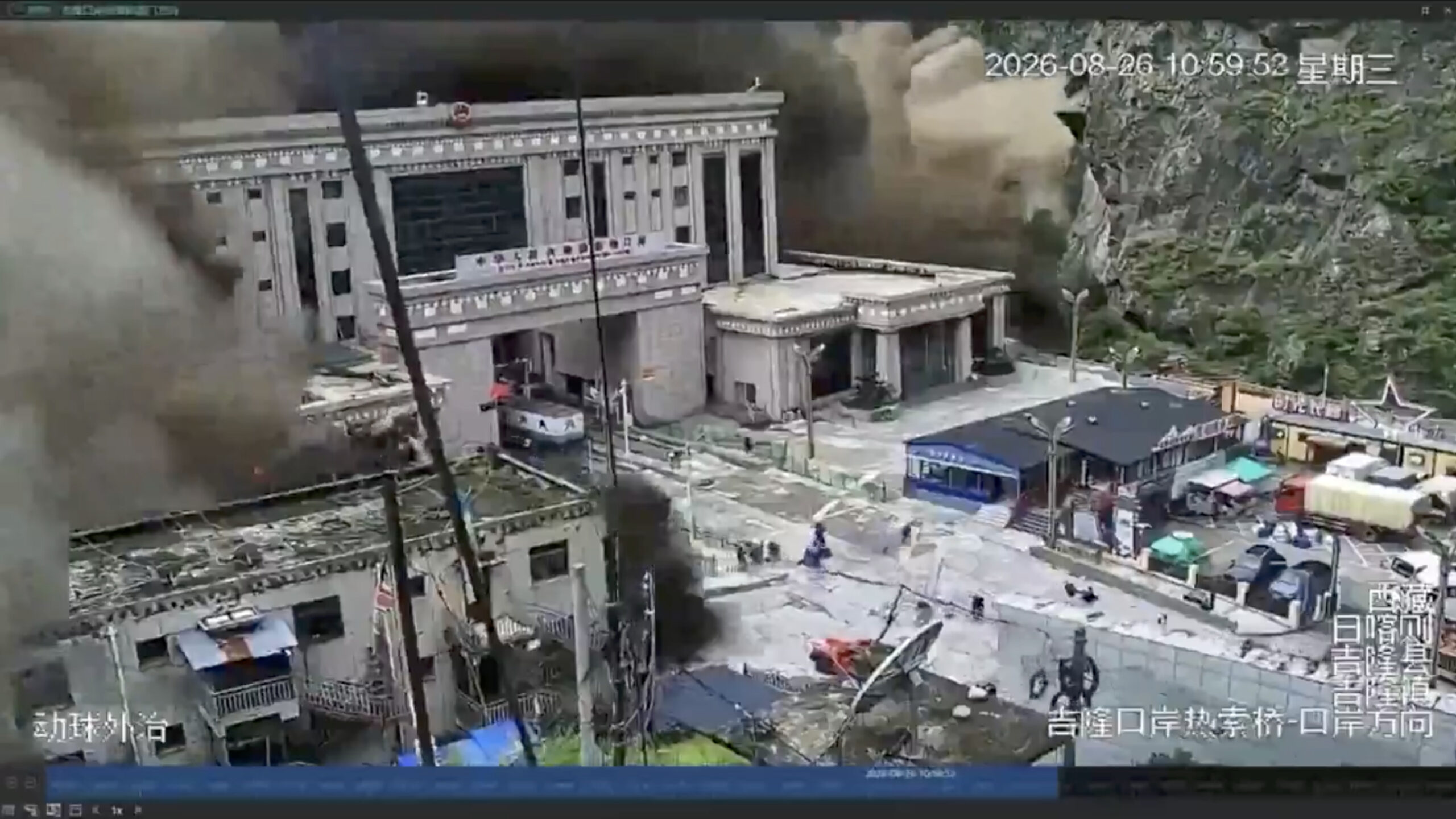
Since May 2026, various regions in mainland China have been hit by a series of disasters such as floods, earthquakes, and mudslides, resulting in numerous collapsed buildings and heavy casualties. The authorities have been concealing the truth, imposing strict censorship on related information and speech, sparking public anger.
Media person Zhan Fei (pseudonym) from mainland China stated that the Chinese Communist Party (CCP) consistently controls disaster information, downplaying the actual situation in an attempt to create an atmosphere of so-called “social stability.”
Starting in May, major disasters including floods, mudslides, and earthquakes have occurred in Guangdong, Guangxi, Guizhou, Chongqing, Shenyang, Hunan, and other places.
On the evening of May 23, Chongqing witnessed flash floods, mudslides, and landslides in multiple areas. After the floods, reports about the construction of new reservoirs and flood prevention in Chongqing were deleted by the authorities.
In July, Guangxi experienced rare floods, and the public mainly relied on self-rescue efforts after the disaster. The authorities blocked information about the disaster, and rescue operations were also heavily criticized.
On the afternoon of August 7, a 4.9-magnitude earthquake struck Gaoxian County in Yibin City, Sichuan. The earthquake was strongly felt, with the official report citing one death and six injuries. At 4:02 pm, a 3.0-magnitude aftershock occurred. Recent frequent earthquakes in Gaoxian County have led local residents to accuse that the earthquakes stem from shale gas extraction in Yibin, which trended on Weibo as “Yibin Shale Gas Extraction” before being suppressed.
On August 26, a mudslide occurred suddenly at the China-Nepal border, devastating the Jilong Port in Shigatse, Tibet, with heavy casualties. After the news went viral online, the CCP demanded strict control over related reports by the Cyberspace Administration, and videos and posts related to the incident were deleted or restricted.
Zhan Fei told Epoch Times, “Strictly blocking news, controlling news, this has been ongoing since the establishment of the CCP’s regime to the present.”
On July 13, the Ministry of Public Security Cybersecurity Bureau also publicized 25 typical cases of so-called “flood and disaster-related network rumors.” Among them, at least four netizens in Guangzhou were criminally detained by the police on charges of fabricating and spreading false information.
“These kinds of disasters are often not reported. The common people can only be aware of our high-speed trains now or our GDP being second globally, which numb the people, making them feel that China is powerful,” Zhan Fei said.
Zhan Fei further cited the 1975 “8.8” dam collapse as an example, where the death toll officially reported in Henan Province was 85,600, but later, the CCP revised the number to 26,000 in official documents; unofficial estimates commonly placed it around 220,000. “Some say over a hundred thousand died, others say four hundred thousand. At that time, journalists heard some information to varying degrees but dared not speak up publicly.”
Zhan Fei also pointed out that CCP state media only select material favorable to the leadership in their disaster coverage. “Reports are always positive, highlighting the Party and government officials visiting disaster areas, which is heavily emphasized. The severe aspects like collapsed houses, buried railways, and other grim scenes are not publicly reported, as they are too tragic and daring to disclose.”
Zhan Fei stated that the authorities believe that these true disaster situations are all unfavorable news for political stability. “The people are filled with anger. If numerous reports about disasters were known, the public would say, even the heavens are not pleased. The CCP wants to create an illusion of smooth sailing and people’s happiness and well-being.”