
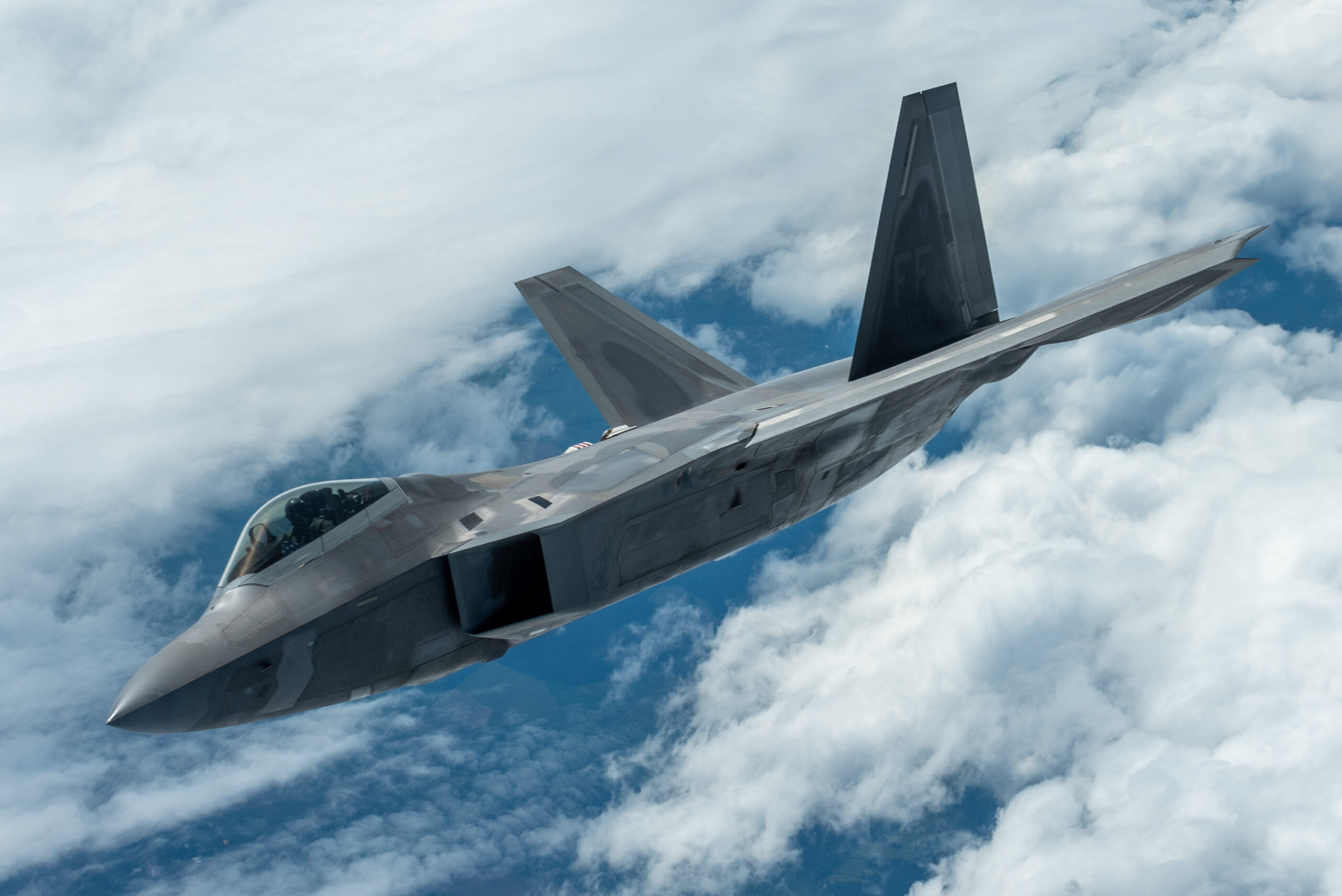
The F-22 and F-35 are both fifth-generation fighter jets of the U.S. military, but while the F-35 has been exported to multiple allied countries, the F-22 has been banned from being sold abroad. Why is that?
According to aviation news website “Simple Flying,” the F-22 and F-35 represent fundamentally different types of air power. The decision to export the F-35 while keeping the F-22 at home is not based on the performance comparison between the two aircraft.
The F-22 was originally designed as a distinctly American fighter meant for air superiority missions, and it is legally protected from export. The design of the F-22 never considered selling it to foreign users. Washington aimed to keep the most advanced stealth capabilities and air superiority of the aircraft solely within the U.S. Military.
In contrast, the F-35 was envisioned from the start as a multinational cooperative effort for a multi-role fighter, available for purchase by allied nations and to operate within the same combat network. This fundamental difference sets them apart.
Through the F-35 program, allies can deepen integration, reduce costs through economies of scale, and provide a common platform for air forces of various allied nations. Additionally, with the permanent closure of the F-22 production line and U.S. Congress insistence on maintaining the export ban, the F-35 became the only available option for export.
The ban on exporting the F-22 has a complex background that dates back to the late 1990s when the aircraft was establishing itself as the U.S.’s next-generation air superiority fighter.
In the eyes of lawmakers, the F-22 is not just a regular commodity; it is an extremely sensitive national strategic asset with core advantages in stealth technology, advanced avionics systems, and superior combat capabilities. The U.S. does not want these technologies to leak overseas.
Starting in 1998, members of Congress included the “Obey Amendment” in multiple large defense appropriations bills, blocking the use of any funds to approve sales of the F-22 to foreign governments. This amendment was repeatedly written into subsequent bills, making this restriction a regular political obstacle rather than a one-time decision.
The concerns go beyond just secrecy; Congress is genuinely worried about the risks of technology proliferation. Even close allies could unknowingly expose the sensitive features of the F-22 to hacking or espionage activities. Exporting such high-end platforms poses significant risks that could disrupt regional power balances.
Previous reports by Epoch Times suggest that another reason the U.S. does not export the F-22 could be the prohibitively high maintenance costs. Unlike multi-role fighters like the F-35, the F-22’s air superiority focus limits its capability for ground attacks as it can only carry two types of weapons during such missions, making it costly and possibly unaffordable for other countries.
While some allied countries have expressed interest in acquiring the F-22, only a handful have shown such willingness, and it is not a widespread phenomenon. Among them, Japan has been the most adamant and persistent, seeking to procure the aircraft for years. The U.S. has considered Japan as a potential customer and even debated the matter in Congress.
Australia also showed keen interest in the aircraft, particularly in the late 2000s. Additionally, Israel has often been mentioned alongside Japan and Australia as interested allied nations, though publicly available records are not as detailed as Japan’s. However, the interest of allied nations does not necessarily indicate that actual export plans were close to realization.
In terms of overall procurement conditions, Japan’s situation has been the most substantial. Nevertheless, the demands from allied countries have never been enough to overcome the U.S. legal restrictions, technical security concerns, and the reality of the F-22 production line closure.