
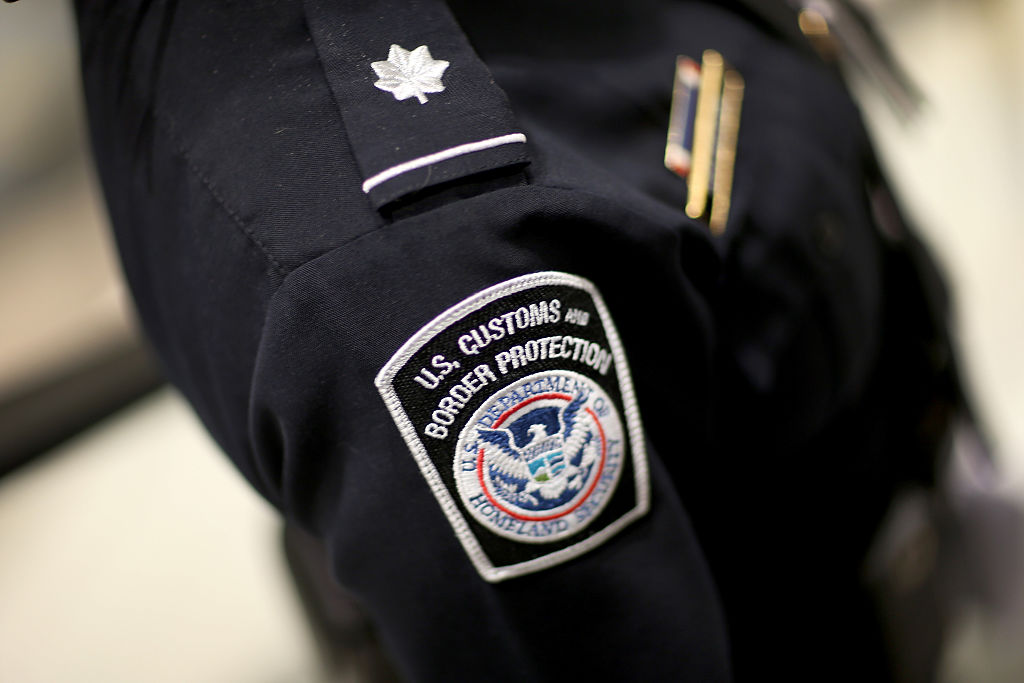
An American citizen is facing federal charges for allegedly obstructing customs inspection upon entry by providing a “duress password” to Customs and Border Protection (CBP) agents at the airport, resulting in the deletion of all data on his Google Pixel phone. This case marks the first instance in the United States where criminal charges have been brought for using a privacy system’s “duress password” to erase phone data, sparking extensive attention from the tech and legal communities and igniting debates on privacy rights, border search powers, and whether digital property is equivalent to “destroyable property.” Last week, the U.S. District Court in Atlanta held a hearing on this unusual case.
According to court documents, in January 2025, Samuel Tunick, a resident of Atlanta, returned from the Dominican Republic and was taken for secondary inspection by CBP’s Tactical Terrorism Response Team at Hartsfield-Jackson Atlanta International Airport. Personnel from the FBI Joint Counterterrorism Task Force were also involved in the coordination and questioning.
The agents requested to examine his Google Pixel phone (running the enhanced privacy-protecting GrapheneOS operating system), and he provided a password that triggered software to wipe the phone’s data. According to CBP agents, “the screen went black, flickered a few times, and then the phone seemed to reboot,” resulting in the permanent deletion of the phone’s contents.
In November 2025, a federal grand jury in the Northern District of Georgia indicted Tunick. The charges are based on Section 2232(a) of the U.S. Code, which states that intentionally destroying, damaging, or misappropriating property to obstruct or impede the government’s lawful seizure of the property constitutes a crime. This provision, historically applied to tangible property, is now being used in a digital data context.
Tunick has denied all charges, and if found guilty, he could face up to five years in prison and fines. GrapheneOS is a high-security Android alternative designed for Google Pixel devices. Its “duress PIN/password” feature allows users to set a second password; when entered, the system irreversibly wipes all data without confirmation, appearing identical to a normal unlock. This design aims to protect privacy when compelled to unlock the device.
Modern smartphones typically store a vast amount of private information, including communication records, photos, location data, work documents, and financial information, which are generally protected by law. However, U.S. courts have long recognized a “border search exception”: CBP officers at ports of entry have broader search powers than domestic law enforcement agencies.
A CBP spokesperson stated that all travelers entering the U.S., including U.S. citizens, must undergo inspection, with electronic devices treated no differently from other items for entry. Checks on phones and laptops are only conducted on a tiny fraction of international arrivals, with an expected percentage of travelers subjected to device checks in the 2025 fiscal year below 0.01%.
The spokesperson emphasized that these measures are in place to ensure all travelers comply with U.S. laws. Searches, including questioning and, in rare cases, electronic device checks, are conducted based on specific circumstances, considering travel history, alerts from law enforcement agencies, and other factors.
According to current CBP policy, officers can conduct basic searches on devices like phones, laptops, or tablets without a warrant, typically involving manual inspection of locally stored information. However, more invasive advanced searches may require connecting the device to external equipment or forensic tools, necessitating reasonable suspicion of illegal activity or national security threats and approval from supervisory authorities.
While U.S. citizens have a vital protection not enjoyed by non-citizens – typically not being denied entry for refusing to unlock devices – failing to cooperate can still have severe consequences. Under current legal guidance, law enforcement can seize devices, conduct further questioning, or take devices for further investigation. Any challenges to the legality of a search usually occur afterward in court.
Lawyer and ACTi AI co-founder Sean Callagy told Newsweek, “Law enforcement can indeed seize the physical devices themselves, which are not ‘speech’ protected like your words are under Fifth Amendment protection against self-incrimination.” “Your digital life is not a paper diary that you can burn when someone knocks. Attempting to erase digital traces during an investigation is not just a misstep; it is intentional behavior that can turn a routine check into a criminal case of ‘obstruction of justice or tampering with evidence,’ a charge that often carries more weight than the initial investigation.”
On the other hand, several privacy groups, including the American Civil Liberties Union (ACLU) and Electronic Frontier Foundation (EFF), strongly criticize the current policy. The ACLU believes that modern smartphones containing a person’s entire private life trajectory should enjoy Fourth Amendment protection stronger than traditional luggage, and the government should not infinitely expand warrantless searches under the pretext of “border security.”
Privacy experts recommend that travelers plan ahead when facing border inspections rather than panicking under pressure at the airport:
Distinguish rights from obstruction: Forcing an unlock or providing a password may trigger Fifth Amendment protection against self-incrimination, but actively deleting or destroying evidence is not covered by this protection and could constitute obstruction of justice.
Stay calm and silent: If asked to unlock a device at the border, experts suggest remaining calm until a lawyer is present and not admitting or agreeing to unnecessary deep searches.
Implement data minimization: Travelers who frequently cross borders or carry sensitive information should minimize local storage on devices before transit, use cloud storage more, and reduce the risk of physical seizure.
(The article referenced reporting from Newsweek)