
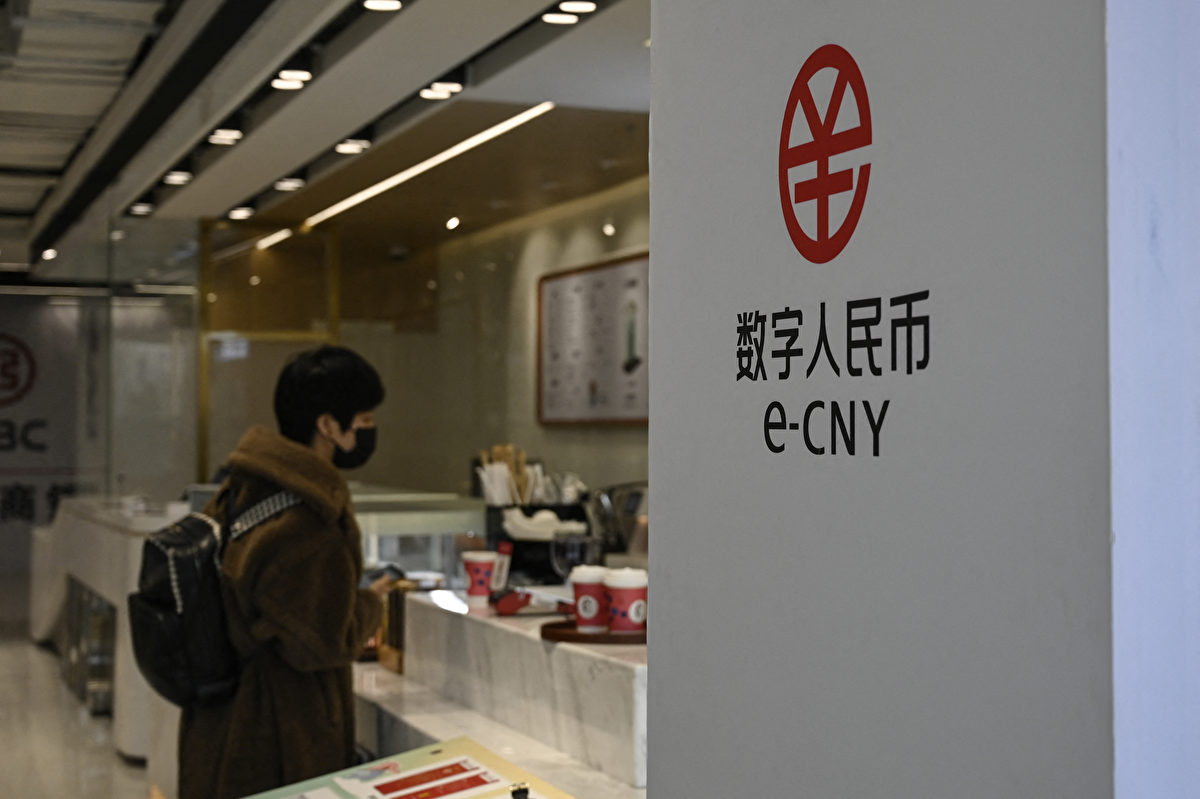
Saudi Arabia has exited the mBridge project, a cross-border digital currency platform led by the People’s Bank of China. The development of digital yuan continues to face obstacles, with poor prospects for domestic and international applications.
According to a September 20 report by the Financial Times, Saudi Arabia has withdrawn from the digital currency project led by Beijing, which is part of Beijing’s efforts to develop an alternative to the US dollar in cross-border payment systems.
Saudi Arabia became a participant in the digital currency bridge project in 2024, joining Mainland China, Hong Kong, Thailand, the UAE, and the Bank for International Settlements (BIS). Saudi Arabia confirmed to the Financial Times that it exited the platform last year, stating that this was part of its initial plans.
Saudi Arabia’s decision to exit was not publicly disclosed before. On August 4 this year, when the South China Morning Post introduced the progress of the currency bridge, the Saudi Central Bank was still listed as a participant.
In a statement, the Saudi Central Bank stated that as part of its central bank digital currency research work, it first “joined the currency bridge led by the Bank for International Settlements as an observer” in 2023. Subsequently, the bank participated in the development of the platform’s basic version, the “minimum viable product” in business terms, and took part in the construction of the “concept verification” in 2024.
The statement mentioned that the Saudi Central Bank successfully completed the concept verification of the currency bridge project on May 13, 2025, according to plan. After completing the concept verification, the Saudi Central Bank no longer remained as a participating member in the currency bridge project.
A source familiar with the matter stated that it is inaccurate to conclude that the Saudi Central Bank withdrew due to US pressure, considering its limited initial involvement. The Bank for International Settlements exited the project in October 2024, amidst rumors of pressure from Washington. The then Managing Director of the Bank for International Settlements, Agustín Carstens, later clarified that the institution “naturally exited” the project, leaving it to continue with the central bank partners, not due to political considerations.
mBridge, initiated by the People’s Bank of China, the Hong Kong Monetary Authority, the Bank of Thailand, the Central Bank of the UAE, is a new generation cross-border financial infrastructure built on blockchain technology. The digital currency bridge aims to revolutionize cross-border remittance, eliminating the multi-layer intermediary bank clearing process, establishing a “peer-to-peer” payment network, and reducing global corporate fund transfer costs.
Previously, Professor Fan Jiazhong from the Department of Political Science at National Taiwan University told the Epoch Times that China certainly hopes to replace the US dollar with digital yuan as the primary payment platform but faces two major challenges.
The first problem lies in the poor international credibility of the yuan, leading to user skepticism. Due to significant political influences within China, the manipulation of the yuan market undermines its marketization.
The second issue concerns the risk of capital outflow. If yuan cross-border transactions become very convenient, capital flight becomes easier, and China may not be able to monitor it entirely. This is a major concern for China.
The People’s Bank of China commenced research on digital yuan in 2014, with a history of 12 years. Former Governor of the Central Bank, Zhou Xiaochuan, proposed the idea of constructing digital currency, leading to the establishment of the Central Bank Digital Currency Research Institute, the world’s earliest official institution for digital currency research. The first test of digital yuan was conducted in early 2017.
Following the initial test of digital yuan, China took various measures to ban other digital currencies, including prohibiting ICOs (Initial Coin Offerings), shutting down domestic digital currency exchanges, etc. According to official Chinese announcements, digital yuan is legal tender, and no entity or individual can refuse its use. It is set to gradually replace the circulating base currency, with all transaction records recorded, including time, location, parties, transaction amounts, and quantities of goods. China is promoting the use of digital yuan through administrative means. In 2023, Changshu City in Jiangsu Province issued a notice to implement full payment of digital yuan for civil servants, employees, and personnel in state-owned units at all levels.