
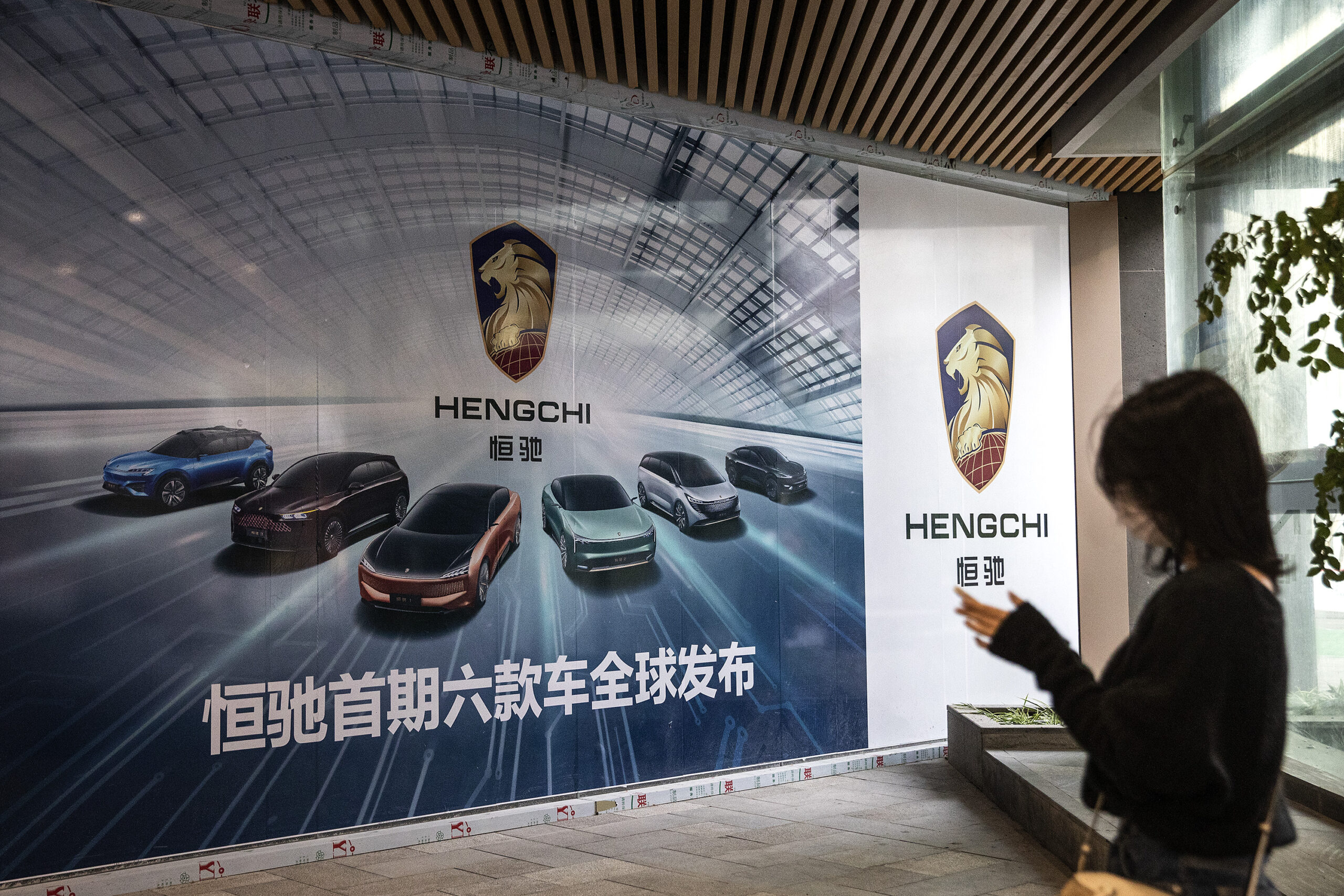
The latest financial data from Hengda Auto shows that as of the end of June 2026, the company’s assets are only about 182 million yuan, while its liabilities exceed 32.7 billion yuan. The company has exited the automotive manufacturing industry and shifted towards light asset businesses such as battery trading, but its continued operation still faces uncertainties such as financing and debt restructuring.
Hengda Auto disclosed its financial reports for the fiscal year 2024, mid-year 2025, fiscal year 2025, and mid-year 2026 on September 17. The company stated that it has completed the exit from automotive manufacturing and is transitioning to a light asset model by leveraging the retained electric vehicle battery and automotive manufacturing-related proprietary technologies.
According to the financial report, as of June 30, 2026, Hengda Auto’s total assets were approximately 182 million yuan, total liabilities around 327.22 billion yuan, with loans of about 162.83 billion yuan and trade and other payables of around 164.39 billion yuan. During the same period, the company generated revenues of around 8.725 million yuan, with a gross profit of about 520,000 yuan, and recorded a net profit of around 186 million yuan.
However, this profit does not necessarily indicate a recovery in the core business. According to Economic Information Daily, the improvement in profit in the first half of the year was mainly due to gains from loan exchange rates, not a revival in automotive manufacturing. The company’s revenue in the first half mainly came from the first-time sale of lithium-ion batteries, amounting to approximately 8.73 million yuan, while the technical service business did not generate any revenue during the same period.
Looking at the financial data from the past two years, Hengda Auto’s asset scale has consistently remained at an extremely low level, while its liabilities still exceed 32 billion yuan.
Based on the financial report, as of the end of December 2025, the company’s assets were about 205 million yuan, and liabilities were around 329.18 billion yuan. Previous financial reports indicated that by the end of 2022, Hengda Auto had total assets of 34.851 billion yuan and total liabilities as high as 72.543 billion yuan. The total revenue for the whole year of 2025 was only about 13 million yuan, resulting in a loss of approximately 891 million yuan. In 2024, the annual revenue was around 53 million yuan, with a net profit of about 6.267 billion yuan, showing significant fluctuations in key financial data.
Simultaneously, Hengda Auto’s operational scale has significantly shrunk. As reported by Ruifinance, as of the end of June 2026, the company only had seven employees, with employee costs in the first half of the year totaling approximately 1.4 million yuan.
Hengda Auto had previously invested heavily in the field of new energy vehicle manufacturing, constructing multiple production bases and launching the Hengchi series. However, due to a tight funding chain, production bases in Tianjin, Shanghai, Guangzhou, and others successively halted production, leading to the eventual exit from the entire vehicle manufacturing business.
Currently, Hengda Auto’s shares remain suspended from trading. According to data from the Hong Kong Stock Exchange, the company’s stock has been suspended from trading since April 1, 2025, and has not resumed trading yet.
Following the exit from vehicle manufacturing, Hengda Auto plans to rebuild its revenue sources through battery trading, technical services, and aims to continue reducing operational and administrative costs.
The company stated that it is currently in discussions with an independent investor for financing to maintain basic operations and meet minimal operational funding needs. At the same time, negotiations are ongoing with Evergrande Group, currently in liquidation proceedings, and the relevant liquidators regarding the overall debt restructuring.
Until the announcement date, the company has not received any demands for immediate repayment of related debts, and there is no intention from Evergrande Group to initiate liquidation proceedings against Hengda Auto.
However, reports from The Paper suggest that Hengda Auto has received non-standard audit reports from auditors on multiple occasions, indicating significant uncertainties surrounding the continued operation capability.
The company also explicitly stated in the financial report that its future ability to continue operations depends on business restructuring, financing arrangements, reaching debt restructuring agreements with Evergrande Group and related parties, and whether new businesses can generate sufficient operating cash flow. If these plans are not realized, the company may need to reassess the recoverable amount of assets and adjust its financial statements accordingly.
In essence, although Hengda Auto has exited vehicle manufacturing, its massive 327 billion yuan debt has not disappeared with the business transformation. The company’s ability to maintain its listing and basic operations in the future still depends on whether financing, debt restructuring, and new business income can truly materialize.
The current predicament of Hengda Auto is closely related to the collapse of its parent company, Evergrande Group. Evergrande Group rapidly expanded through a high-leverage, high-turnover model in the past, with its asset size growing from about 63.1 billion yuan at the time of listing in 2009 to around 348.1 billion yuan in 2013, and its interest-bearing debt once exceeded 800 billion yuan, with a total peak debt of around 2.4 trillion yuan.
In 2020, after the policy on real estate financing “three red lines” was introduced by the Chinese Communist Party, Evergrande’s financing environment significantly tightened. Starting from 2021, the company faced issues such as defaulted commercial papers, project halts, Evergrande Wealth facing payment crises, among others, and substantial defaults occurred in December of that year. In 2022, China Evergrande, Hengda Auto, and Evergrande Property stocks were successively suspended from trading.
In 2023, Evergrande disclosed huge cumulative losses in 2021 and 2022, with total liabilities of about 2.4 trillion yuan. In September of the same year, Xu Jiayin was subjected to compulsory measures. In January 2024, the High Court of Hong Kong issued a winding-up order against China Evergrande. In August 2025, Evergrande was formally delisted.
Just last month, a intermediate court in Shenzhen announced the verdict in the Xu Jiayin case. Xu Jiayin was sentenced to life imprisonment, confiscation of all personal assets, and fines of 8.82 billion yuan and 7 billion yuan imposed on Evergrande Group and Evergrande Real Estate, respectively. The court found the case to involve charges such as illegally absorbing public deposits, fundraising fraud, fraudulent issuance of securities, irregular disclosure of material information, embezzlement, and unit bribery.
With Evergrande’s default crisis, the debt crisis of the group continues to impact its subsidiary businesses. After exiting vehicle manufacturing, the main issue Hengda Auto currently faces has shifted from “can they manufacture vehicles” to “can they maintain operations through financing, debt restructuring, and new business ventures”.