
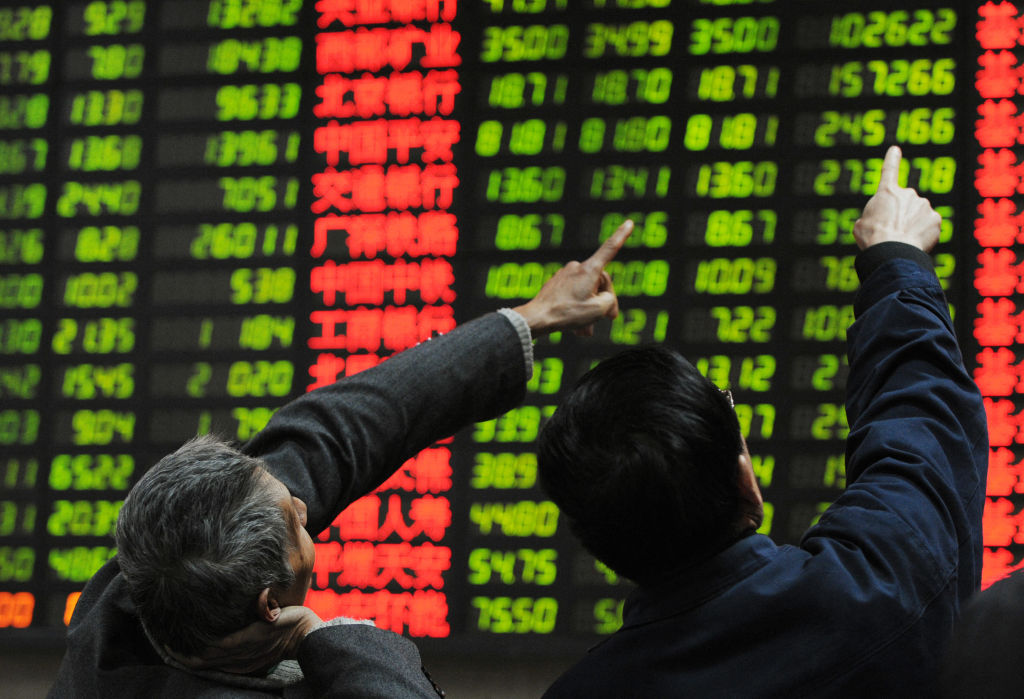
On September 17th, the main A-share indices in mainland China collectively fell, with over 2800 stocks declining. The trading volume in the Shanghai and Shenzhen markets decreased compared to the previous trading day, with the gold, oil, and non-ferrous metal sectors leading the losses.
According to a report from the “Daily Economic News,” at the close of trading, the Shanghai Composite Index fell by 0.41% to 3875.6 points; the Shenzhen Component Index dropped by 0.33%, the ChiNext Index by 0.40%, and the STAR 50 Index by 0.15%.
The total market turnover for the day was around 1.84 trillion yuan, a decrease of 16 billion yuan from the previous trading day, with over 2800 stocks experiencing declines.
The precious metals, oil and gas exploration, minor metal, gas, power, brokerage, petrochemical, and coal sectors all saw declines.
The precious metals sector saw the most significant drop. Shandong Gold fell by 6.46%, Hunan Silver by 5.82%, while Shandong Gold International, Chifeng Gold, Zhongjin Gold, and Hunan Gold all experienced substantial declines.
The oil and gas exploration and services sector also weakened, with Tongyuan Petroleum falling by 5.92%, Kele shares, Zhongman Petroleum, Shouhua Gas, and China Oilfield Services all declining.
The “21st Century Economic Herald” mentioned that gold, oil, and non-ferrous metal stocks were the main decliners of the day, while rare earths, electronic components, and some semiconductor stocks also saw adjustments.
On September 16th, the Federal Reserve of the United States announced that it would raise the federal funds target range by 25 basis points to 3.75% to 4%. This is the first rate hike by the Fed since July 2023. The rate forecast released by the Fed shows that out of 18 officials, 16 believe that there is still a need for at least one more rate hike within this year.
Following the rate hike announcement, the US dollar index briefly crossed 100, and international gold prices experienced a temporary decline. According to “Securities China,” the decline in gold stocks is related to the Fed’s rate hike, the strengthening of the US dollar, and the decline in international gold prices.
Opinions vary among mainland Chinese institutions on how this rate hike will affect A-shares.
A research report from CITIC Securities stated that this rate hike is in line with market expectations. If the Fed’s rate hike is short-term or a one-time event, its sustained impact on A-shares may be limited, especially since A-shares have already reacted to expectations of a rate hike.
Multiple fund companies cited by Caijing Network believe that the Fed may continue to raise interest rates. SDIC Aladdin Fund believes that a rate hike in October by the Fed is not ruled out; Southern Fund expressed that high interest rates in the long term may depress prices of technology stocks that are already high.