
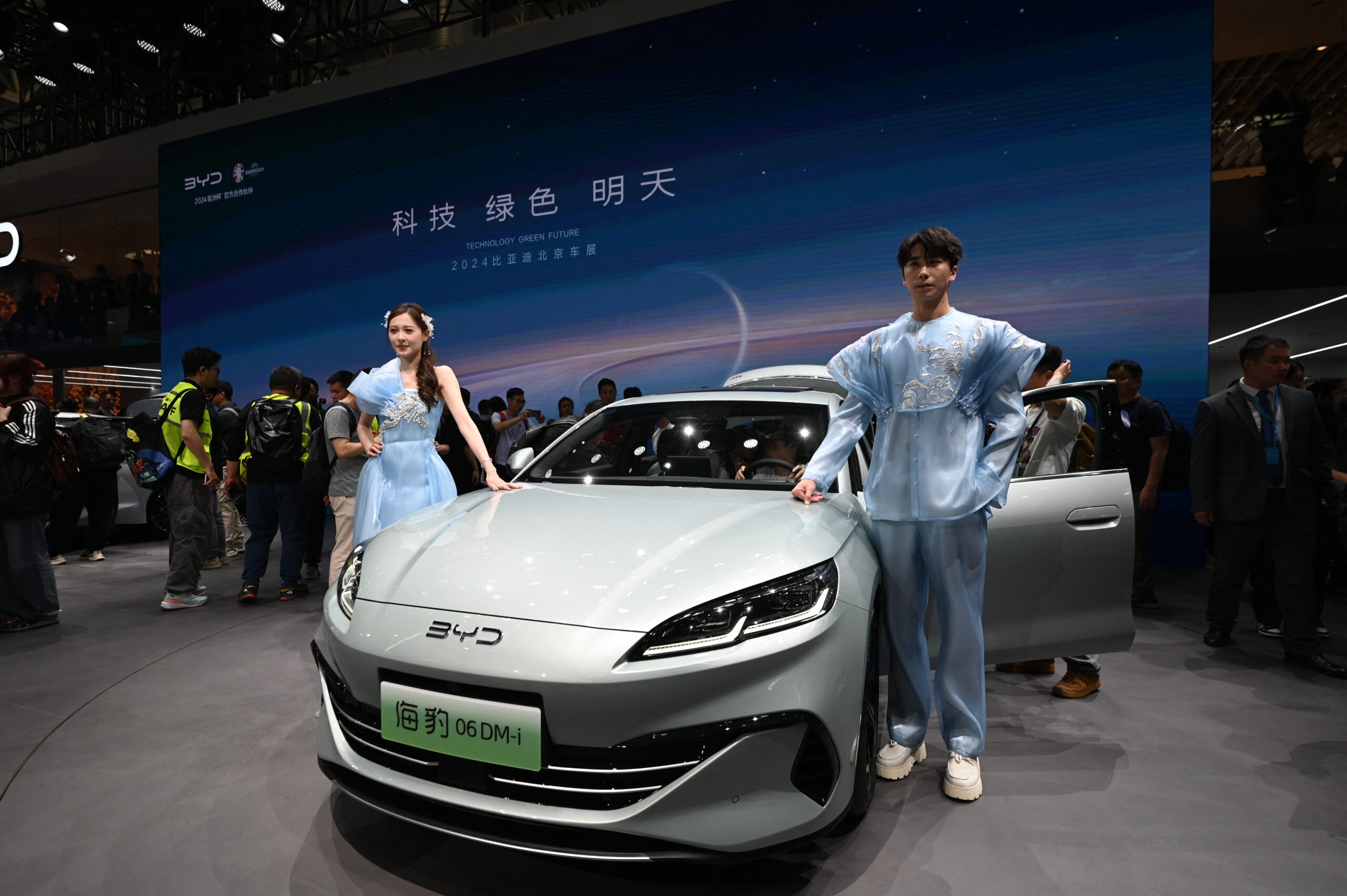
The European Union is urging China to voluntarily restrict the export of hybrid cars to avoid escalating trade conflicts between the two sides. Brussels hopes that Beijing will limit the market share of Chinese-manufactured hybrid vehicles in the EU to about 15%, as currently this proportion has exceeded one-third.
According to a report by the Financial Times (FT), three sources revealed that due to the influx of low-priced Chinese-made car models into the European market, European auto manufacturers are undergoing significant layoffs. Brussels aims to restrain the Chinese automotive industry to prevent further tariff hikes by the EU.
An EU official stated that the EU’s actions are aimed at preventing the continual decline of the European manufacturing sector. “We must take action,” the official said. They emphasized that by controlling the scale of trade, the EU can mitigate the impact on the European industry. The official also noted the EU’s desire for China to exercise restraint in exports of chemicals and other products, while increasing purchases of European goods.
In June, the EU set a deadline in October for substantial progress in reducing the trade deficit with China. Both parties have established the EU-China Trade and Investment Dialogue (TIC) Forum in an attempt to address market access issues.
Ursula von der Leyen, President of the European Commission, stated in her annual State of the Union address to the European Parliament on the 16th that the EU’s trade deficit with China reached €360.6 billion last year and expanded by 9% in the first half of this year. The trade imbalance has reached a “turning point,” and Europe is facing a second wave of “China shock.”
Previously, the EU imposed a maximum anti-subsidy tariff of 45% on Chinese electric cars, while hybrid cars currently only incur a uniform tariff of 10%. As a result, the import of Chinese hybrid cars has significantly increased, from around 3,800 vehicles in October 2024 to 50,000 vehicles in July 2026, representing a more than tenfold increase, with average prices continuously decreasing.
Maros Sefcovic, the EU Trade Commissioner responsible for leading negotiations with China to address the trade deficit issue, is expected to visit China in the second week of October.