
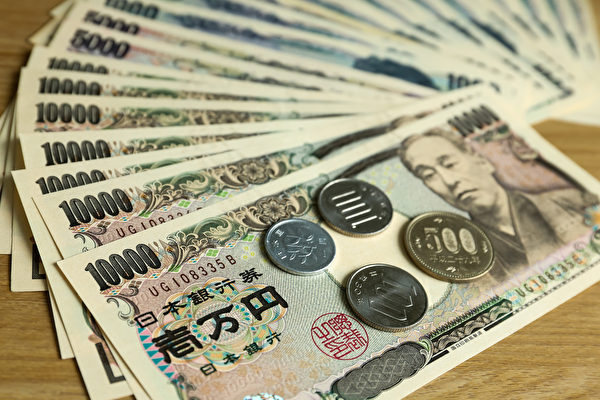
The United States government has decided to join forces with Japan to support the weakening Japanese yen, marking the first time in decades, sparking discussions and debates. On Tuesday, August 4th, US Treasury Secretary Scott Bennett stated that the depreciation of the yen has exacerbated Japan’s inflation issues and increased the risk of broader depreciation of Asian currencies, potentially endangering the stability of the entire Asian market. He reiterated the US’s efforts to support stability.
This coordinated intervention is a rare move for the US to support another major currency, highlighting concerns that the long-term depreciation of the yen could worsen domestic inflation in Japan, put pressure on other Asian currencies, and disrupt global market stability.
During an interview with CNBC on Tuesday, Bennett stated, “The level of the yen could lead to other issues or competitive devaluations, which is unhealthy.” He emphasized that the stability of the yen is crucial not only for the US but also for the entire Asian region.
A few days ago, the US and Japan intervened together to support the yen, as the yen-dollar exchange rate dropped to its lowest level in forty years in recent weeks.
When asked if the US would intervene further, Bennett mentioned, “We are in close contact with the Tokyo authorities,” and “We will make every effort to support them to help the US economy, US taxpayers, and stabilize the global economy.”
Following the US-Japan action, the yen exchange rate surged, but on Tuesday, the momentum stalled, with the trading price around 157.54 yen to the US dollar. On July 23rd, the index fell to around 164 points, the lowest since 1986.
Bennett stated that part of Japan’s inflation issue is due to the transmission of the weakened yen, which has increased Japan’s energy costs. He also mentioned, “If the yen depreciates significantly, other currencies will follow suit. We have already seen excessive volatility in the Korean won. Many also believe that the Chinese yuan is undervalued.”
“Given the trade, economic size, and their contributions to the global savings market, maintaining yen stability is crucial.” Bennett said, “The Japanese government is well aware of this, and we are proud to stand with them, support their policy implementation, and assist in stabilizing the regional situation.”
As part of this joint action, the US Treasury sold euros from reserves and used the proceeds to buy yen. Bennett clarified that he had informed European officials that the sale of euros was merely a reallocation of reserve assets.
He stated, “We maintain close contact with our European partners, including central banks,” and some finance ministers. “I assured them that this is just a reallocation of our reserves.” He said.
He also mentioned, “In my view, the euro is closer to an equilibrium price,” the issue lies in “the yen is indeed severely undervalued.”
Before becoming Treasury Secretary, Bennett specialized in studying currencies during his decades-long career in hedge funds. He stated that currency intervention can “send signals to the market,” but ultimately, “policy changes the market.”
He noted that the two governments have maintained close communication, and the US believes that Japan will take measures to bring the yen exchange rate back to a more normal level.
“Intervention can send signals to the market, but it ultimately requires policy to reverse the situation.” He said.
Bennett explained that the reason the US is involved is because they are optimistic about Japan’s policy direction. He mentioned that the administration of Japanese Prime Minister Sanae Takichi is moving towards “budget discipline,” including basic surplus.
When asked whether stabilizing the yen requires the Bank of Japan to raise interest rates, Bennett said he would not “prejudge” what the Bank of Japan should do. He expressed confidence in Kazuo Ueda, the Governor of the Bank of Japan, whom he has known for 15 years, stating, “I believe he will do what needs to be done.”
Bennett said, “It will require policy follow-through on intervention measures, and I am very confident we will see that.”