
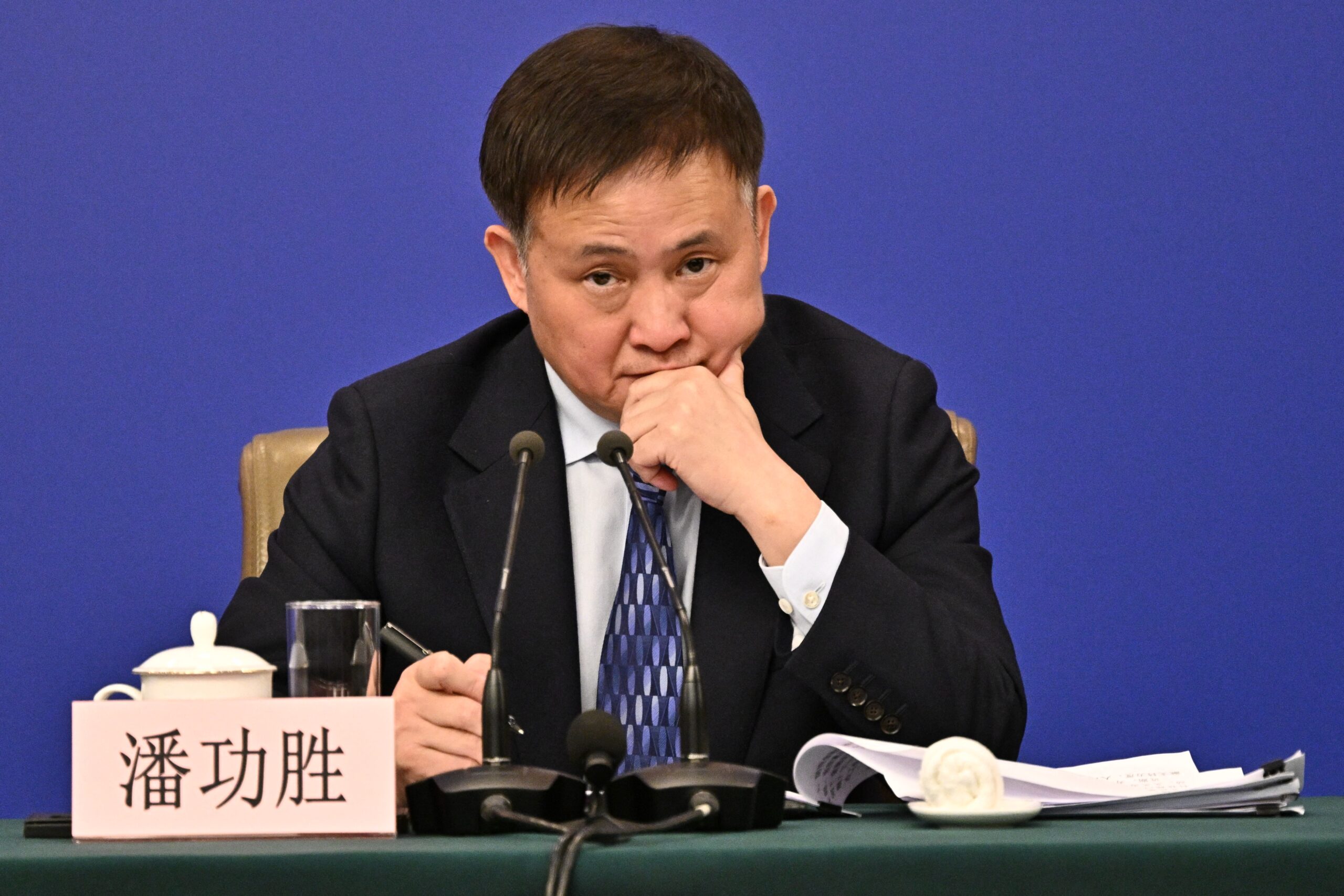
At the working conference in the second half of the year on August 1, the Governor of China’s Central Bank, Pan Gongsheng, delivered a speech that sharply contrasted with his remarks at the Lujiazui Forum in June. Within just six weeks, the policy focus shifted from financial structural reform to “increasing counter-cyclical adjustment efforts” to support the economy. Compared to previous years, the speech placed greater emphasis on “comprehensively and strictly governing the Party” as a top priority. Analysts believe that the slowdown in GDP growth in the second quarter and the manufacturing Purchasing Managers’ Index (PMI) falling below the threshold in July have pushed the Chinese Communist Party’s policies in a new direction.
Pan Gongsheng emphasized “increasing counter-cyclical adjustment efforts” at the China’s Central Bank’s working conference for the second half of 2026 on August 1. In terms of financial policies, there has been a shift from the long-term structural changes in finance highlighted at the Lujiazui Forum six weeks ago to issues like promoting a shift in the monetary policy framework towards a price-based model.
Pan Gongsheng’s speech also aligned with the policy direction of “counter-cyclical adjustment” put forward earlier by Chinese Premier Li Keqiang, making it a core focus of the central bank’s work in the second half of the year.
During an economic situation experts and entrepreneurs meeting on July 13, Li Keqiang mentioned the emergence of “new changes and trends” in economic operations and emphasized the need to have a full and objective understanding of the current economic situation. He stressed the importance of increasing counter-cyclical adjustment efforts in economic work for the second half of the year.
“Counter-cyclical adjustment” typically involves going against the current economic conditions; applying brakes during an overheated economy (raising interest rates, reducing spending) and stepping on the gas during a cooling economy (lowering interest rates, increasing investment) to stabilize or prevent overheating of the economy.
Li Keqiang did not specify the exact situation of the “current economic situation” or detail the “new changes in trends.” However, two days later on July 15, the National Bureau of Statistics of China revealed that the GDP growth in the second quarter of this year was only 4.3%, a significant drop from the 5.0% in the first quarter and below the 4.5% growth forecasted by economists.
Furthermore, one of the indicators of the manufacturing industry, the Purchasing Managers’ Index (PMI), dropped below the 50% threshold in July, falling to 49.2%, hitting a five-month low. Bloomberg’s report pointed out that the construction industry PMI fell to a historic low of 47.0% and the service industry’s business activity index dropped to the lowest level since the initial lockdown phase due to the pandemic, with the comprehensive PMI declining to 49.3%. These figures underscore the reality behind Li’s mention of “new changes and trends” hinting at an overall deterioration of the economy.
Following Li Keqiang, Pan Gongsheng also emphasized that in the second half of the year, the central bank will strengthen its “counter-cyclical adjustment efforts” to provide support for the continuously weakening economy.
In terms of monetary policy expression, Pan Gongsheng transitioned from “prudent” to “appropriately loose,” proposing the use of reverse repurchase agreements, the Medium-Term Lending Facility (MLF), buying and selling government bonds, and introducing new overnight reverse repurchase tools. He stressed the importance of balancing credit distribution to ensure that social financing and the amount of money supply (M2) align with economic growth and price targets.
Additionally, Pan Gongsheng mentioned continued support for key areas, employing structural tools to reduce interest rates and expand quotas (such as in technology innovation, support for agriculture and small businesses, and refinancing for privately-owned enterprises).
It is noteworthy that compared to previous years’ working conferences, this year’s detailed deployment of comprehensive and strict governance of the Party, supervision for rectification, and internal oversight have been further intensified, with political construction and monetary policy running as the two major axes for the second half of the year’s work.
Professor Sun Guoxiang from the Department of International Affairs and Business at Nanhua University in Taiwan pointed out in an analysis for Epoch Times that under the pressure of economic downturn, the role of China’s central bank has subtly changed. He said, “Pan Gongsheng’s speech focuses not only on continued loosening in the second half of the year, but also on his integration of monetary policy, financial stability, and political discipline into one framework, reflecting an underlying pressure.”
Sun Guoxiang believes that with a significant emphasis on making comprehensive and strict governance of the Party the central bank’s primary work, the central bank is no longer just the traditional monetary policy institution but is more of a pivotal hub for financial stabilization and policy execution, making it seem like the central bank is a central pivot for both utilizing monetary tools and driving policy execution by political discipline.
Pan Gongsheng repeatedly stressed the need for “appropriate looseness,” “strengthening guidance expectations,” and “enhancing the balance of credit distribution,” indicating that the central bank is seeking to restore market confidence from a policy perspective. According to the Beijing Business Daily, industry insiders suggest that there may be room for further cuts in reserve requirements and interest rates among the upcoming key policy tools.
Sun Guoxiang stated, “Manufacturing, investment, domestic demand, and real estate are still weak, making a moderate loosening necessary but its effectiveness should not be overestimated.”
He pointed out that the current concern is not simply a lack of money but rather weak expectations. The decline in business profits, intensified internal competition, fiscal constraints at the local level, and insufficient confidence in private investment are issues. Thus, measures like reserve requirement cuts and interest rate reductions can lower the cost of capital but may not automatically translate into effective investment and consumption. Additionally, externally, if the Federal Reserve maintains or raises expectations of rate hikes, it could limit China’s room for rate cuts as excessive easing may increase pressure for renminbi depreciation and capital outflows.
Sun Guoxiang emphasized that the real challenge lies in avoiding idle capital, narrowing net interest margins for banks, delaying bad debts, and dealing with the concentrated impact of defaults. Stimulus policies flowing to low-efficiency sectors could lead to a misallocation of resources, reducing overall economic efficiency.
Pan Gongsheng also mentioned the risks associated with local government debt, stating the need to prudently resolve the risks in specific areas and continue financial support for the transformation of local government financing platforms by promoting their market-oriented shift. Observers believe the authorities are trying to separate local government-related debts from government credit, no longer providing a safety net for companies with debts.
Sun Guoxiang analyzed the current dilemma in handling local government debts, highlighting two challenges: excessive rescue efforts could lead to moral hazards, perpetuating a reliance of the local authorities on the central government or financial system for support, while adopting firm measures could trigger defaults in local government financing and an increase in non-performing assets for banks, along with a freeze in local investments.
Sun Guoxiang projected that in the second half of the year, the authorities will take a route of “dragging, swapping, stabilizing, and transforming” – extending deadlines, replacing high-interest debts, stabilizing public market credit, and simultaneously promoting platform classification transformation. While this step could effectively reduce short-term “default” risks, it remains challenging to address the structural issues of inadequate local fiscal revenues and low returns on investments.