
For foreign nationals doing business and working in China, the pervasive digital surveillance by the Chinese Communist Party (CCP) is no secret. However, seeing his own face on the screen still startled Mark Hoogwerf.
Earlier this year, Hoogwerf, a Dutch internet security expert and former correspondent based in China, inadvertently stumbled upon a local law enforcement platform called the “Dynamic Control Platform for Overseas Personnel” while browsing online, as reported by The New York Times.
Upon finding the platform, Hoogwerf discovered that the login page was pre-filled with usernames and passwords, allowing any ordinary internet user easy access to browse and download a vast amount of sensitive personal data stored internally.
The platform Hoogwerf uncovered documented over 700 foreign residents permanently stationed in Zhangjiakou, Hebei Province, with a database containing about 12,000 personal records. These records encompass foreign journalists, corporate executives, students studying abroad, as well as individuals from Hong Kong and Taiwan.
Suddenly, Hoogwerf saw his own face – an archived photo taken by a CCP immigration official, accompanied by his passport number and the mobile phone number he used in China. This discovery left him profoundly shocked.
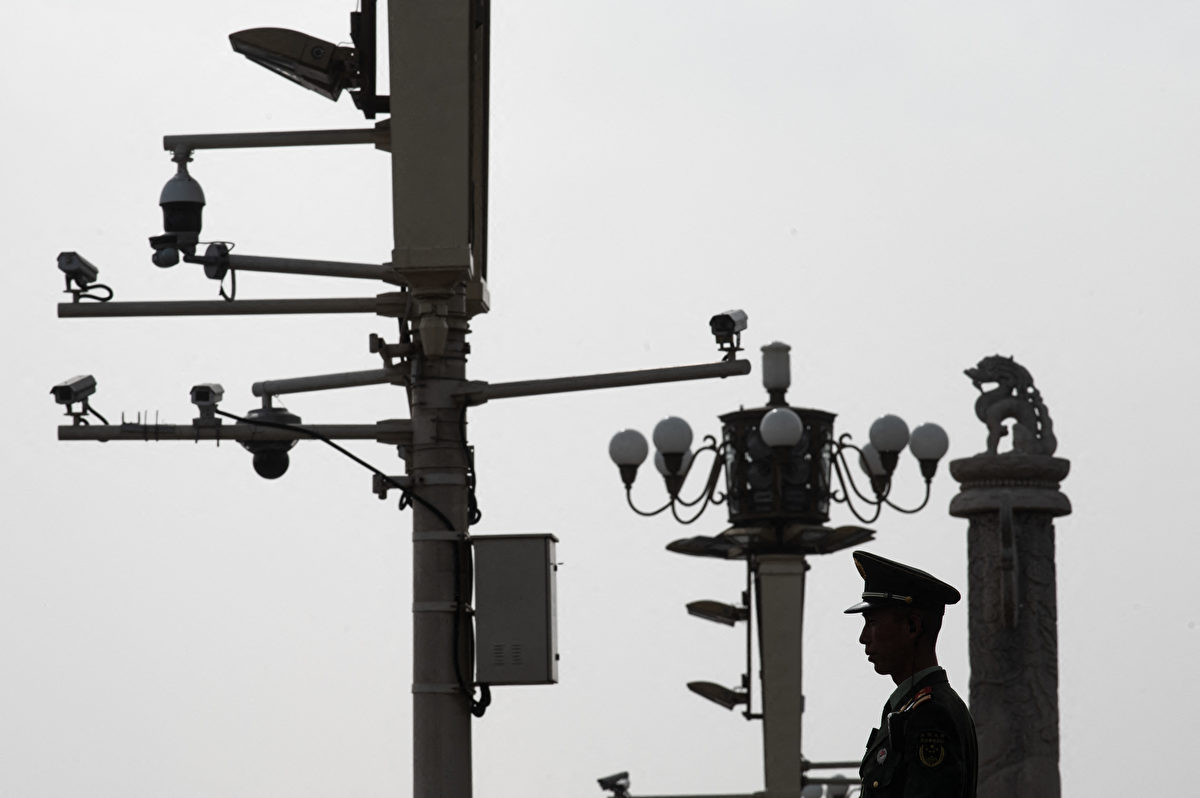
The New York Times report revealed that the CCP is leveraging artificial intelligence (AI) facial recognition and big data integration technologies to conduct nearly real-time comprehensive tracking and surveillance of foreign individuals in China. By integrating surveillance cameras, facial recognition, visa data, and mobile information, the CCP tracks the movements, social relationships, and activities of foreigners within China.
Hoogwerf’s discovery sheds light on the extensive extent of CCP surveillance on foreign individuals. The system categorizes personal information by nationality, including birth dates, gender, marital status, address, occupation, religious beliefs, and even medical records. The system also records instances of individuals being captured on camera at traffic intersections, markets, shopping malls, and other locations, including details such as seat numbers on high-speed trains, flight information, and refueling payment records.
Since his discovery in January, Hoogwerf began downloading as much data as possible from the website. By May, the website was taken offline.
The CCP utilizes AI and big data from this system to conduct relationship network analysis, automatically creating “social graphs” whenever two or more foreigners are captured appearing together on camera, automatically tagging them as “associated personnel.”
The system further classifies all tracked individuals into categories:
– “Five Eyes Alliance”: Citizens from the United States, Canada, the United Kingdom, Australia, and New Zealand are directly labeled under this category. The Five Eyes Alliance is an intelligence-sharing alliance among these five countries.
– “Key Countries”: Citizens from countries like Egypt, Iran, Israel, Morocco, Pakistan, and Sudan.
– Individuals from Taiwan, Hong Kong, and “Key Personnel”: Residents who have experienced the Hong Kong extradition bill protests and visitors from Taiwan are independently classified; while dissenters, human rights activists are categorized as “Key Personnel.”
According to public tender documents discovered by The New York Times, the platform is associated with Beijing’s Changyuan Power Technology Co., Ltd. This company provides robot technology, surveillance services, and equipment to law enforcement agencies. A portion of the company’s equity is held by the Yancheng Municipal Government in Jiangsu Province.
The New York Times requested comments from Changyuan Power and the Zhangjiakou Public Security Bureau via email and fax but did not receive any response.
Hoogwerf stated that the development of the Zhangjiakou system appears to have begun in 2021, with the most recent modification in April of this year. Some fields in the database were empty or filled with placeholders, indicating that the system may still be under construction at that time. He documented his investigative findings in his newsletter on the Substack platform.
Hoogwerf discovered that the data source of the platform was not limited to law enforcement. The database contained a list of foreign nationals and Chinese citizens who had visited the Taiwu Ski Resort in Zhangjiakou, including their photos, full names, and passport numbers taken at the location.
The student files listed in the database included information on religious beliefs, marital status, fields of study, and the number of times they were captured on camera at the entrance of their schools.
Among the data Hoogwerf downloaded was information on residents who had been penalized for violating CCP laws. For instance, one woman was fined 1,000 yuan in 2021 for failing to register a change of address.
As early as May of this year, The Telegraph’s senior foreign correspondent Sophia Yan had previously exposed the CCP’s “Dynamic Control Platform for Overseas Personnel” system.
Yan, who was stationed in China for 10 years, found her own personal file in this leaked database.
Her file included old photos from 2021, the source country of her employing organization, the organization’s name, English and Chinese names, gender, birthdate, citizenship, passport number, and Chinese mobile phone number.
She noted that unlike many other records in the database, her record had a column marked as “trackable” on the far right.
Clicking on it revealed all the data fragments, showing when and where she was photographed and discovered in China, and the location entered into the database.
Yan described the specific details in some personal records as “very specific,” such as someone being found 78 times at a specific intersection; other data might originate from cameras at supermarket entrances, different subway stations, and more.
“This is very, very specific… and a bit chilling,” Yan pointed out that China has deployed numerous security cameras in cities and small villages over the years, using facial recognition scans to enter gyms, board flights, etc., generating a wealth of raw data for comprehensive individual tracking.
The Telegraph previously pointed out that after investing in digital surveillance capabilities for the past 20 years, China is being transformed by the Communist Party into a “dystopian authoritarian state.”
(For more information, refer to Epoch Times’ previous reports: Exposed CCP’s Surveillance Platform on Foreigners; British Journalist Tagged)