
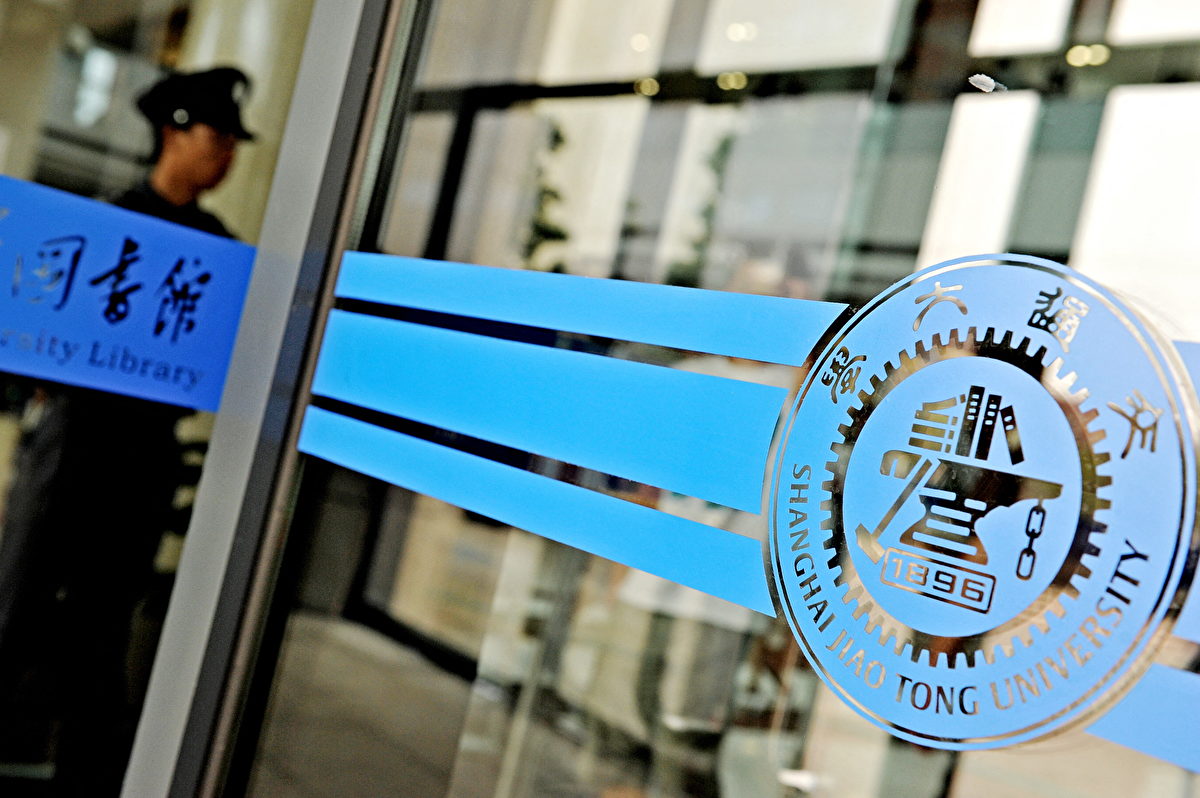
Last week, the Pentagon added Fudan University, Shanghai Jiao Tong University, and Shandong University to its blacklist of foreign universities and academic institutions. These universities on the blacklist are seen as being involved in activities that may pose a threat to U.S. national security.
According to Section 1286, the Pentagon compiled this blacklist, which currently includes 130 entities from the Chinese Communist Party (CCP), Russia, and Iran. Research from the U.S. risk data platform Kharon indicates that these three universities are involved in the CCP’s military-civil fusion program, conducting research ranging from hypersonic weapons to advanced semiconductors.
Entities blacklisted by the Pentagon will no longer receive funding for any basic research starting from the 2026 fiscal year. This includes grants, contracts, and any other federal funding, with the ban applying to all employees of federally funded institutions.
The U.S. Department of Defense has warned American researchers that collaborating with personnel associated with blacklisted entities poses compliance risks and may impact eligibility for federal funding. The Department of Defense has stated that this action is taken to protect U.S. public academic research and safeguard American technological advancements.
Recent articles from Kharon indicate that the expansion of the Pentagon’s “1286 blacklist” initially targeted CCP defense industry-related entities like the so-called “Seven Defense Colleges” and a few CCP military academies in Russia and Iran. However, the list has expanded to include tens of military academies and defense labs, extending last year to encompass so-called Chinese civilian universities.
Timothy Heath, founder of Perceptum, a research company and former analyst for the RAND Corporation and an expert on China for the U.S. military, believes the expansion of the list highlights the Pentagon’s recognition of the depth of cooperation between Chinese “civilian” universities and the military. As this collaboration deepens, Chinese civilian universities and research institutions will increasingly become focal points of concern for U.S. security research.
Nazak Nikakhtar, Chair of the National Security practice at the Willy Law Firm in Washington, D.C. and former Deputy Secretary of Commerce, views this as a typical regulatory approach in Washington. Measures often start with limited restrictions on easier targets to gauge litigation risks and industry responses before gradually expanding the scope of limitations.
For example, Shanghai Jiao Tong University, one of the universities cited, is one of the first nine elite universities selected for China’s “985 Project” initiative. The university has collaborative research institutions with universities and companies in the U.S., fostering research partnerships.
However, research from Kharon reveals that a national laboratory under the Materials Science and Engineering School at Shanghai Jiao Tong University is involved in research on CCP hypersonic weapons, including the development of anti-ship missile components, which CCP state media touts as “carrier killers.” Overall, Shanghai Jiao Tong University has at least five colleges with research and product development contributing to CCP “military-grade” projects.
Similarly, Fudan University, another CCP “985” university, houses a chip research laboratory funded by the CCP authorities. In 1998, Fudan University established Shanghai Fudan Microelectronics Group through its Integrated Circuit Laboratory, which signed a strategic cooperation agreement last July, claiming to enhance China’s core chip technology competitiveness and safeguard the security of the CCP’s strategic core supply chain. According to corporate disclosures and reports from Chinese banks, downstream customers of Shanghai Fudan Microelectronics Group include CCP military and suppliers on the U.S. Entity List, including the state-owned chip foundry Semiconductor Manufacturing International Corporation (SMIC).
Last September, the U.S. Department of Commerce listed Fudan Microelectronics on the Entity List, citing the company’s support for CCP military modernization, procurement and attempted procurement of U.S. origin items directly supplied to CCP military, government, and security entities, as well as providing technology to end users in the Russian military.
Richard Fisher, a Senior Fellow at the International Assessment and Strategy Center (IASC) and author of “China’s Military Modernization: Building for Regional and Global Reach,” pointedly notes that while Shanghai Jiao Tong University and Fudan University are not military academies, they are deeply involved in the CCP’s military-civil fusion strategy, contributing to CCP military technology research and talent development.
A few weeks before expanding the “1286 list,” the Pentagon also widened another list – the “1260H CCP Defense Enterprises” list. Subsequently, the CCP took retaliatory measures by sanctioning several U.S. companies.
Nikakhtar emphasizes that the two lists issued by the U.S. serve as signals of risk through blacklisting, imposing stricter compliance requirements compared to tools like the Commerce Department’s Entity List. By qualitatively identifying national security threats, the U.S. government finds it easier to operate legally and diplomatically while maintaining regulatory flexibility.
In Nikakhtar’s view, the current situation is akin to a blacklisting showdown between China and the U.S., with both sides exercising a degree of restraint.