
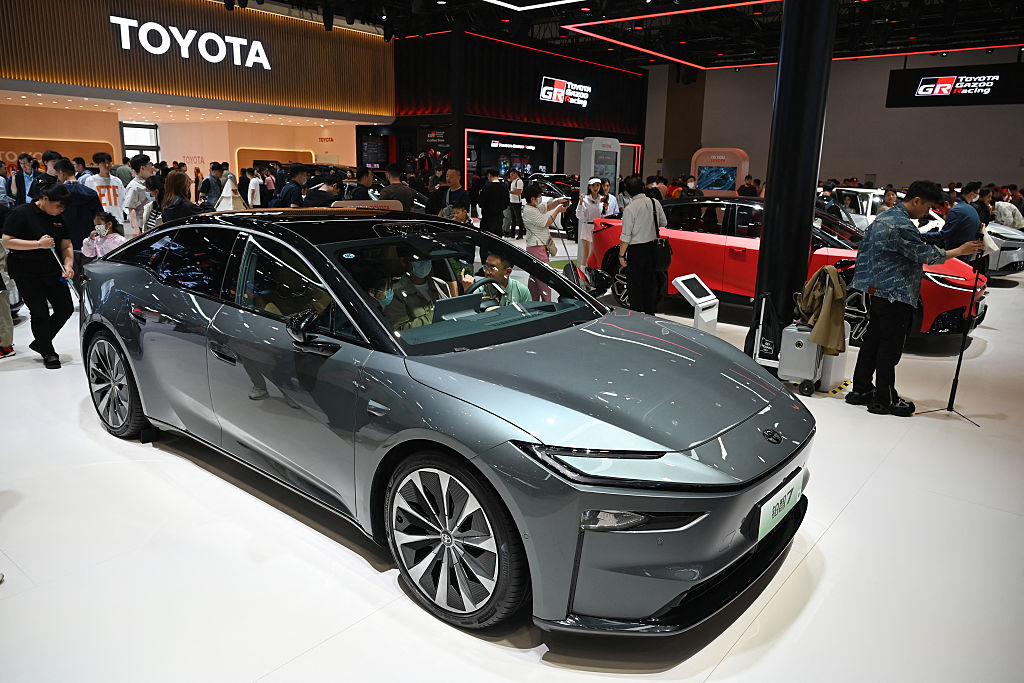
Toyota’s sales in China continue to decline. In the first half of this year, sales dropped to 694,700 vehicles, a decrease of 17.1% year-on-year, selling 143,000 fewer vehicles compared to the same period last year. In June, monthly sales further plummeted by 26.9%, marking the fifth consecutive month of year-on-year decline. During the same period, Toyota’s global production and sales both experienced declines.
According to a report by “First Financial” on July 31st, Toyota’s sales in the Chinese market in June were 115,300 vehicles, down 26.9% year-on-year, marking the fifth consecutive month of decline.
In the first half of the year, Toyota’s sales in China amounted to 694,700 vehicles, a decrease of 143,000 vehicles compared to the same period last year when the sales were at 837,700 vehicles, resulting in a 17.1% year-on-year decline. Toyota attributed the decline in sales to factors such as rising gasoline prices and changes in the market environment.
Sales of Lexus imported cars also saw a decline. In the first half of the year, Lexus imported around 70,600 vehicles, a 10% decrease year-on-year. Data provided by Cui Dongshu, Secretary General of the Passenger Car Market Information Joint Committee of the China Automobile Dealers Association, showed that in June, Lexus sales were around 10,300 vehicles, marking a 40% year-on-year decline and the third consecutive monthly decline.
As reported by Observer, global sales of Toyota and Lexus in the first half of the year totaled 5.089 million vehicles, a 2.9% decline year-on-year; production was 4.8637 million vehicles, a 1.2% decline year-on-year. This marks the first time in nearly two years that Toyota has experienced simultaneous declines in global production and sales in the first half of the year.
Toyota’s “electrified vehicles” category includes hybrid vehicles, mild hybrid vehicles, plug-in hybrid vehicles, all-electric vehicles, and fuel cell vehicles. In the first half of the year, sales of these vehicle types in the Chinese market reached 439,900 vehicles, with only a 0.3% year-on-year increase.
Out of the global sales of 2.7073 million electrified vehicles by Toyota and Lexus, hybrid vehicles accounted for approximately 86%; all-electric vehicle sales were around 193,200 vehicles, accounting for about 7% of electrified vehicle sales and around 3.9% of the total sales of both brands globally.
Amid Toyota’s declining sales in China, the overall demand in the mainland’s auto market is also contracting. Data from the Passenger Car Market Information Joint Committee shows that in the first half of this year, retail sales of passenger cars in the mainland reached 8.701 million vehicles, a 20.2% year-on-year decrease; June sales stood at 1.602 million vehicles, down by 23.2%.
Consumption growth on the mainland is also at a low ebb. Data from the National Bureau of Statistics of the Communist Party of China shows that the total retail sales of consumer goods only grew by 1.3% year-on-year in the first half of the year, dropping to 1.0% in June; retail sales at brand specialty stores declined by 8.7% in the first half of the year.
An Associated Press report on July 11th mentioned that the prolonged stagnation in the Chinese real estate market and the slowdown in economic growth have impacted consumer confidence, leading more consumers to reduce spending on high-ticket items such as automobiles.
In addition to weakening market demand, Secretary General Cui Dongshu of the Passenger Car Market Information Joint Committee stated that Japanese car companies are also facing challenges such as the contraction of the gasoline car market, slow introduction of electric vehicle models, and lagging behind in intelligent updates.