
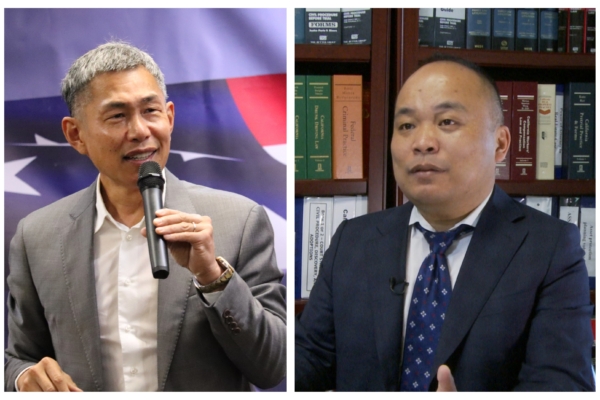
Last Tuesday, the Federal Bureau of Investigation (FBI) carried out a series of raids in Southern California, directly involving top executives of Chinese-funded media outlets that have been operating in the U.S. for decades. The raids have caused a stir and sparked numerous speculations within the Chinese community. Two prominent Chinese individuals running for public office in California shared their perspectives with the Epoch Times, emphasizing the importance of public officials adhering to ethical standards and cautioning Chinese individuals to be mindful of compliance and avoid any appearance of impropriety in their daily interactions and official duties.
On July 28th, the FBI conducted searches at multiple residences and offices in Southern California, targeting not only local officials but also James Su, the founder and CEO of EDI Media based in West Covina.
Eric Ching, who is running for California’s 31st Congressional District, stated to reporters on Wednesday, without knowledge of the reason behind the searches, that based on his experience, FBI operations of this scale often have some basis. He speculated that in the coming months, lawsuits may be filed or more individuals could come under scrutiny.
Having been involved in American politics for over a decade and having served as the Mayor of Walnut City three times, Eric Ching is familiar with the workings and social interactions of city officials. He believes that Chinese-American elected officials in the U.S., to a greater or lesser extent, find it difficult to avoid contact with individuals with questionable intentions. He has heard of instances where officials received favors or hospitality without knowing the true background or intentions of the other party.
In California, local officials are required to undergo a 2-hour AB1234 ethics and moral training every two years and report political expenses and gifts over $50 to the Fair Political Practices Commission (FPPC) or similar ethical committees annually.
“I firmly believe that as Americans or residents of the United States, we must remain loyal to the country without compromising it for minor favors or benefits,” Ching emphasized. “Officials should be aware that their positions are bestowed upon them by God and the people, and each individual must uphold moral and ethical responsibilities.”
Chinese individuals in America, especially those in the business sector, often have dealings with mainland China due to business or work requirements. The recent FBI actions in Southern California have raised concerns among some active members of the Chinese community: could they inadvertently violate the Foreign Agents Registration Act or other related laws?
In response, Longzhu Liu, a Chinese lawyer running for California’s 49th State Assembly District, explained the legal aspects. The U.S. law has strict definitions and procedural safeguards regarding who qualifies as a foreign agent and how ordinary citizens are legally protected. To be considered a “foreign government agent,” two criteria must be met: being “controlled” and “following instructions.”
Being controlled means being employed by a foreign government to act on their behalf in the U.S. Foreign government agents are required to report to the Department of Justice, disclose the government they represent, provide relevant materials such as financial transactions, details of staff, and the activities they engage in for the U.S. government to monitor.
“As a foreign agent, the action itself is not illegal; however, failing to report it is against the law,” Liu explained.
Regarding interactions between U.S. immigrants and political figures from their home countries, Liu highlighted two points that require special attention: “First, do not follow the other party’s instructions; second, do not have financial transactions with them.” He suggested that if social gatherings or activities occur too frequently, suspicions may arise, and it is best to limit or cease such interactions.
Chinese individuals in the U.S. interact with fellow countrymen or friends based on shared language, dietary habits, or common interests like singing, dancing, or hiking. According to Liu, these interactions are normal, but if someone asks for assistance in certain matters, especially involving government activities, individuals should be vigilant and discerning.
Liu explained that expressing views consistent with a foreign government’s stance, participating in activities that align with their interests, engaging in commercial transactions, academic exchanges, or journalism without receiving directives, funding, or commands from the foreign government does not constitute acting as a foreign agent. However, if instructions, commands, or financial support from a foreign government are accepted, then it becomes a different matter.
In June, following Chinese-American female Mayor Eileen Wang’s admission of acting as a foreign agent, which stemmed from her dissemination of pro-communist propaganda and receiving praise from Chinese officials with a reply of “thank you for your leadership,” Liu addressed the issue. Liu suggested that merely saying polite remarks does not constitute incriminating evidence. Compliance usually arises when an individual is urged to carry out certain tasks for which they are later held accountable.
In conclusion, individuals need to exercise caution in their interactions, especially when it involves foreign entities, to avoid potential legal pitfalls and uphold ethical standards, as emphasized by the Chinese-American public figures in the wake of the recent FBI raids and ongoing investigations.