
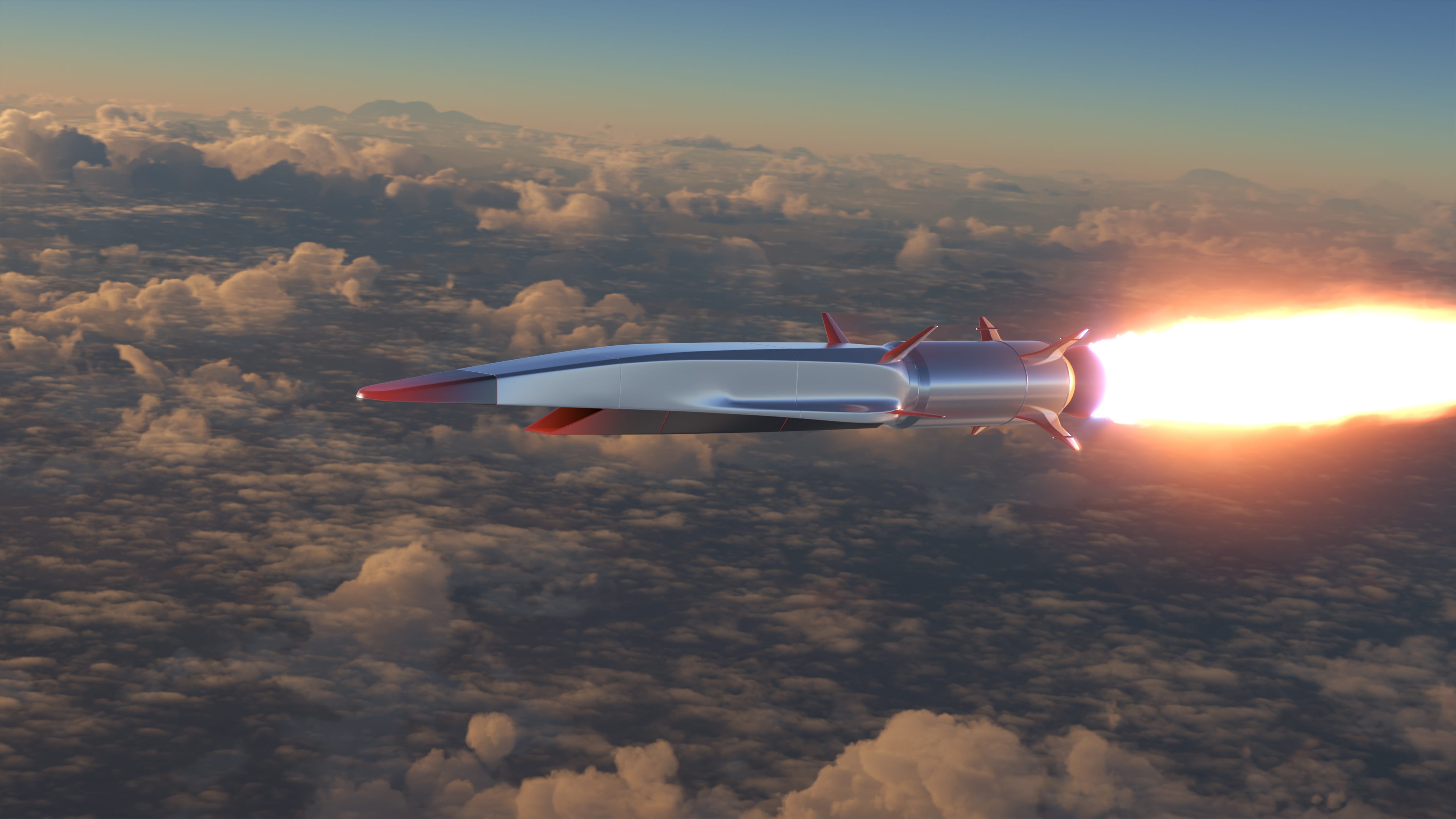
In the recent joint military exercise “Valiant Shield 2026” held last month in the Western Pacific region, the US Army deployed the “Dark Eagle” hypersonic missile on Guam, with the capability to strike targets up to 3,500 kilometers away, covering coastal provinces of China.
According to a report from USNI News, the Pacific Multi-Domain Command (formed by the merger of the 7th Infantry Division and the 1st Multi-Domain Task Force based in Washington) is responsible for operating long-range hypersonic weapons. During the exercise, Admiral Samuel Paparo, the Commander of the US Indo-Pacific Command, reviewed this unit.
Nearly a month after the exercise concluded, the War Department media outlet “Stars and Stripes” released photos from the exercise last Sunday. The message issued by the Pacific Fleet stated that this year’s focus of the Valiant Shield exercise was to conduct combat exercises against land, sea, and air enemies in contested environments.
In recent years, the Valiant Shield exercises have often simulated scenarios related to US-China confrontation. This year’s exercise highlights include the Royal Australian Air Force introducing combat drones, the Japan Maritime Self-Defense Force sinking a decommissioned amphibious assault ship, and the US Marine Corps conducting live-fire exercises with the “Iron Dome” air defense system.
“Stars and Stripes” reported that the photos of the “Dark Eagle” missile were taken in Guam. It is currently unclear whether the missile is still present on the island.
Guam holds a strategic airport and a naval base, with the increasing role of US military forward bases becoming more pronounced, especially in potential conflicts with China. As US territory, Guam can deploy medium-range missile systems without issues of base access and troop placement.
Both the US Army and Navy emphasize that conventional hypersonic weapons enable commanders to quickly respond to long-distance threats, such as those originating from the Pacific region. Both branches are deploying various models of the Common-Hypersonic Glide Body, known as “Dark Eagle” for the Army and “Conventional Prompt Strike” for the Navy.
Last summer, during the US-Australian joint military exercise “Talisman Sabre,” the US Army deployed the “Dark Eagle” missile west of the International Date Line, marking the first time the missile was deployed at sea. In 2024, a simulation of expeditionary deployment of hypersonic missiles was conducted on US soil.
Reports indicate that the US Army highlights the deployment of land-based missile platforms like “Dark Eagle” in various exercises in the Pacific region to prepare for potential conflicts with China. Apart from the Korean Peninsula, motorized units capable of combat operations in coastal, jungle, and maritime areas are increasingly replacing mechanized tactical equipment and tactics.
To counter the Chinese fleet, the US Army aims to introduce new capabilities to mobile missile launch vehicles, extending strike capabilities to targets at sea up to 1,000 kilometers away. The Army has also introduced the Typhon system. Since 2024, this system has been deployed in the Philippines, Australia, and Japan, conducting two SM-6 and Tomahawk missile live-fire exercises in the Pacific region.