
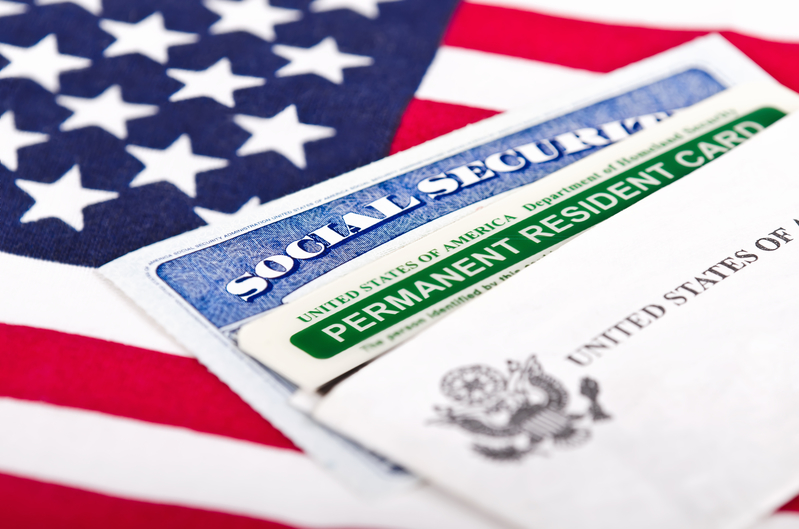
The Department of Homeland Security (DHS) of the United States released a correcting document on September 16, amending a rule related to the registration of permanent residents born in the United States to foreign government employees. DHS stated that when the interim final rule was announced on September 9, during the process of modifying the regulation text, some proof document requirements that were originally supposed to be kept were accidentally deleted, and thus they are now being restored.
This correction issued on September 16 is considered a technical correction and does not alter the substantive policy content of the interim final rule announced on September 9.
This correction came into effect on September 16 and applies retroactively to September 4, aligning with the original rule’s effective date.
According to the revised provisions, eligible applicants must, in addition to submitting the I-485 permanent resident registration application, birth certificates, and other materials, provide official documentation of the parent’s employment by a foreign government at the time of the child’s birth, including their position. If applicable, they must also provide evidence of the parent’s diplomatic status at that time. Additionally, applicants must submit materials such as U.S. entry and exit records and proof of continuous residence.
The rule itself went into effect on September 4 and applies to children born on or after that date who meet the criteria. It expands the previous regulations that targeted children of foreign diplomatic officials to allow children of eligible foreign government employee families to apply for lawful permanent resident status.
The definition of “foreign government employee” here goes beyond just ambassadors or diplomats. The categories listed by DHS include: foreign diplomats certified by the U.S., individuals employed by foreign embassies or consulates who are nationals of that country, individuals employed by a foreign government in an official capacity, and relevant international organization employees recognized by the U.S. with immunity privileges.
However, not all individuals working for foreign governments or related entities are included. For example, personal assistants, drivers, or janitorial staff of foreign government officials, some employees of foreign state-owned enterprises, third-country nationals, general contractors, and individuals coming to the U.S. in a private capacity are excluded from this definition.
Therefore, this rule targets a quite specific group: parents who are not U.S. citizens, children born in the U.S., and at least one parent meeting DHS’s definition of a “foreign government employee” at the time of the child’s birth. Children meeting the criteria can apply for permanent resident registration under the new rules.
This rule does not apply to general foreign immigrant families.
For further reading:
U.S. Tightens Birthright Citizenship Requirements with New Rule Extending Restrictions