
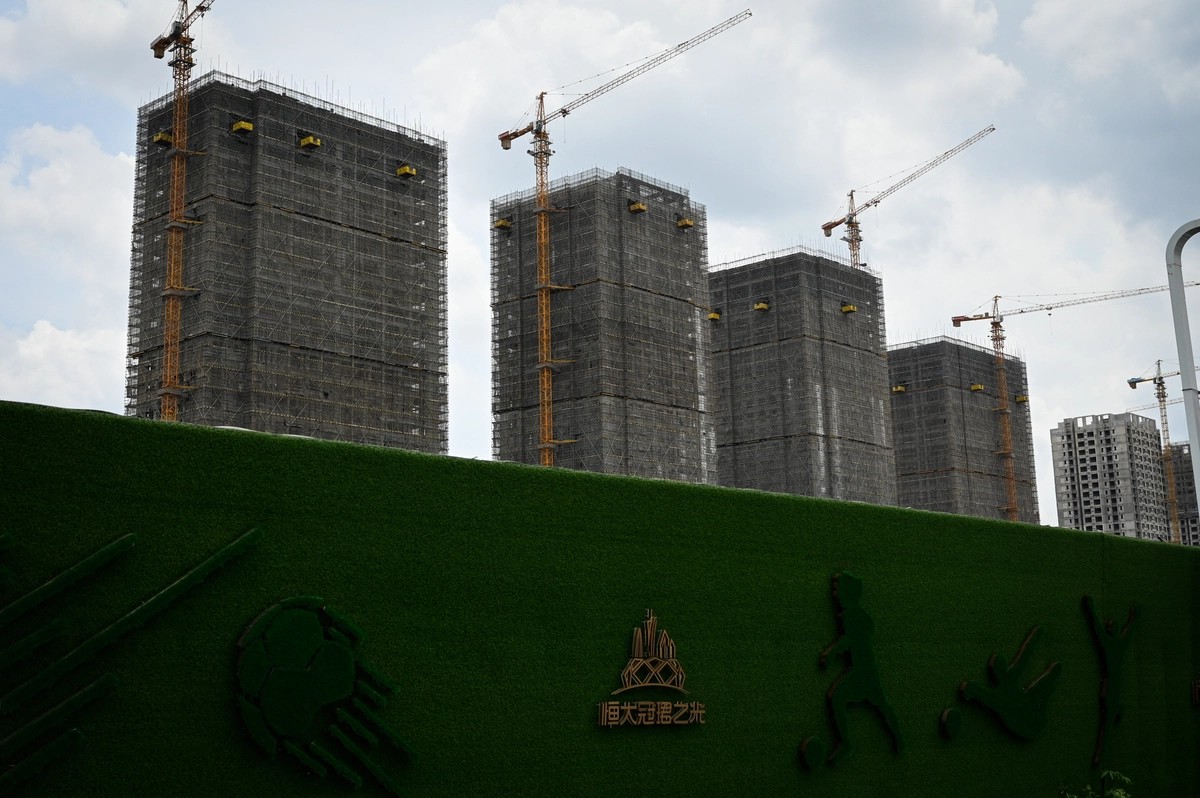
In 2026, Beijing has started to require developers to sell completed apartments rather than projects that are still under construction. This move essentially acknowledges that the decades-long pre-sale model has shifted construction risks onto ordinary homebuyers.
Simultaneously, a policy change extended the maximum mortgage term from 30 to 40 years—aiming to reduce monthly payments by stretching family debt over a large part of their working lives.
This offers a correct perspective on the real estate crisis, as the mainstream narrative misunderstands both aspects. Chinese Communist Party leader Xi Jinping did not suddenly decide to destroy a healthy real estate market; nor does he have any alternative growth engine to rely on, allowing the real estate market to collapse freely.
Instead, he inherited the high leverage machine built by the communist regime over the years through land sales, bank loans, buyer prepayments, and household savings—then abruptly shut it down. In doing so, he turned an inevitable market adjustment into a systemic balance sheet crisis.
Real estate makes up about a quarter of China’s economic activity, with nearly 70% of household wealth tied to housing. Real estate also plays multiple roles like local government fiscal revenue, bank collateral, household savings, and consumer credit foundation. Disrupting the real estate system weakens the economy’s four pillars, dragging down overall demand. Land sales finance local governments, pre-sales finance the construction industry, and mortgages fund both. Once credit stops, all that’s left is debt.
While real estate developers have a bad reputation, high debt is an inherent part of their business model.
In the past decade, Beijing restricted real estate companies from raising funds through stock sales—market access frozen after 2010, briefly reopened around 2013, closed again in 2016, only easing after the crisis at the end of 2022.
This created a contradictory dilemma: local governments rely on developers to purchase expensive land to drive economic growth, yet exclude them from traditional capital markets. They end up relying on bank loans, trust products, buyer prepayments, unpaid supplier accounts, and offshore dollar bonds.
Subsequently, Beijing, citing excessive leverage, abruptly cut off these remaining lifelines. In essence, the state created these precarious balance sheets, then punished the companies burdened with the debt.
This all happened rapidly. In 2020, the “three red lines” on developers’ balance sheets and restrictions on bank real estate loans reshaped financing within months. A structural issue that would typically take a decade to adjust was simplified into a two to three-year administrative task with outcomes of liquidity freezing, construction stagnation, and collapsing buyer confidence rather than orderly deleveraging.
Speculation is only part of the problem; the real issue lies in cost extraction at every stage of the development process. Before groundbreaking, projects incur costs like land acquisition fees, site clearance expenses, and property taxes. By the time the property reaches buyers, various fees like value-added tax, land appreciation tax, corporate tax, and building tax accumulate. While property ownership taxes are trivial, all these upfront costs are eventually passed on to buyers and renters through property prices and rents.
The system prioritizes land sales, construction, and transaction taxes over public services. Local governments heavily rely on real estate revenue, rather than building a stable, service-oriented tax base.
Chinese households bear these costs not out of speculative motives but out of necessity. Gaps in social security, healthcare, education, and pensions force significant savings, while capital controls, low bank interest rates, and volatile stock markets limit viable investment avenues. Therefore, residential property serves multiple functions—retirement funds, children’s education savings, essential for marriage, bank collateral, and inheritance.
The notion that “housing is for living, not for speculation” is a political slogan rather than an economic solution. People will naturally seek assets that retain value until social needs like retirement, healthcare, and education are reliably secured. The government should not shift the major financial risks of life onto families, then blame them for viewing property as an investment.
Housing’s role goes beyond wealth creation—it also constrains citizen compliance. Yet, this aspect is often overlooked.
Apartments are immovable, and urban land remains state-owned. Processes like household registration, mortgage approval, resale rights, and enrollment all must go through national channels. Furthermore, this wealth lacks autonomy; it’s a leveraged asset tied to decades-long mortgages, pledging future income to banks.
This repayment structure is thought-provoking. Local governments collect land taxes at the point of sale, while borrowers take three to four decades to repay their loans. Chinese mortgages even have recourse: if property prices fall below the loan amount and the auction proceeds aren’t enough to cover the difference, borrowers are still liable for the shortfall. Market prices may drop, but the debt remains.
This results in a “mortgage governance” system. Rising property values make households feel affluent, encouraging continued work, consumption, and debt repayment. When property prices fall, paper profits vanish, but the debt remains, leading households to value work more and wait for opportunities. Studies show that housing debt makes families more cautious and less likely to start businesses. It plays a role in labor discipline: bearing the risks of repaying a 40-year loan monthly is daunting.
However, this control is a double-edged sword. Chinese homeowners reportedly focus more on public affairs and their own rights but tend to seek redress within the system rather than confront it, playing the role of “loyal opponents.” A regime that welcomes loyalty but has far lower tolerance for opposition.
In this system, property wealth serves as bait, and mortgages as restraints. Land supply, credit flows, and national policies determine when to lure and when to retrieve.
Why take such risks? Because Beijing controls banks, land, capital flows, planning approvals, and media—and believes it can manage real estate risks through administrative orders. Developers accumulated immense wealth during the real estate boom, but lacked political protection or institutional power to counter any upper-level decisions.
Additionally, central planners believed that manufacturing could replace real estate, underestimating the economy’s dependence on housing.
The economic crisis further eroded Xi Jinping’s fundamental distrust of private capital. He repeatedly warned against the “disorderly expansion of capital,” with real estate developers being easy targets, as their wealth entirely depends on state-owned land, banks, planning approvals, and local officials’ favors—assets the state can reclaim at any time.
For example, Ren Zhiqiang, the former head of a state-owned developer, was sentenced to 18 years for corruption, bribery, and abuse of power. The official charges only revealed part of the truth: this punishment occurred only after years of public dissent transformed into open criticism of Xi Jinping. In this system, wealth doesn’t cross the line itself; but using it to voice independent opinions does.
Xi Jinping’s gamble lies not only in the thriving growth of emerging industries but also in whether the communist regime’s structure can withstand the resulting shock. Economic losses will bypass Beijing and affect homebuying families, local governments, state-owned banks, builders, suppliers, and even the credibility of the CCP. Banks will maintain their ability to repay, local governments will function as usual, people will bear losses independently, and Beijing will retain full control of capital flow.
Three facts are evident simultaneously. First, the old economic model was destined to fade away: declining birth rates, slower urbanization, oversupply of housing, and housing prices surpassing household incomes.
Second, developers are far from innocent. Many of them indulge in reckless borrowing, divert pre-sales deposits, and lie in regulatory documents. Evergrande is not a victim.
However, policies set traps and then trigger them: the nation reliant on land sales to drive growth, encouraging pre-sales and household leverage, then abruptly cutting developers’ credit overnight—all without establishing protected escrow accounts, deposit insurance, or a national housing delivery fund.
Blaming greedy developers alone allows the entire system to escape accountability. Blaming Xi Jinping solely ignores the fact that the land-based financing, pre-sales, and stringent credit controls were established under the rule of Hu Jintao and Wen Jiabao. What Xi Jinping added was the forceful abolition of this system and refusal to allocate national funds to buffer ordinary citizens and the private sector from economic impacts.
Housing demand hasn’t disappeared; rather, the engine driving it has seized. This engine’s power, derived from local government land sales, developer debt leverage, buyer prepayments, bank loan expansions, and steadily rising property prices, has come to a halt.
Xi Jinping isn’t the instigator of all flaws within the system. However, he chose to dismantle the system through political control and administrative deleveraging, underestimating the severe economic and social costs it would bring.
There’s no evidence of an overall plan to lure people into buying homes and deliberately crash the market. This collapse severely impacts local government budgets, banking assets, employment, and even the reputation of the CCP.
A financially strained middle class only makes governance more challenging, not easier. Beijing leans towards controlled prosperity: where household incomes sustain work and consumption but lack sufficient liquid assets to break free from the state’s constraints.
The CCP will not abandon real estate entirely. It will suppress during overheating and support when fiscal revenue is threatened. However, each cycle results in the same outcome: the state profits during a real estate boom, while households suffer losses amid declines.
Reforms in 2026 mainly target new projects. These reforms do not resolve past issues, lacking firewalls independent of local governments, banks, and developers, or addressing problems like land-based municipal financing, social security systems, or incentives for officials’ promotions. These reforms may reduce future risks but cannot restore household confidence or repair the overall economy’s balance sheet.
Xi Jinping’s real estate policies are both economic structural adjustments and power structure shifts. They weaken developers while eroding the fiscal independence of local governments, private enterprises, and middle-class households. Instead, they strengthen central leadership, state-owned banks, and state capital. This is the core issue. Whether other industries can replace real estate in the end is a separate question—even if they can, it won’t absolve the approach to addressing the housing crisis.
Additional credit: Sean Tseng, a journalist at English Epoch Times, also contributed to this report.