
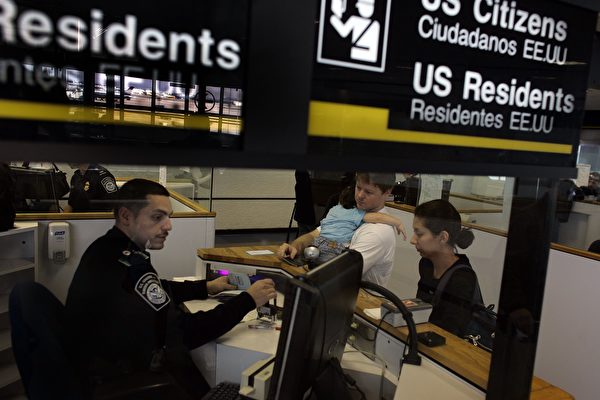
In a recent ruling, the U.S. Second Circuit Court of Appeals declared that border law enforcement officers have the authority to inspect the phones of incoming travelers without a warrant or reasonable suspicion. This decision came in response to an appeal filed by Chinwendu Alisigwe, a lawful permanent resident of the United States. Alisigwe had his phone searched by border officers when he arrived at a New York airport in 2019. Subsequently, evidence found on his phone was used in his prosecution for fraud, leading to a conviction.
According to Judge Steven J. Menashi, “Because phones are considered goods, based on our precedents, the government does not need a warrant or reasonable suspicion to search the property of border crossers.”
As of the time of publication, Alisigwe’s defense attorneys had not provided a comment regarding the ruling.
A spokesperson for the U.S. Customs and Border Protection (CBP), responsible for conducting phone searches, affirmed that the agency has the legal authority to perform electronic device border searches on all individuals entering or leaving the U.S., regardless of nationality. The spokesperson cited national security laws related to counterterrorism, child exploitation, drug and human trafficking, visa fraud, and national security threats as the legal basis for these searches.
Furthermore, the spokesperson clarified that such border searches are limited to examining information stored on the devices at the time of inspection and not extended to other invasive actions.
In the fiscal year 2025, the proportion of arriving passengers in the U.S. whose electronic devices were searched was less than 0.01%.
Alisigwe’s legal team invoked a 2014 Supreme Court ruling during their defense. The ruling established that despite generally allowing warrantless searches, a warrant is required for phone searches unless specific exceptions apply. However, the Second Circuit Court of Appeals found that the border search in this case did not fall within the framework of exceptions.
Judge Menashi emphasized that the government’s authority to conduct warrantless border searches extends beyond seeking contraband or evidence of border violations. This power enables the government to control who and what enters the country, including searching for criminal evidence on the devices of incoming individuals.
Moreover, there were assertions that the Fourth Amendment does not restrict the government’s power to search phones at the border.
Judge Eunice Lee from the Second Circuit Court of Appeals highlighted the need for reasonable suspicion in such searches. She expressed concerns about the broad implications of indiscriminate phone searches on travelers’ privacy and personal data, underscoring the risks of exposing medical records, financial information, private messages, online activity, and other personal data without suspicion.
Critics, including the Knight First Amendment Institute at Columbia University, raised apprehensions about the erosion of privacy rights resulting from the court’s ruling. Scott Wilkens, a senior legal advisor at the Institute, lamented that the decision allows unfounded searches of Americans’ most sensitive information at the border.
Some legal experts, like Orin Kerr from Stanford Law School, speculated on possible appeals to the Supreme Court regarding this case. The outcome of such potential legal challenges remains uncertain.