
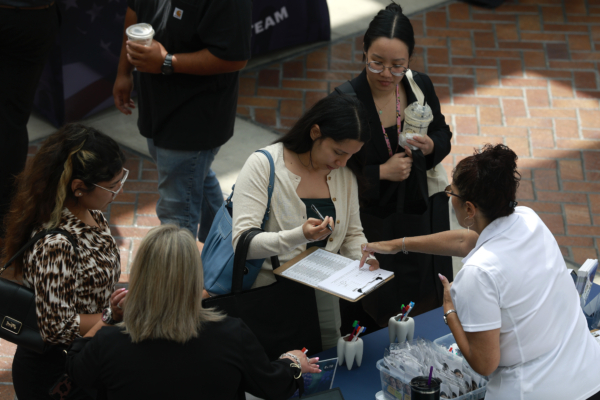
A new study shows that with the rise of artificial intelligence (AI), the initial income and employment prospects of graduates in related fields have significantly deteriorated.
According to a job report released by the Center for Economic Studies of the U.S. Census Bureau on September 10, since the release of ChatGPT at the end of 2022, the likelihood of graduates from the top 10% of AI applications finding employment shortly after graduation has decreased by 5 percentage points.
The research findings indicate that the initial quarterly earnings of these graduates have also declined by approximately 13%. In comparison, graduates in fields with less AI application did not experience an equivalent decrease in income.
Researchers stated that the magnitude of this income decline is comparable to the income losses suffered by graduates during severe economic recessions.
The study analyzed administrative records of bachelor’s degree awards in the United States from 2016 to 2024, revealing that graduates in the three most widely applied AI fields – computer science, computer and information systems, and computer engineering – experienced the largest decline in employment and income after 2022.
The researchers wrote, “Among these graduates, there has been a decrease in those finding immediate employment post-graduation, and those who do secure employment have lower incomes.”
The study shows that the income decline among graduates in the most widely applied AI fields is primarily attributed to two factors: industries traditionally employing these graduates are lowering salaries, and more graduates are transitioning to industries with lower wages.
The authors of the study noted, “About half of the income decline is due to graduates moving from high-wage industries to sectors such as retail, accommodation, and food services with lower wages.”
A recent survey conducted by online learning platform Study.com on 261 university graduates revealed that among respondents with degrees in computer science or information technology, none expressed a desire to have chosen a different profession considering the impact of AI.
In contrast, 43% of graduates in communication, journalism, and media studies indicated they would choose a different profession if they considered the impact of AI. This was followed by 28% in the field of biological sciences and 22% in psychology.
Of all the surveyed graduates, 77% expressed that despite AI’s impact on the job market, attending university was still the right choice, while 22% stated that if they could go back with their current understanding of AI, they would choose a different profession.
An earlier analysis by the Federal Reserve Bank of St. Louis revealed that AI is just a part of the broader issues faced by young workers aged 18 to 24.
A report released by the bank in June indicated that the reduction in job openings from 2023 to 2025 was the primary factor leading to the decline in employment rates and the rise in unemployment rates among young workers.
The increase in AI-related jobs also appears to have marginalized some new entrants to the labor force, especially recent university graduates, although its impact is smaller than the overall decrease in labor demand.
The St. Louis Fed pointed out that at the beginning of 2026, the employment-population ratio of recent university graduates in the U.S. still stood at 79%, but in a labor market characterized by “low hiring, low firing,” new entrants to the workforce find it more challenging to secure their first job.
The author highlighted that AI has not resulted in a decrease in job positions across the entire economy. However, it has raised the barrier for young workers to establish themselves in the labor market, with current employers seeming less enthusiastic about posting job advertisements, sending out job offers, and recruiting.