
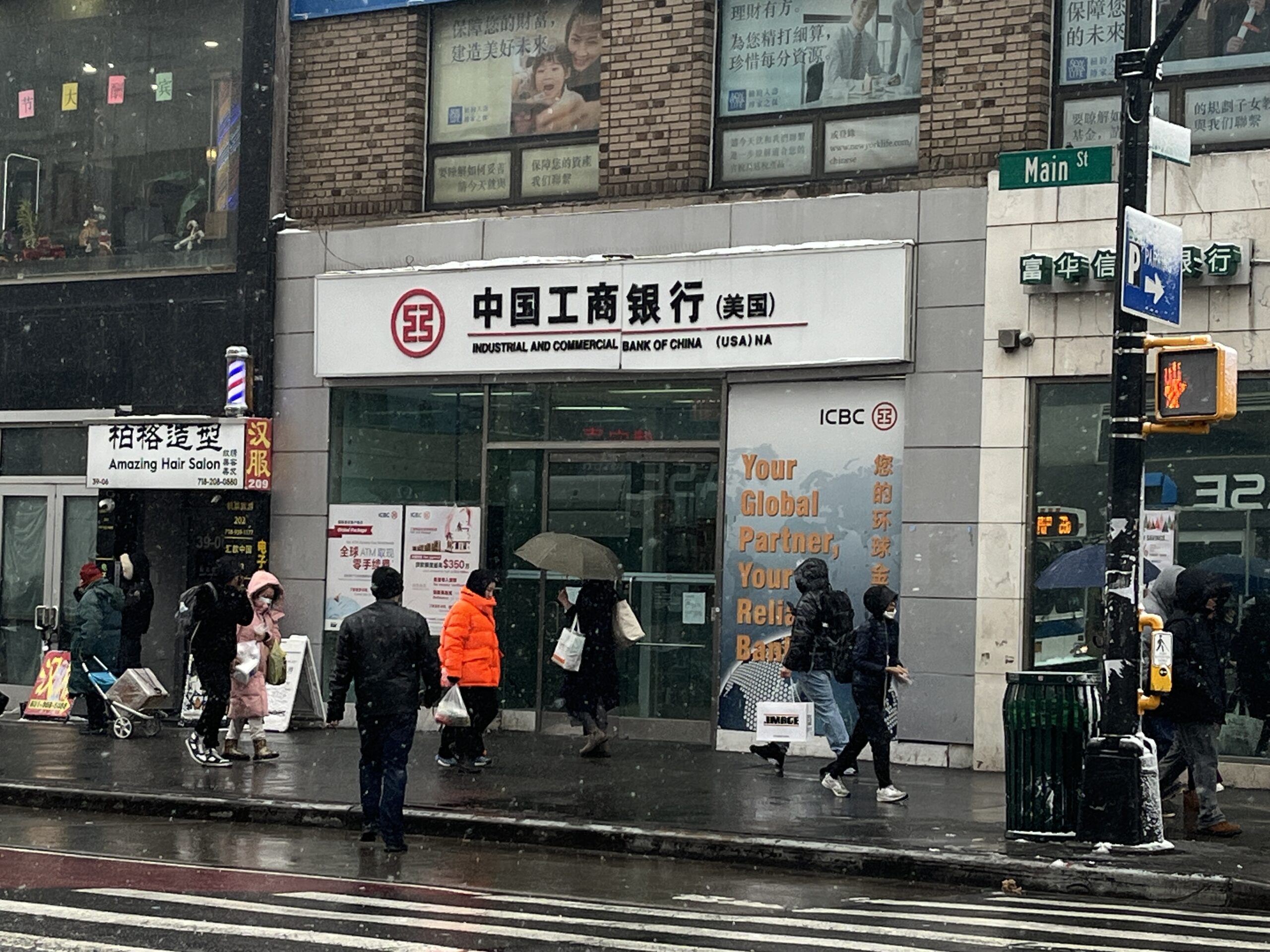
The latest investigation conducted by the International Consortium of Investigative Journalists (ICIJ) in collaboration with 24 media outlets from around the world, under the project “China Capital,” has revealed the clandestine operations of the state-owned bank of China – Industrial and Commercial Bank of China (ICBC), to assist the Chinese Communist Party (CCP) in achieving its geopolitical goals.
The investigation, based on 4.8 million ICBC records spanning from 2005 to 2024, including internal emails, trade confidential documents, files of over 4,000 corporate clients, meeting records, suspicious transaction records, and directives from the ICBC party committee, exposes how the ICBC London branch facilitated financial services for entities related to Russia, Belarusian businessmen under sanctions, accused corrupt dictators, heavily indebted countries, and enterprises associated with the CCP political system, sometimes even bypassing its own sanctions and anti-money laundering regulations.
According to the findings, the ICBC London branch, following instructions from the Beijing headquarters, worked towards specific political goals for the CCP: solidifying alliances, acquiring natural resources, expanding Chinese enterprises’ control over overseas communication, energy, and transportation infrastructure.
During the Russia-Ukraine war, the ICBC London branch assisted the Russian mining giant Norilsk Nickel in finding financing options. Norilsk Nickel, closely tied to the Russian government and a key player in Russian mining, was under U.S. sanctions.
Internal documents reveal discussions within the London branch leadership to provide financing in Chinese yuan to avoid U.S. dollar transactions. Norilsk Nickel proposed building a smelting plant in China and labeling products as “Made in China,” a proposal fully supported by ICBC.
Clients of the ICBC London branch also included a bank owned by the daughter of the President of Azerbaijan, a state-owned oil company controlled by a close associate of Angola’s former dictator, and a Chinese company collaborating with a Belarusian enterprise sanctioned by the European Union.
The investigation discovered that despite inquiries from regulatory authorities in over ten countries regarding the compliance and anti-money laundering practices of the ICBC London branch, it continued to cater to these high-risk clients, sometimes making special arrangements.
In early 2019, Huawei faced multiple charges including violating sanctions against Iran as leveled by the U.S. Department of Justice. Shortly after, the ICBC London branch swiftly facilitated the transfer of $1.3 billion in “emergency cash” for Huawei.
While this transaction itself was not illegal, the failure to notify the ICBC internal financial crime prevention department beforehand led to strong disapproval within the organization.
The compliance issues in ICBC’s overseas operations have also attracted scrutiny and penalties from multiple national regulatory authorities and courts. The investigation reveals that since 2014, courts and regulatory bodies in eight jurisdictions handed down unfavorable judgments or penalties to ICBC and its overseas branches, totaling at least $96 million. Internal documents indicate that senior ICBC officials were aware of compliance issues in branches in the UK and other countries.
Furthermore, the investigation exposes ICBC’s practice of imposing harsh loan conditions on some impoverished African countries, exacerbating their economic and fiscal woes.
In 2011, ICBC provided a $285 million loan to Zambia’s state-owned power company, ZESCO. By 2018, Zambia found itself in a sovereign debt default crisis due to factors including drought, prompting ICBC to initiate the collection of the initial $20 million.
Prior to this, ZESCO had paid a $15 million “management fee” to ICBC for another loan. At that time, ZESCO had no choice but to open an account at the London branch, where ICBC’s headquarters instructed UK staff to deduct funds from the ZESCO account and transfer them to Beijing before completing the required customer review.
The investigation points out that beyond the Zambian government, few outsiders are aware of how much Zambia owes ICBC and other Chinese banks. The lack of transparency in debt obligations complicates debt relief negotiations for Zambia, which saw a significant currency devaluation and soaring prices during the 2020 financial crisis.
The investigation also uncovers around 200 loan agreements in ICBC London branch internal documents, with loan amounts ranging from $3 million to $400 million, involving borrowers such as the Zambian government, companies from nearly 30 countries including the UK, South Africa, and Luxembourg, as well as some offshore financial centers, the majority engaged in commodity trading, energy, and financial services industries.
The investigation concludes that while ICBC operates as a commercial bank, it functions more like a development bank, serving the CCP’s overseas expansion and infiltration efforts.
In line with the CCP’s strategy for overseas expansion and infiltration, ICBC assists Chinese state-owned enterprises in obtaining overseas contracts, providing loans for the acquisition of foreign transportation, energy, and telecommunications infrastructure. Clients include enterprises and individuals charged by foreign courts or regulatory bodies for corruption, environmental violations, theft of trade secrets, and engaging in harmful market practices. Additionally, ICBC extends loans to foreign government entities to aid in China’s economic diplomacy.
The investigation suggests that these activities position ICBC as a crucial tool for expanding Chinese financial and economic influence overseas, with loan activities resembling a long-standing lack of transparency, similar to other Chinese state banks.
When faced with these accusations, the Chinese authorities, as usual, deny any wrongdoing and refuse to respond to multiple interview requests made by the ICIJ.