
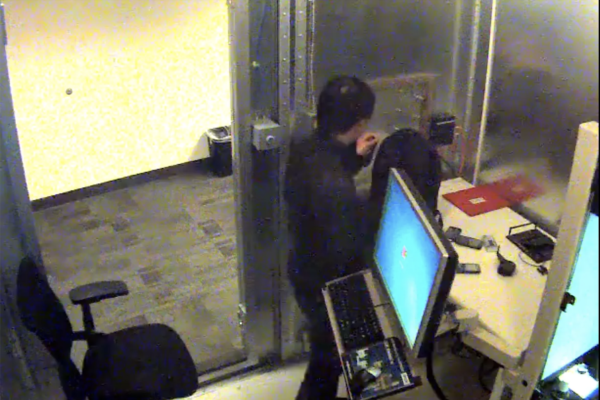
This week, the criminal case against Huawei has entered a crucial stage focusing on allegations of stealing commercial secrets. The prosecution has summoned former Huawei employees and witnesses from T-Mobile, presenting internal emails, employee data, and surveillance footage from T-Mobile labs to the jury in an attempt to prove that Huawei obtained technology from other companies in the U.S. and sent it back to China.
John Martin, a former base station expert at Huawei’s U.S. subsidiary Futurewei, testified on the 15th, stating that he used his connections in the U.S. tech industry to find potential partners for Huawei. However, he found the information flow during the contact between the two parties different from the usual business cooperation models he was familiar with, showing a “one-way flow” where Huawei obtained information but the collaborations did not materialize.
For instance, Quintel, a company with antenna technology, signed a confidentiality agreement with Huawei and shared patent technology, yet they did not end up collaborating. The prosecution, however, claims that Huawei later put forward related patents and developed products, selling equipment worth millions of dollars.
Martin admitted that such experiences ultimately led him to believe that staying at Huawei would damage his professional reputation, so he decided to resign.
In 2009, Martin was one of the initial five employees at Huawei’s office in Santa Clara, California, which was primarily responsible for research and development work. After 18 months of working there, the number of office staff had increased to around 300, but they still had not established the research and development lab he had initially hoped for.
Martin also mentioned his experience visiting Huawei’s office in China, where security measures were extremely tight, with no mobile phones allowed inside and laptops’ cameras taped shut with electrical tape. During a visit to a laboratory in Shanghai at lunchtime, he found that all employees’ desks were almost empty, with all items locked in safes.
Upon returning to the U.S., Martin questioned Sonny Lu, his supervisor at the Santa Clara office, about the reasons behind these strict measures. Lu explained that it was to prevent employees from taking company data when they leave and said: “Your value to the next employer depends on what you take from your previous employer.”
Martin also noted that in the Shenzhen lab, he saw dismantled equipment from Ericsson and Alcatel-Lucent on workbenches. This indicated that Huawei’s engineers were engaged in hardware reverse engineering rather than independent technological development. He was surprised by the open conduct of potential infringing reverse engineering by employees.
On September 15th and 16th, the prosecution focused on another key point: T-Mobile’s automated phone testing equipment named “Tappy” developed in Washington state. Huawei had sought authorization but was denied, eventually gaining access to T-Mobile’s lab under the pretext of testing their own phones.
Internal emails revealed that despite knowing T-Mobile’s reluctance to disclose technical details, Huawei still requested its engineers to obtain specifications such as the range of motion, positional accuracy, and repeat positioning accuracy of Tappy’s mechanical arm. The situation escalated further:
A witness responsible for lab security and equipment management at T-Mobile testified that in 2013, Huawei employees violated lab access rules. At the time, he saw three Huawei employees in the lab, some of whom were not approved for entry. The next day, one of the employees, Frank Wang, returned to the lab.
Surveillance footage showed Wang taking photos of Tappy with a camera. Several weeks later, another Huawei employee, Adam Shong, was caught on camera removing a detachable component from Tappy and placing it in his black backpack. When questioned about the whereabouts of the component by T-Mobile, Shong claimed ignorance.
T-Mobile ultimately sued Huawei in 2014, leading to a $4.8 million compensation in 2017.
In the opening statement, the prosecution accused Huawei of fostering a “culture of crime and corruption” and linked multiple cases of stolen commercial secrets involving companies like Quintel, T-Mobile, Cisco, Fujitsu, and CNEX Labs, under the core legal basis of the Racketeer Influenced and Corrupt Organizations Act (RICO).
RICO was originally designed to combat organized crime like the Mafia. In the context of a commercial criminal case, the prosecution applied this law to prove that the defendant did not merely engage in isolated, individual illegal acts by employees but systematically carried out at least two transnational crimes through an “enterprise organization” over a specific period.
In this case, the prosecution merged the different acts of theft against various victim companies over different years into a 20-year-long “pattern of ongoing criminality,” directly holding Huawei’s top executives and the entire company criminally responsible. If the RICO charges are upheld, the consequences of organizing RICO crimes (including significant criminal fines, asset seizure, and severe transnational business sanctions) would be much more severe than a typical commercial lawsuit or single civil infringement.
(Note: Reporters Nick Zifcak from The Epoch Times and Juliet Song from NTD contributed to this article.)