
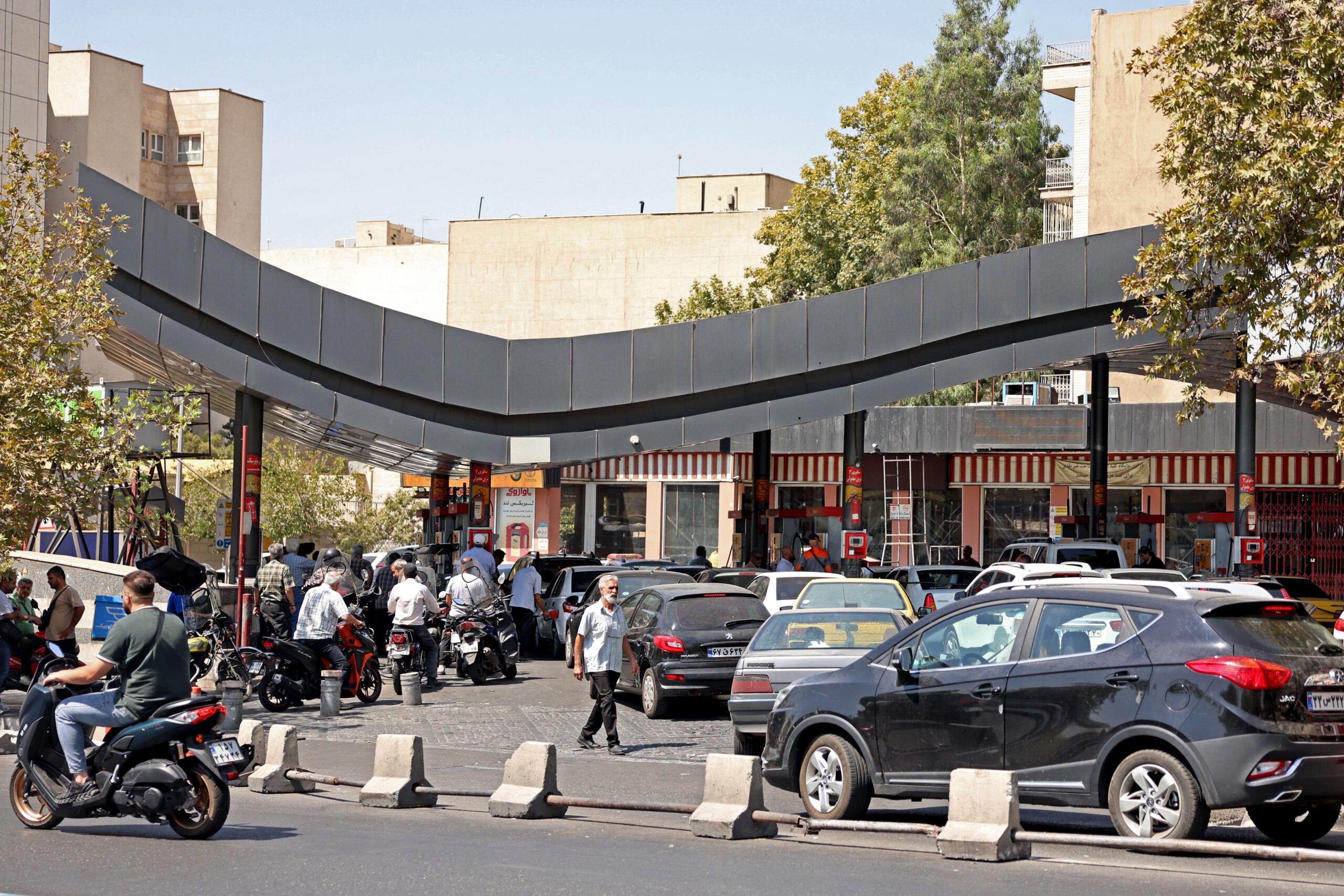
Iranian government vows to counter the US blockade on the Strait of Hormuz by increasing land trade, but so far their plans have faced obstacles at every turn.
According to The Wall Street Journal, hundreds of Iranian truck drivers are currently stranded at the border between Iran and Pakistan, unable to transport goods to neighboring countries. They report facing increasing bureaucratic hurdles and high costs, many of which are caused by the Iranian government. Similar situations are also unfolding at the land borders between Iran and Turkey, Turkmenistan, and Afghanistan.
Due to delays, a large quantity of stranded apricots has rotted and spoiled. Truck drivers reveal that lucrative cargo such as iron ore, cement, and bottled gas are also stuck at the Pakistan and Afghanistan borders.
The economic battle in the Persian Gulf region largely depends on who can transport export goods through land routes instead of the Strait of Hormuz. Some countries have found alternative solutions, but Iran’s efforts are being frustrated while the US is isolating Iran through new sanctions.
Iran’s sanctioned airline, Mahan Air, announced the suspension of flights to Oman and Turkey last Wednesday. Mahan Air’s operations include both cargo and passenger services.
The US blockade has also hindered Iran’s import of essential goods, with 70% of these goods typically needing to pass through currently blocked ports.
Iran is attempting to increase trade through other channels. According to Iranian officials, cargo transport via the Caspian Sea has increased by 70% in the past 5 months. Data from commodities provider Kpler and Iranian trade websites show that Iran is importing large quantities of wheat, corn, and edible oil from Russia.
As reported by Iran’s official media outlet Tehran Times, since the blockade began, the frequency of freight train services from Tehran to Xi’an, China, has increased from once a week to every three to four days. Iran imports industrial machinery, electronic products, and automotive components from China.
Iran’s blockade is not solely stemming from the US. Last weekend, Iraq accused Iran of staging attacks on Saudi Arabia through its territory, leading to the temporary closure of a freight terminal at the Iranian border. According to the central fruit and vegetable market in Tehran, trucks carrying Iranian onions bound for Iraq were forced to turn back on Sunday.
The land border situation in Iran has long been chaotic. This summer, the number of trucks passing through Pishin, one of the main transit points to Pakistan, has increased from around 40 a day to 130, overwhelming customs officials.
At the Iranian side transit point leading to Turkey, delays are up to 20 days. The local civil organization, Baloch Human Rights Documentation Network, claims that there are always around 700 trucks queued up at the main transit point to Pakistan.
According to a message released by the Truck Drivers Union on social media, Iranian truck drivers attempting to enter Pakistan express fears of being stranded for days without access to water, food, and sanitation facilities. The union alleges that Pakistani authorities are charging each Iranian driver over $10,000 in transit fees, an unprecedentedly high amount.
The escalating costs are exacerbating Iran’s increasing inflation. According to the Iranian official statistics bureau, the food inflation rate surged to 128% in August.