
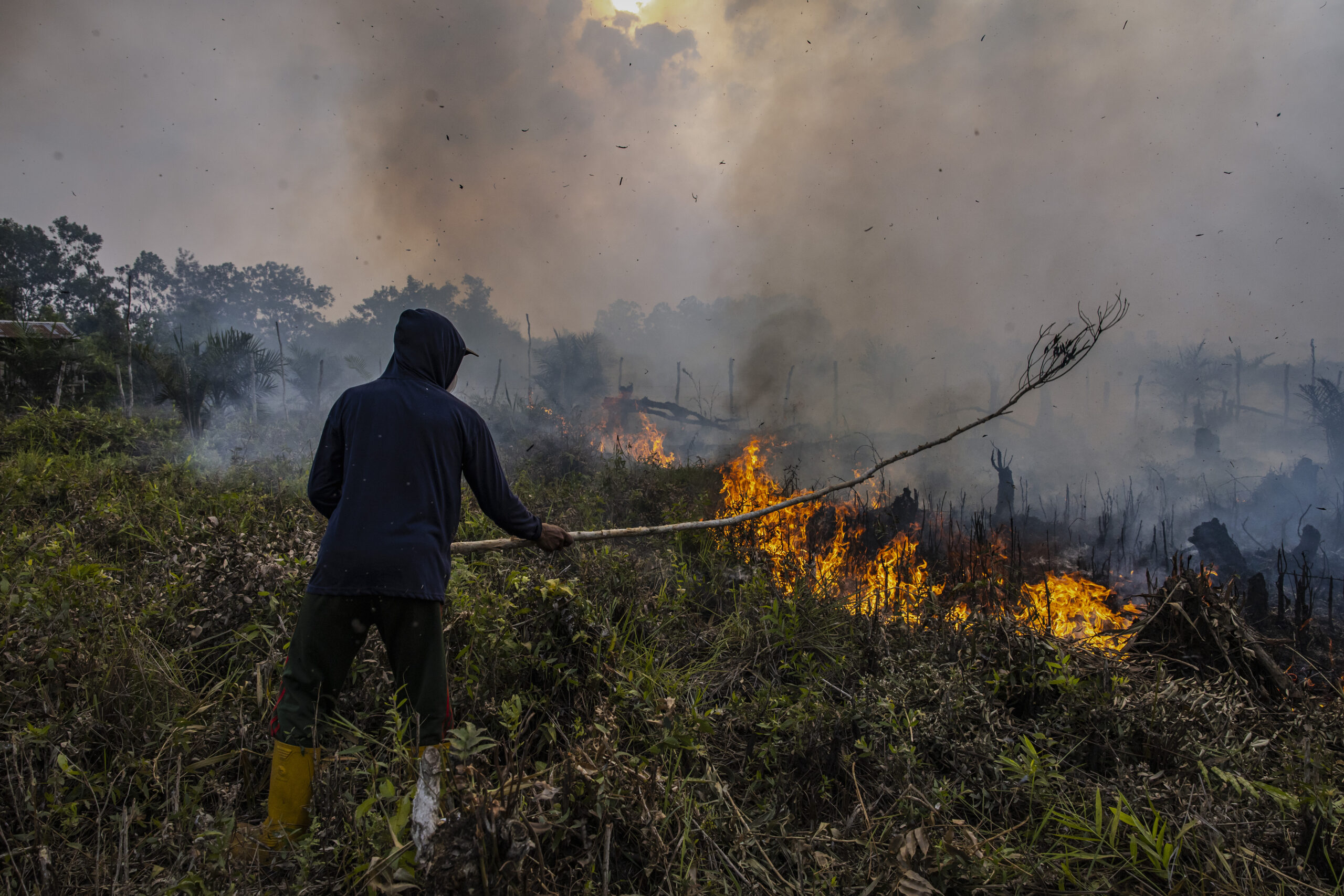
Indonesia is currently facing its most severe forest and wildland fires in 11 years under the conditions of a phenomenon known as “super El Niño,” characterized by high temperatures and drought. The regions most affected by the fires are Borneo and Sumatra, with smoke from Indonesian fires also impacting neighboring countries Singapore and Malaysia.
In response to the ongoing wildfires, Indonesian President Prabowo Subianto emphasized a “zero tolerance” approach towards individuals or businesses identified as the cause of the fires during a cabinet meeting.
A statement released by the Indonesian Presidential Palace on Wednesday, September 16, stated that Prabowo has requested the Secretary of State and Minister of Law to draft more stringent legal sanctions and consider amending laws to classify such actions as “ecological terrorism.”
He also instructed local governments to immediately revoke exemptions allowing small-scale farmers to clear land with fire and demanded that the police launch criminal investigations into companies suspected of violating fire prevention regulations.
On the same day, Indonesian Minister of Forestry Raja Juli Antony warned that the rainy season is forecasted to be delayed until late October or early November, potentially prolonging the wildfires until early November. He urged all sectors to refrain from using fire to clear land during extreme drought to prevent exacerbating the fires.
The Indonesian environmental organization YKAN estimated that approximately 600,000 hectares of land were affected by fires in August. Indonesian government data shows that from January to July this year, about 202,000 hectares of land were destroyed by fires.
The Fire Emissions Watch under the EU Copernicus Climate Change Service estimated that Indonesia’s fire emissions from September 1 to 7 amounted to 19.7 million tons, surpassing one-third of the global fire emissions during the same period.
According to the Indonesian Ministry of Health, as of September 9, more than 12.5 million people in seven provinces were exposed to haze from the fires. The number of respiratory illnesses related to wildfire pollution has reached 113,336 cases. West Kalimantan province’s capital of Pontianak on Borneo is one of the areas most severely affected by the haze.
Local residents have reported difficulty breathing even when wearing masks due to the thick smoke. The grassroots volunteer group “Rumah Oksigen” has been going door-to-door to provide oxygen tanks to residents and firefighters experiencing respiratory distress.
Indonesian authorities have deployed over 50 aircraft for water bombing and cloud-seeding operations, with Japan sending three CH-47 Chinook helicopters to assist in firefighting efforts in Indonesia.
Malaysian Deputy Prime Minister Ahmad Zahid Hamidi stated that during his visit to Jakarta from September 17 to 20, he will discuss the transboundary haze issue with Indonesian Vice President Jusuf Kalla. Malaysia aims to reduce the risk of recurring haze through diplomatic cooperation and preventive measures.