
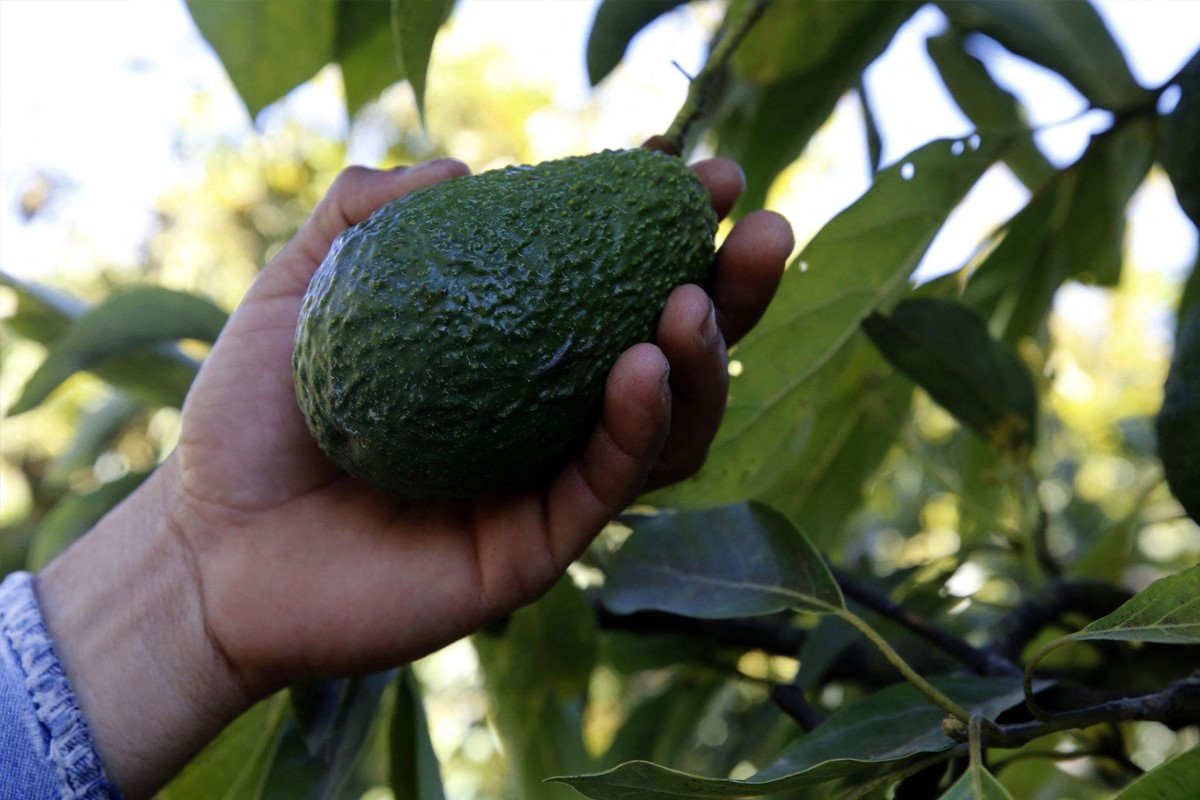
In the world of science, it has long been acknowledged that avocado trees have a unique way of life. Each avocado tree’s flower is both male and female (hermaphroditic), possessing both stamens and pistils at the same time. Moreover, avocado trees exhibit a phenomenon known as “synchronous dichogamy,” where they switch the gender activity of their flowers within the same day, categorizing them into two types: Type A and Type B.
The latest research by American scientists has uncovered the genetic mechanism behind the gender switching process in avocado trees. This discovery holds the promise of aiding breeders in faster cultivation of new avocado varieties.
“If each plant is in both male and female states simultaneously, there will be no pollen exchange,” said Graham Coop, an evolutionary and ecology professor at the University of California, Davis, and one of the co-authors of the study. “It is due to the alternating and synchronized opening of male and female flowers that avocados can constantly exchange and utilize pollen throughout the day.”
Published in the Proceedings of the National Academy of Sciences (PNAS), the study identified a gene that determines the flowering type in avocado trees. This gene allows breeders to discern between Type A and Type B without having to wait for the trees to flower, thereby expediting the breeding selection process.
For instance, Hass avocados exhibit female flowers in the morning and male flowers in the afternoon, while Bacon avocados show the opposite trend. Therefore, farmers often plant both types in orchards simultaneously to increase pollination success rates.
The challenge lies in the fact that before avocado trees bloom, scientists and farmers cannot determine which category they belong to, a waiting process that could last up to 15 years.
The research team froze leaves of different avocado varieties and sequenced their DNA, eventually pinpointing a gene that triggers the “gender switch” in plants.
The team expressed that this finding could assist in identifying suitable tree pairings earlier, fostering the cultivation of new varieties that are more resilient to climate change and have higher yields.
To monitor the process of how the gender genes transform, the main author of the study, evolutionary geneticist Jeffrey Groh, and another researcher camped in the center of an avocado orchard for several days. Every few hours, they collected flowers from a tree in different stages of opening and closing, stored the RNA cellular material, and examined the variants of the “gender gene.” The results revealed that this fluctuation was consistent with the flower’s opening stages.
“It’s fascinating to see such a familiar plant exhibit such intriguing and entertaining reproductive behavior,” Groh remarked.
This unique flowering pattern of avocados has been present for over 42 million years. However, questions regarding avocado reproduction date back to the 1920s when botanist A.B. Stout noted the phenomenon of “daily alternation of male and female roles” in avocado trees.
Coop highlighted that several dozen plant species closely related to avocados also possess the same mating system. Previously, their team discovered that walnuts and hickory nuts also showcase alternating male and female roles, although these nuts are not closely related to avocados.