
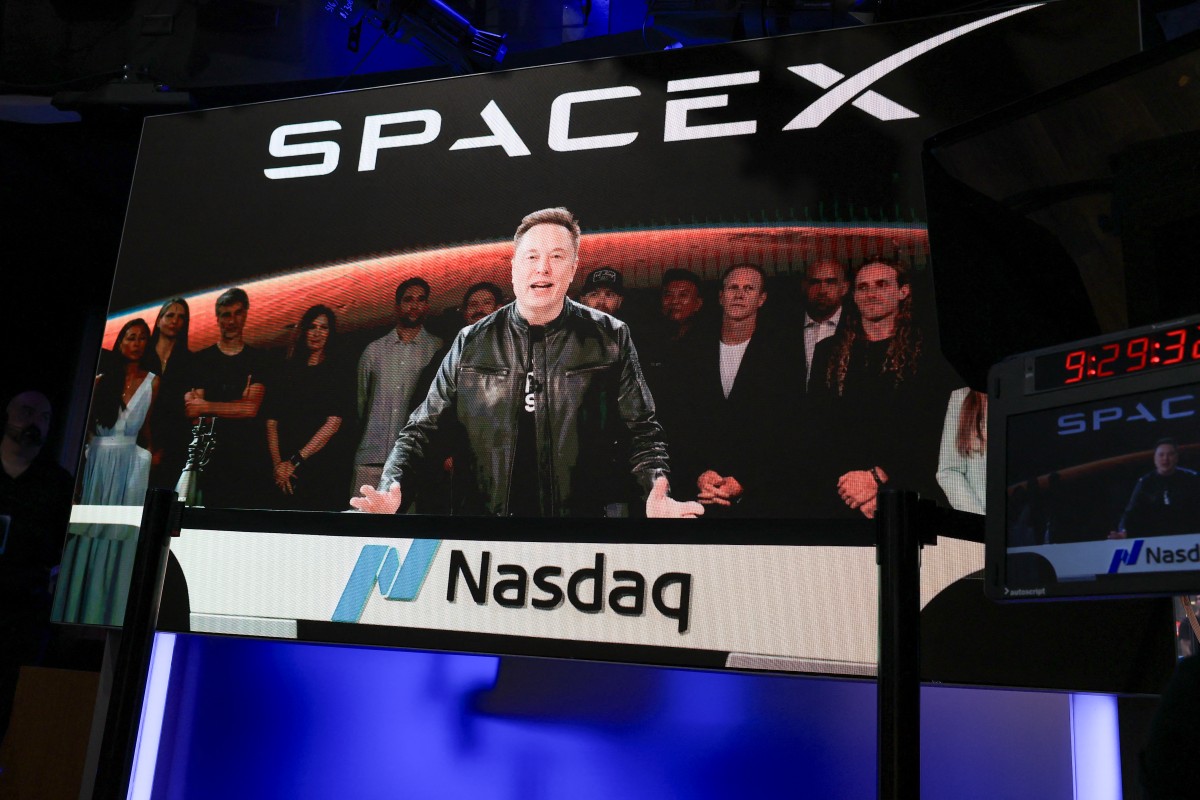
SpaceX generated buzz in June with its much-anticipated initial public offering (IPO) and on Tuesday (August 4th), it released its first quarterly earnings report, surpassing Wall Street expectations.
The technology giant owned by tech mogul Elon Musk reported a revenue of $7.8 billion, exceeding the analyst average expectation of $6.81 billion, according to a Bloomberg survey.
The company also disclosed that its artificial intelligence operations incurred a loss of $1.26 billion, performing better than the market’s general expectation of a $2.39 billion loss.
The highly anticipated quarterly performance of SpaceX marked a conclusion to the roller-coaster ride of stock prices the company has experienced since its IPO. SpaceX raised a staggering $86 billion in the biggest IPO in history back in June. However, shortly after, SpaceX’s stock prices fluctuated dramatically, facing a broader AI stock sell-off that led to a devaluation of over $1 trillion, causing Musk to lose his position as the world’s richest person.
Later this week, SpaceX stocks worth over $100 billion will become eligible for sale for the first time, potentially exerting further downward pressure on stock prices.
SpaceX announced a loss of 9 cents per share on Tuesday, lower than Wall Street’s expectation of 24 cents.
With a market value of approximately $16 trillion, SpaceX rivals many super companies and even surpasses Tesla, the electric vehicle manufacturer under Musk’s umbrella.
Although Musk has proposed numerous growth plans, including establishing data centers in space, these come with high costs and great risks, possibly taking years to materialize. However, given Musk’s track record of disrupting established industries, Wall Street analysts continue to hold a positive outlook on SpaceX.
SpaceX stated that capital expenditures for the quarter reached $18.37 billion, falling below analysts’ anticipated $18.58 billion.
The company claimed that its only profitable business, the “Starlink” satellite internet service, had 12 million users in the second quarter, slightly lower than analysts’ expected 12.19 million. “Starlink” utilizes over 10,000 satellites in low Earth orbit to provide broadband services to consumers, governments, and businesses.
Musk’s decision to take SpaceX public is closely tied to the company’s commitment to expanding space data centers, as ground data centers face increasingly stringent resource and energy constraints. This costly and yet-to-be fully validated strategy involves launching a satellite network that relies on solar power to sustain energy, and processing data in orbit before transmitting it back to Earth.
SpaceX has inked a series of agreements to sell its existing computing capacity. In June, Google, a subsidiary of Alphabet Inc., agreed to pay SpaceX $920 million monthly as part of a cloud service agreement, extending until mid-2029. SpaceX has also signed similar agreements with Anthropic PBC.
According to a recent circulating video of NVIDIA CEO Jensen Huang on social media, when asked about the future development of the AI industry, he highlighted Musk’s competitive advantage.
“The cost of collecting real-world data is extremely high, and Musk has a huge advantage,” he said.
Huang referred to Musk’s Tesla, which boasts one of the world’s largest vehicle fleets, continuously generating massive amounts of driving data. Furthermore, Tesla’s AI computing infrastructure has deployed a significant amount of NVIDIA hardware. With the combined advancement of xAI, Tesla’s autonomous driving, and Optimus humanoid robot projects, Musk has secured a significant advantage in the AI era.