
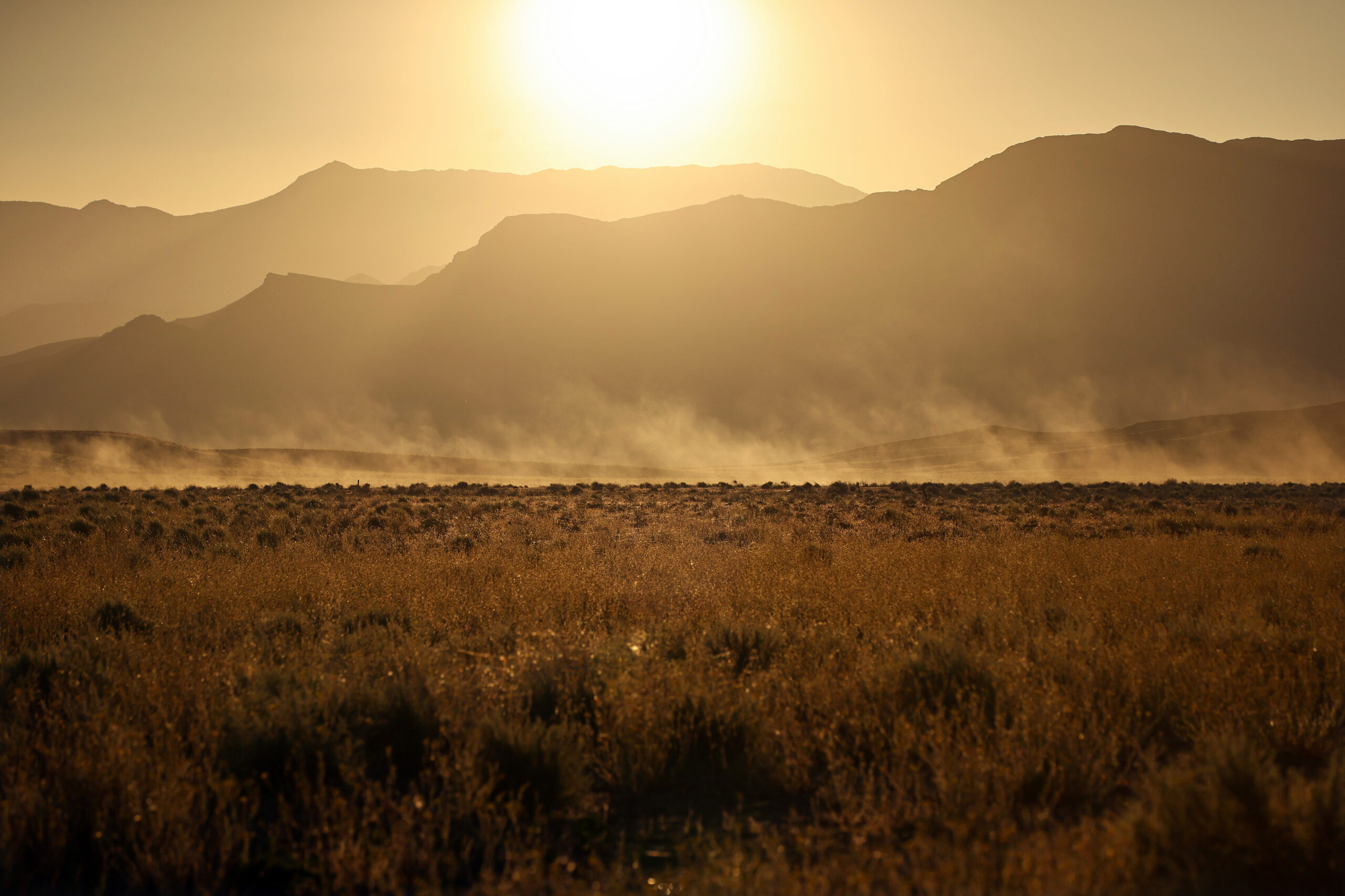
Death Valley in California, USA, is one of the hottest places on Earth, with temperatures soaring above 50 degrees Celsius in the summer. Despite the intense heat, few plants can survive in this harsh environment. However, there is a unique plant that has the ability to cool its leaves, allowing it to thrive and adapt well in such extreme conditions.
This plant is scientifically known as Tidestromia oblongifolia, a shrub-like native flowering plant also referred to as Arizona honeysweet.
Recently, a study published on the preprint website bioRxiv revealed that the key to this plant’s survival in extremely high temperatures lies in its significant ability to lower the temperature of its leaves, keeping them much cooler than the surrounding air.
Its remarkable cooling capability allows it to thrive even in temperatures as high as 140 degrees Fahrenheit (60 degrees Celsius), which is at the edge of what complex eukaryotic organisms can withstand.
To understand how this plant copes with high temperatures, researchers from Michigan State University collected seeds from 223 wild plants within the species’ distribution range, including populations from Death Valley.
They then subjected over 1,200 cultivated seedlings to harsh simulated high-temperature environments, gradually acclimating them and exposing them to 6 to 8 hours of 60-degree Celsius heat daily for over a week.
However, not all seedlings survived. Depending on genetic factors, their survival rates ranged from less than 2% to over 34%, indicating some individuals are better adapted to extreme heat than others.
Researchers recorded through infrared cameras that on the hottest days, some leaves’ temperatures were over 10 degrees Celsius lower than the surrounding air, with temperature differences reaching up to 13 degrees Celsius in extreme cases.
Even after enduring 60-degree Celsius heat for eight consecutive days, surviving plants could maintain leaf temperatures between 54 and 59 degrees Celsius, slightly below the estimated upper limit of tolerance for complex eukaryotic organisms.
This study demonstrates that this plant not only withstands higher temperatures than other plants but also actively avoids elevating temperatures through cooling mechanisms.
Researchers explained that plants with lower leaf temperatures activate relevant pathways to maintain the tiny stomata on leaves open, allowing water to evaporate from the leaf surface, producing a cooling effect similar to sweat evaporation on human skin.
To verify if this cooling mechanism is indeed crucial for Arizona honeysweet’s survival, researchers artificially closed the stomata and found that doing so hindered the cooling process.
Lead author of the study, postdoctoral researcher Joanna Feehan, told ScienceAlert that “part of transpiration is water evaporation through stomata, so we are confident that this is a crucial part of their cooling mechanism.”
As global temperatures continue to rise and more crops are susceptible to heat stress, Arizona honeysweet has found a way to survive in high-temperature environments, which are typically lethal to other plants, animals, and fungi.
Feehan stated, “Understanding these survival mechanisms could provide unique methods for crops to better withstand heatwaves.”
The National Park Service of the United States notes that Death Valley is renowned for being the hottest and driest location in North America. The area receives less than 2 inches (5 centimeters) of average annual rainfall, only a fraction of what most desert regions receive.
On July 10, 1913, Furnace Creek in Death Valley National Park recorded a scorching 134 degrees Fahrenheit (57 degrees Celsius), the highest global temperature ever documented.
Previous reports by Epoch Times indicated that Death Valley’s extreme temperatures are attributed to several unique environmental factors, with its low elevation being a major contributor. Located far inland in the U.S., Death Valley is 400 kilometers away from the nearest major water source, and some parts are below sea level. Coupled with nearby mountain ranges blocking moisture from the Pacific, the basin’s atmosphere is predisposed to heat buildup.
Other factors exacerbate Death Valley’s high temperatures, including its narrow shape hindering airflow, sparse vegetation incapable of absorbing sunlight, and proximity to desert regions.