
New York City Councilman Phil Wong from the 30th district has written a letter to Governor Ho Chu on July 17, urging the state government to immediately impose a statewide moratorium on the approval of “Battery Energy Storage Systems” (BESS) proposed in residential areas, schools, daycare centers, parks, and other sensitive locations until an independent safety and environmental impact assessment is completed.
In his letter, Wong expressed his support for Governor Ho Chu’s recent decision to halt the issuance of new permits for Artificial Intelligence (AI) data centers to assess their impact on energy and the environment, believing that the state government should adopt a similarly cautious approach towards lithium-ion battery storage facilities.
He pointed out that in recent years, fires or environmental concerns have occurred at battery storage facilities in locations such as Moss Landing in California, East Hampton and Warwick in New York, highlighting the risks that still exist in the technology that warrant further in-depth research.
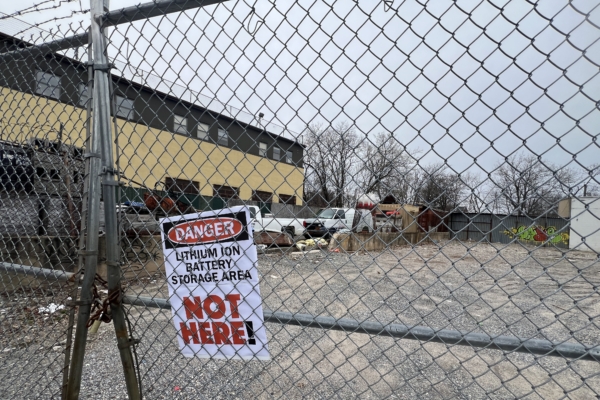
Wong mentioned that the NineDot Energy storage facility in the Midtown Village area of the 30th district is currently suspended from construction due to two stop-work orders issued by the New York City Department of Buildings (DOB), including the highest-level “stop work order with heavy penalty.”
Wong stated, “If the state government can halt the approval of AI data centers for a deeper understanding of their impacts, then similar measures should be taken for lithium-ion battery storage facilities being built near residential areas, schools, and daycare centers. The government has a responsibility to fully understand the relevant risks before approving projects that may have significant impacts on public safety and the environment.”
He urged the state government to suspend the approval of new storage facility projects during the review period, conducting a comprehensive review that includes safety distances between facilities and residences, environmental testing, emergency response capabilities, developer responsibilities, and long-term monitoring mechanisms in the event of battery fires or other accidents.
Wong emphasized, “Public safety must come first. Residential communities should not be experimental sites for technologies that have caused fires, evacuations, and environmental pollution elsewhere. We should hit the pause button, complete an independent assessment, ensure all safety measures are in place, and then decide whether to proceed with more projects.”