
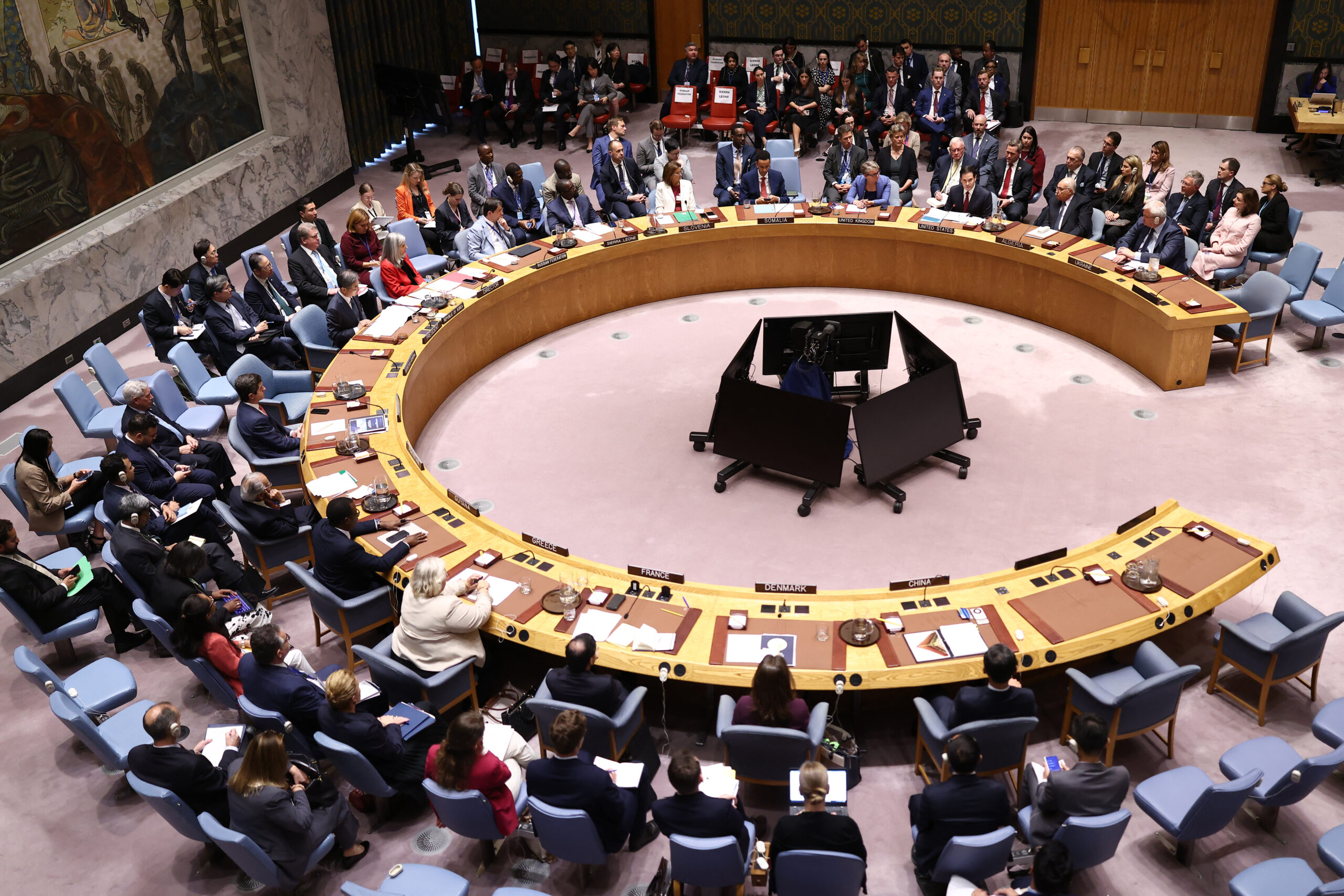
On Thursday, September 17th, the United Nations Security Council voted to extend the term of the expert panel on Iran sanctions. The US draft received 11 votes in favor but was vetoed by Russia and China, with Pakistan and Somalia abstaining. The lack of consensus on the panel’s members over the past year has hindered its functioning, leading to setbacks in the UN’s efforts for independent sanctions oversight.
The resolution drafted by the US aimed to extend the expert panel’s term by a year until September 2027. The panel’s role is to investigate whether countries are complying with UN sanctions on Iran, collect potential evidence of violations, and present reports and recommendations to the Security Council.
However, the expert panel has been inactive over the past year. Due to the necessity of Security Council consensus for expert appointments, member states have been unable to agree on suitable candidates.
According to Security Council Report, in April of this year, the UN Secretariat proposed 8 expert candidates, which were opposed by China and Russia. The committee responsible for Iran sanctions within the Security Council has also been unable to carry out substantive work due to the prolonged uncertainty regarding the selection of a chairperson.
Following the vote, Jennifer Locetta, the Deputy US Ambassador to the UN, expressed concerns about the lack of an independent expert panel, stating that without it, the Security Council would lose its main source of information and be unable to obtain fair, evidence-based reports on sanctions violations.
She warned that this gap in oversight would persist, further complicating the existing situation.
The vote is emblematic of the Security Council’s year-long disagreements on Iran sanctions. In 2015, the Security Council suspended UN sanctions against Iran in conjunction with the Iran nuclear agreement.
In August 2025, France, Germany, and the UK triggered the “snapback” mechanism, reinstating previously suspended UN sanctions against Iran citing Iran’s failure to comply with the nuclear agreement. After a 30-day process, the sanctions were reimposed on September 27th the same year.
However, China and Russia have continually opposed this arrangement, questioning the legal basis for the UK, France, and Germany’s activation of the mechanism. Both countries argue that as Resolution 2231 on the 2015 nuclear agreement expired on October 18th, 2025, the previous UN sanctions should not have been reinstated.
The UK, France, and Germany refute this claim, stating that the reinstatement of sanctions was completed in accordance with the Security Council resolution, thereby making the original sanctions effective again.
These disagreements have hindered the Security Council’s ability to resume normal oversight of Iran sanctions. Russian Ambassador to the UN, Vassily Nebenzia, reiterated Russia’s stance post-vote, emphasizing that the only way to address concerns and disagreements regarding the Iran nuclear program is through political and diplomatic efforts.
Following the reinstatement of UN sanctions, the authorization of the expert panel was also restored. However, due to the prolonged inability to finalize members, the panel has remained inactive. Consequently, the International Atomic Energy Agency (IAEA) has become a crucial source of information for monitoring Iran’s nuclear activities.
Yet, the IAEA’s verification of Iran’s nuclear program has faced ongoing limitations in recent years. Iran reduced its cooperation with the IAEA starting in 2021, subsequently removing some monitoring equipment, leading to a gradual loss of continuous supervision over certain nuclear activities and materials. Following the outbreak of conflicts in June 2025, on-site inspections were further disrupted.
On September 10th this year, the IAEA Board of Governors passed a new resolution demanding Iran fulfill its nuclear verification obligations and requested Director-General Rafael Mariano Grossi to submit the Iran issue to the Security Council and the General Assembly. Security Council Report noted that this was the first such action taken by the IAEA Board of Governors in 20 years.
Jerome Bonnafont, the French Ambassador to the UN, stated that France would explore alternative methods to ensure the enforcement of sanctions.
One potential approach, as suggested by the Associated Press, could be to establish a monitoring team independently by France, Germany, the UK, and the US following the termination of the Iran sanctions oversight mechanism, similar to what occurred after the discontinuation of monitoring mechanisms for North Korea sanctions.