
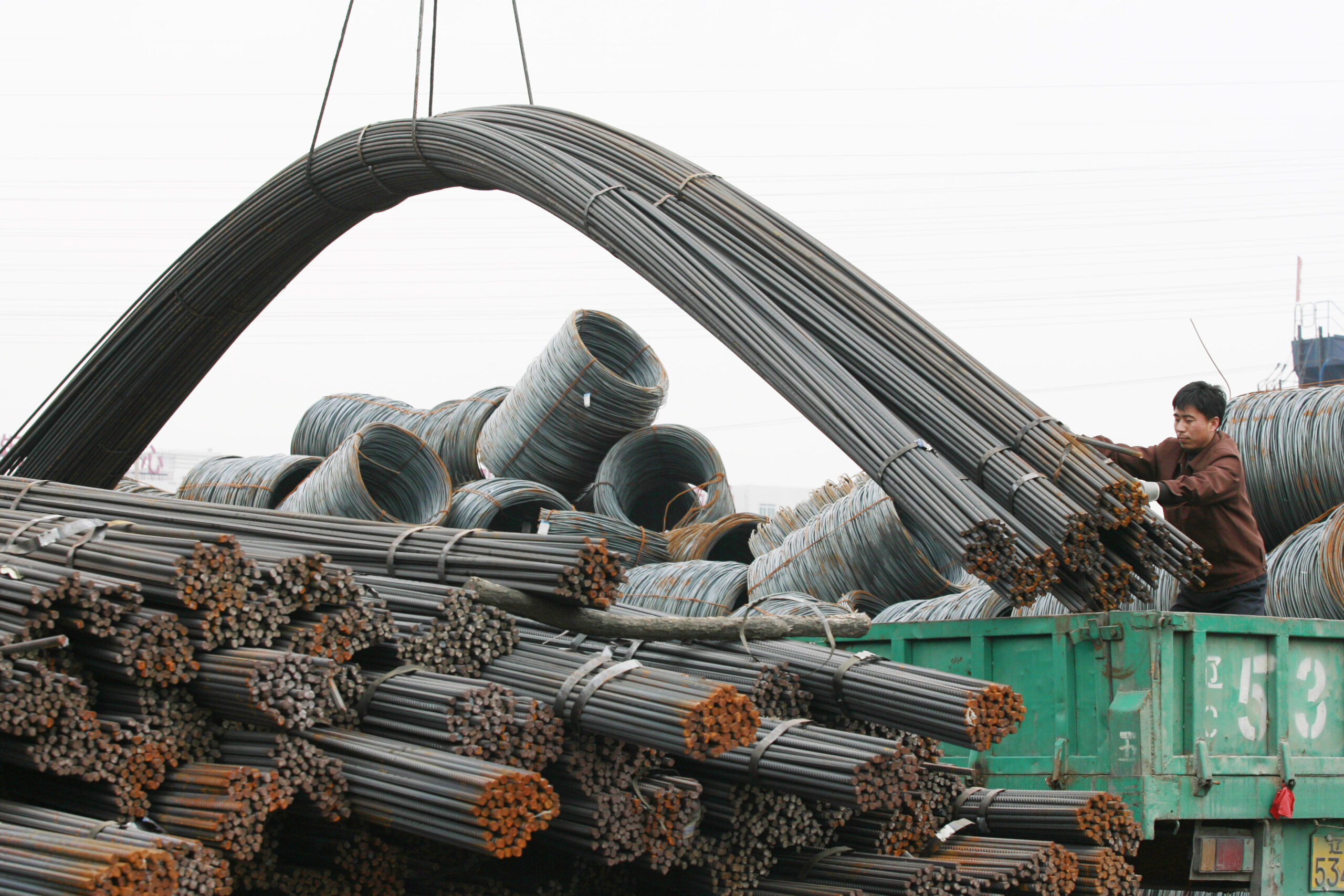
Amid continuous decline in real estate development and imbalanced supply and demand in the manufacturing industry, the profits of China’s steel industry plummeted by 40% in the first half of the year due to factors contributing to weak demand. In response to their struggles, 45 major steel enterprises jointly launched an initiative to resist low-price malicious competition and search for new opportunities.
On September 17th, the China Iron and Steel Industry Association released the steel production data for August and January to August 2026 for the entire country and key statistical steel enterprises.
The data showed that the demand from end-users for steel materials remained weak in August, continuing to be the main drag on the market. In August, the national crude steel production was 74.61 million tons, a 3.7% year-on-year decrease. The daily production was 2.4068 million tons, a 3.0% decrease from the previous month. The production of pig iron was 67.65 million tons, down by 3.5% year-on-year, with a daily output of 2.1823 million tons, a 1.0% decrease from the previous month. The production of steel materials was 114.75 million tons, a 5.5% year-on-year decrease with a daily output of 3.7016 million tons, a 1.5% decrease from the previous month.
From January to August, the national cumulative production of crude steel was 652 million tons, a 3.1% decrease year-on-year. The production of pig iron was 563 million tons, down by 3.1% year-on-year, and the production of steel materials was 951 million tons, a decrease of 1.7% year-on-year.
According to data from the General Administration of Customs of the Communist Party of China, steel exports in China from January to August amounted to 751.5 million tons, a 3% decrease year-on-year. The export volume in August reached 101.5 million tons, a 0.3% increase from the previous month. By the end of 2025, steel exports in China increased by 7.5% year-on-year, reaching a record high of 1.19 billion tons, partially offsetting the slowdown in domestic demand.
Facing losses and imbalances in supply and demand in the steel industry, the China Iron and Steel Industry Association issued a “Proposal for Comprehensive Self-regulation, Production Control and Inventory Reduction in the Steel Industry” on September 15th. 45 major steel enterprises, including Shougang, jointly signed the proposal, committing to production control, self-regulation, and inventory reduction, while denouncing low-price malicious competition.
The China Iron and Steel Industry Association pointed out that since 2026, the industry has shown features of “strong supply, weak demand, low prices, and weak profits.” Domestic steel demand has continued to weaken, with social and enterprise inventories at relatively high levels in recent years, leading to fluctuating steel prices, significant decline in steel industry profits, and increased pressure on production and operations of enterprises. Steel companies must firmly resist actions that compete below cost to grab market share and consciously regulate market behavior.
Data from the China Iron and Steel Industry Association showed that the total profits of key statistical enterprises in the first half of the year amounted to 58.4 billion yuan, down by 5.5% annually. Among them, the profits of primary steel operations were only 16.7 billion yuan, a substantial 40% decrease, with a sales profit margin as low as 0.77%.
According to statistics from Wind, a financial data service provider, among the 26 A-share steel sample companies, the total operating income in the first half of the year was approximately 555.7 billion yuan, while the net profit attributable to the parent company was less than 7 billion yuan, with 11 companies recording losses and 7 companies earning less than 300 million yuan.
Recently, various degrees of losses have emerged in the industry. Data from Mysteel showed that as of the week ending September 11th, out of 247 steel companies, only 7.79% were profitable, a 22.51% decrease from the previous period. Most steel plants were operating at a loss, with profit margins shrinking to near a 10-year low. The utilization rate of blast furnaces was 88.73%, producing an average of 2.3629 million tons of molten iron per day, a slight decrease of 0.53 thousand tons from the previous period. Different varieties such as rebar, hot-rolled coil, and cold-rolled products suffered varying degrees of losses. Cold-rolled steel suffered the highest losses exceeding 300 yuan per ton. On the raw material side, although iron ore prices were weak, fuel prices saw a significant rise, with the fifth round of coke price increases implemented on September 10th, pushing up prices and further squeezing profits from finished steel.
Official data also indicates that steel production has continued to decline, reaching its lowest level in seven years. The industry attributes the contraction in steel output to the long-standing crisis in the real estate market, significantly suppressing domestic steel demand.
In addition to the ongoing drag from real estate development, traditional manufacturing industries have also shown no signs of improvement. The National Bureau of Statistics of the Communist Party of China released data on September 15th, showing that national fixed-asset investment from January to August decreased by 7.2% annually, with the manufacturing industry’s investment dropping by 2.3%, increasing by 0.6 percentage points compared to the period from January to July. Real estate development investment declined by 19.9% annually, widening by 0.7 percentage points compared to the period from January to July.
Galaxy Macro, a Chinese securities research institution, stated that current capital spending in the manufacturing sector remains concentrated in a few high-growth industries, with most enterprises facing weak end-demand, uncertain profit sustainability, underutilized existing capacity, and lacking the impetus to urgently expand capacity.