
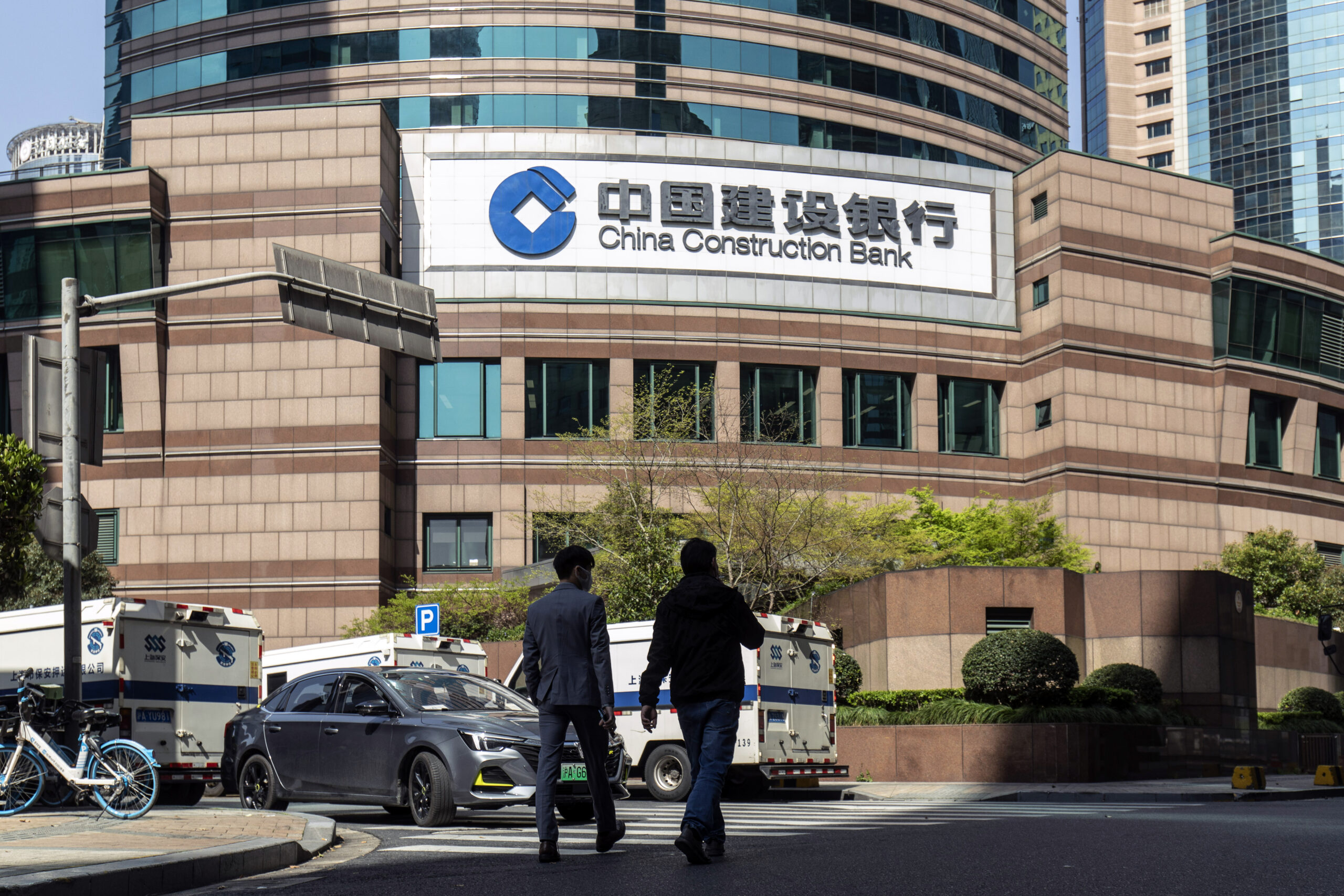
A woman in Nanjing triggered an anti-fraud alert when she transferred money to a friend for hotel expenses, she said. After two assistant police officers came to her door, she showed them the hotel reservation and made a call in front of them to explain the purpose of the transfer to her friend. However, she was still asked to go to the police station to “learn about fraud prevention”. Due to work commitments, she did not go to the police station and discovered that her bank card had been frozen that evening. A transfer that had already been explained in purpose left her in another predicament: her account was frozen, yet she didn’t know the specific reason why.
The woman shared her experience on Xiaohongshu on September 15th, and the post was reposted on overseas social media platforms. She provided a screenshot of her conversation with the China Construction Bank customer service, indicating that the freezing authority was the Criminal Investigation Brigade of the Jiangning Sub-Bureau of the Nanjing Public Security Bureau, with an agreed date for unfreezing being September 17th. When she inquired about the reason for the freeze, the customer service confirmed that the account was frozen by a public security agency, and she needed to contact the freezing unit for specific reasons. She also mentioned that the friend who received the money, considered by the police as “risky”, did not receive any verification call.
According to the woman’s account, she cooperated with the police by verifying at home, explaining who the money was transferred to and for what purpose. Nevertheless, she was still asked to go to the police station “for learning”, or her card might be frozen. Since she did not go to the police station, her account was frozen that night. What was the basis of the police’s request to go to the station? After the account holder had already explained the purpose of the transfer, why was her ability to use the bank card tied to attending the station? These questions are at the crux of the skepticism surrounding this incident.
This incident has sparked discussions among netizens about anti-fraud measures. A netizen recalled the scene when authorities promoted an anti-fraud app: “Downloading the anti-fraud app was like a political task during the ‘Cultural Revolution’, with directives handed down to individuals and units, and even rankings for completing tasks by cities and counties. When I went to the police station for something, I happened to overhear police officers discussing this matter with furrowed brows… A few days later, about seven or eight classmates gathered for a meal, and one classmate who worked as a director at the Finance Bureau immediately asked each of us if we had downloaded the anti-fraud app, saying they also had a mission!”
Ms. Hui, a resident of Nanjing, expressed in an interview with Dajiyuan that she believes the anti-fraud app is being used to monitor the public: “Nowadays, even when you transfer money, they demand proof of where the money came from, what it’s for, and if you transfer too much, they freeze your account, requiring you to go to the bank to unfreeze it; if you transfer too little, they say you’re just testing transfers and ask why you’re transferring so little. Who are these people running the country?”
Ms. Hui questioned why, despite the authorities repeatedly claiming to “protect the safety of people’s lives and property,” the public is feeling increasingly insecure. She cited, “Since the real-name registration of phone numbers, there have been more and more phone scams. Previously, when receiving a text saying ‘you’ve won a prize’, they couldn’t even say your name, but now they can clearly state your name, address, and occupation. So, do you think the anti-fraud app is useful? No, it’s not useful, but it’s very useful for them to surveil the common people.”
Mr. Jiang, a relevant person in charge at the Shenzhen branch of China Merchants Bank, told reporters that bank account freezes are often related to suspected fraud risks, but after investigation, many accounts are confirmed not to be involved in fraud. He stated, “The criteria for freezing accounts have loosened recently; large fund transfers are considered abnormal account activities, automatically locking your account. Two large transfers within a day also freeze accounts, requiring customers to come to the bank to handle the unfreezing. Our bank is inundated with customers coming daily to unfreeze accounts or bank cards; we are overwhelmed and have requested the head office to relax the rules, with the higher-ups saying this is a task.”
The implementation of the “Anti-Telecommunications and Internet Fraud Law” by the Chinese authorities requires early warnings, dissuasion, fast freezing of funds related to cases, and clear conditions, procedures, and remedies. However, in this Nanjing incident, the customer service at the China Construction Bank could only inform the woman of the freezing authority, but was unable to specify the exact reason.
Mr. Lu, a legal scholar in Guangxi, believes that according to the woman’s account, she had already shown the hotel reservation and contacted the recipient to explain the purpose of the transfer, yet the police still demanded that she go to the police station for “learning”; the basis for this requirement needs to be explained.
He pointed out that while the law stipulates precautionary measures, learning at the station should not become an obligation for ordinary individuals solely based on the anti-fraud alert; facing the consequence of a frozen account for not going creates pressure that is difficult to resist for the individual.
Mr. Lu stated that individuals have the right to request the freezing authority to explain the reasons, basis, and conditions for freezing an account. As for seeking legal redress, it must first be determined whether the freeze is an administrative control measure or a criminal case measure; until the nature of the measure is clear, it is not feasible to directly rule out the possibility of applying for administrative review.