
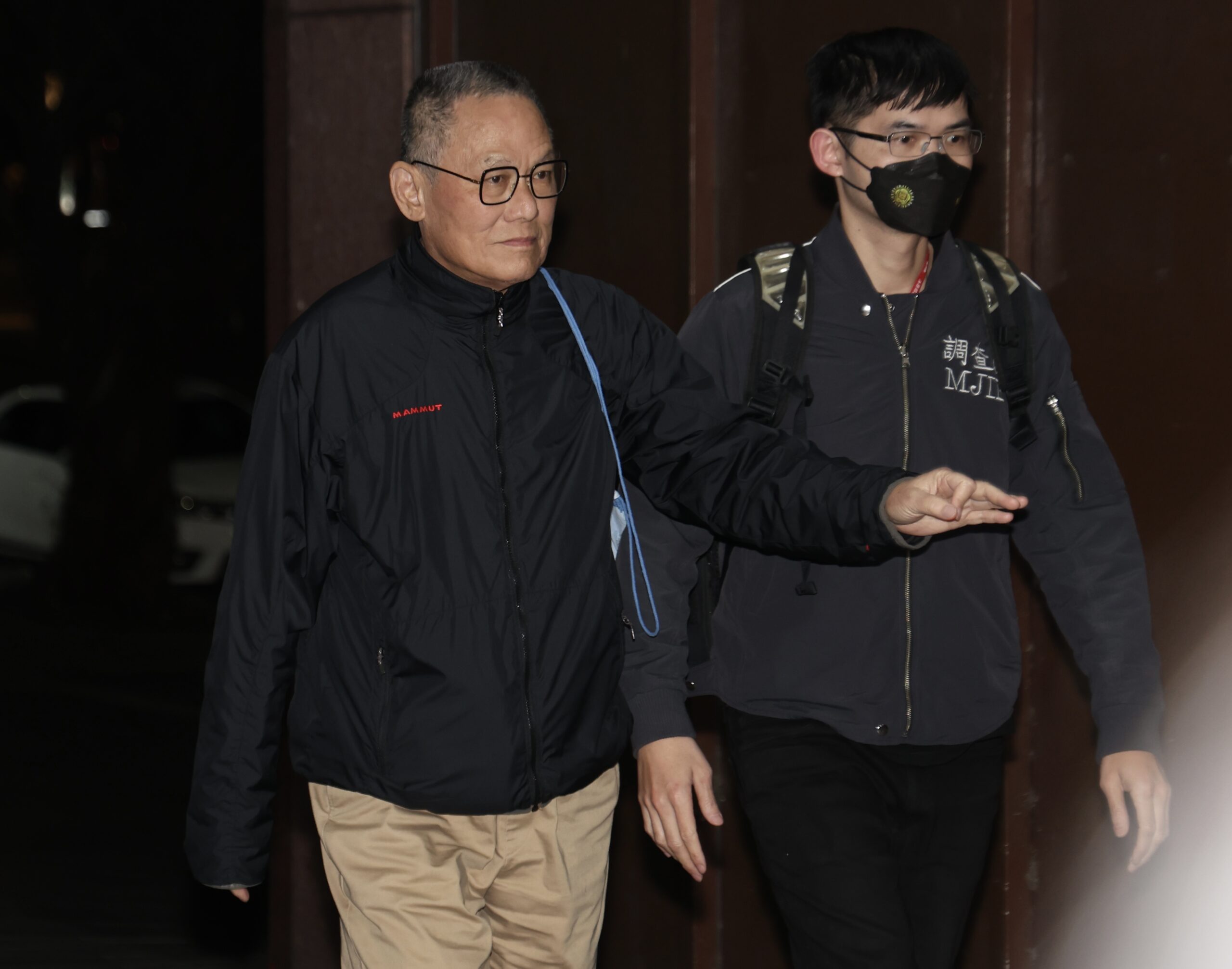
In the recent news from Taiwan, former director of parliament office and treasurer Zhang Junjie, known for his links to the Chinese Communist Party (CCP), is accused of receiving CCP funds to act as a spy. He recently skipped bail and went into hiding, prompting a nationwide manhunt. Investigators found evidence that some individuals assisted in his escape following instructions via WeChat. Taiwan AI lab founder Du Yijin pointed out that with so many people in Taiwan involved in aiding fugitives based on WeChat instructions, it highlights the significant role of CCP communication software and payment apps in Taiwan. Du urged the government to establish better oversight in this regard.
At 70 years old, Zhang Junjie faced corruption charges, with the prosecution seeking a sentence of over 16 years. After posting bail of NT$10 million, he absconded by destroying his electronic monitoring device on September 6. The Ministry of the Interior and the New Taipei City Police Department have been offering a reward of up to NT$1 million for information leading to his capture, urging the public to come forward with any leads (New Taipei City Police Department tip line: 02-29104677).
The Taiwan High Prosecutors’ Office stated that Zhang Junjie and others are suspected of receiving CCP funds to organize activities in Taiwan, leading to their detention. Meanwhile, key personnel in the office of legislator Gao Jinmei, including director Chen Zhisu and assistant Lin Yijun, have been detained and denied bail pending further investigation.
Following Zhang Junjie’s escape, investigations revealed interactions between Zhang and individuals aiding him, such as his assistant Chen Junwei, who was granted bail after being questioned by authorities and providing information. Other accomplices who facilitated Zhang’s escape, like Zhou Huankai and Chen Junhan, were detained and also denied bail by the court. Additionally, individuals who provided transportation assistance were also sanctioned by prosecutors.
Further investigation into the destruction of the monitoring device identified Chen Weida as the perpetrator. He and his associates, Pan Xinyi and Chen Caixun, were apprehended and face charges related to tampering with evidence. Pan Xinyi was remanded in custody, while Chen Caixun was released on bail.
In a predawn operation on September 15 in Yulin, the police arrested 22-year-old Chen Houzhang for his involvement in aiding Zhang Junjie. Chen Houzhang was deemed a serious suspect and has been detained. The Taipei District Prosecutors’ Office issued a warrant for the arrest of Zhang Junjie and Chen Weida, coordinating with law enforcement authorities to bring them to justice.
Reflecting on the ongoing situation, Du Yijin expressed concerns over the widespread influence of WeChat and CCP directives in Taiwan’s governance and urged stricter regulations to curb foreign interference. Public comments echoed these sentiments, underscoring the need to ban the use of opaque software from adversarial countries.
Political and military analyst James Jseng highlighted the alarming pattern of syndicated assistance in Zhang Junjie’s evasion case, suggesting extensive CCP infiltration in Taiwan. Describing the elaborate escape plan involving multiple collaborators, James emphasized the need for Taiwan to bolster its defenses against covert operations orchestrated by foreign agents.
In summary, the unfolding events involving Zhang Junjie shed light on the covert tactics employed by individuals with suspected ties to foreign entities. Taiwan’s efforts to combat such threats require enhanced vigilance and comprehensive measures to safeguard national security and sovereignty against external influences.