
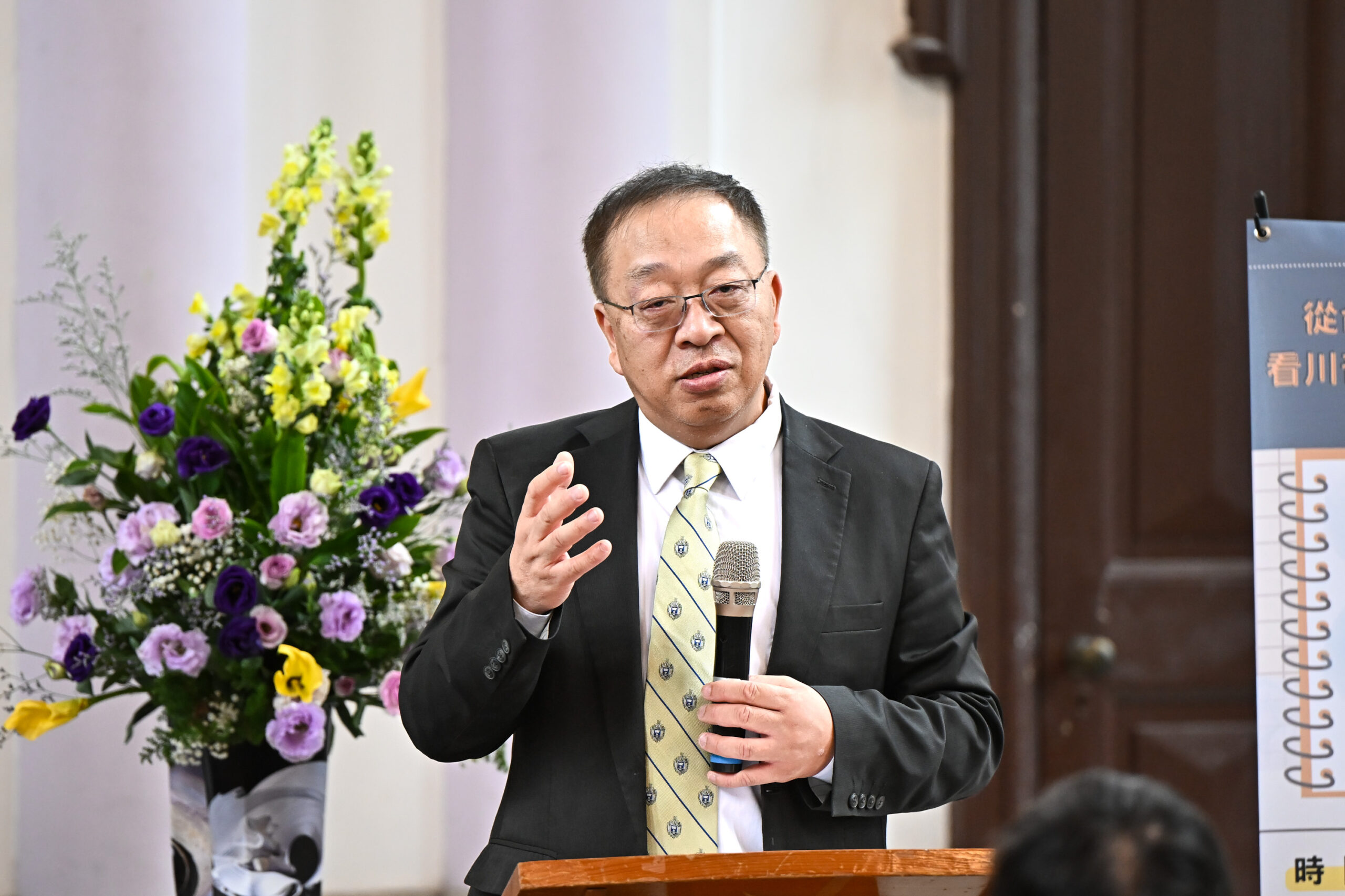
The China expert at the Hudson Institute, Maochun Yu, said that one of the greatest strategic challenges that (Communist) China poses to the world may not be the continued existence of the CCP regime, but rather what would happen if it suddenly collapsed.
The Hudson Institute recently released a report titled “China after Communism: Preparing for a Post-CCP China.” The report was written by experts in military, intelligence, economics, human rights, transitional justice, and constitutional governance fields, exploring the challenges that the international community and Chinese society may face during the early stages of stability and the subsequent transition paths if the CCP regime loses centralized control over the country.
As the lead author of the report, China expert Maochun Yu further pointed out in an article in The Washington Times that Western policies towards China in the past decades have been built on the assumption that the CCP will continue to exist and remain a significant factor in international politics. However, very few have seriously considered what would happen if the CCP suddenly collapsed and how the world would respond.
He argued that Washington and its allies should consider planning for a “post-CCP era” as a strategic contingency, purchasing a “strategic insurance policy” for one of the most influential political events of the 21st century.
Using the political upheavals at the end of the Cold War as an example, Yu pointed out that seemingly solid authoritarian regimes could lose control in a short period of time.
In 1989, several communist regimes in Eastern Europe collapsed within months, the Berlin Wall came down, and about two years later, the Soviet Union disintegrated.
“History repeatedly shows that seemingly indestructible dictatorships often disappear at astonishing speed,” he cautioned.
He believed that as the longest-ruling communist party dictatorship and the world’s second-largest economy, the sudden collapse of its political system is also not unimaginable.
Moreover, it can be foreseen that once it falls, the impact will far exceed China itself.
Yu raised a series of practical questions: If the central authority of the CCP suddenly disintegrates, who will control the nuclear arsenal? Who will command the military? Who will take over the PLA, the armed police, the militia, the Ministry of State Security, and the vast domestic surveillance apparatus? Who will ensure the safety of dangerous biofacilities? Who will prevent regional military commanders or security chiefs from seceding and eventually evolving into warlords?
He believed that these issues cannot be addressed only after a regime crisis occurs. If central authority collapses, the scramble for control over strategic weapons, the military, intelligence systems, and security agencies could rapidly turn a political crisis into a regional and international security crisis.
The economic risks are equally huge. How will the renminbi be maintained? How will China’s banks, sovereign debts, state-owned enterprises, foreign exchange reserves, and trillions of dollars worth of domestic assets be handled?
Yu pointed out that these assets could face disputes over control and legitimacy in a political vacuum and become targets for competing political and security factions.
“If trillions of dollars of Chinese national assets are divided among CCP officials, military leaders, security heads, or vested interest groups in a political vacuum, a new oligarchic system could quickly emerge from the ruins of the old communist system,” he noted. “This would not be the birth of a free China but merely the beginning of another dictatorship.”
Yu believed that the post-Cold War transformation experience in Europe showed that the fall of authoritarian regimes does not automatically bring democracy.
Citing examples from Poland, Czechoslovakia, and East Germany, after the collapse of the communist regimes, although they also underwent painful adjustments, they were able to establish new systems relatively quickly. The key was that before the old system collapsed, society had accumulated enough talent, organizations, institutional ideas, and public principles.
He said, “The most important lesson of political regime transitions in the 20th century is that preparation determines success.”
By comparison, he viewed post-Soviet Russia as a negative example. Yu believed that at that time, Russia lacked mature democratic system design, an independent civil society capable of governance responsibility, a mechanism for privatizing state assets with broad legitimacy, and a stable constitutional consensus. As a result, economic reforms and political expediency intertwined, leading to the acquisition of a large amount of state wealth by a few oligarchs, the weakening of the state system, and eventually a return to nationalist authoritarian rule.
He also mentioned that Ukraine has long been troubled by the legacy of corruption networks, oligarchic politics, and institutional fragility left by the Soviet Union after independence, taking decades to gradually establish a more democratic and accountable political order.
“The death of a dictatorship does not equate to the birth of a democratic system,” Yu said. “Should China undergo a similar upheaval, the scale and consequences would be much greater.”
Yu emphasized that planning for the “post-CCP era” does not mean seeking regime change or advocating chaos. On the contrary, its purpose is to prevent the end of an authoritarian regime from triggering a larger-scale civil war, weapon proliferation, economic collapse, or the rise of a new dictator.
He described this work as a “strategic insurance policy” that the free world is purchasing for one of the most influential political events of the 21st century.
Yu concluded by reminding that preparing for “China after Communism” is not about seeking a change in regime, nor is it about promoting disorder. Instead, it aims to prevent the end of an authoritarian regime from leading to a larger scale of civil war, weapon proliferation, economic collapse, or the rise of a new dictator.
He described this work as a “strategic insurance policy” that the free world is purchasing for one of the most influential political events of the 21st century.