
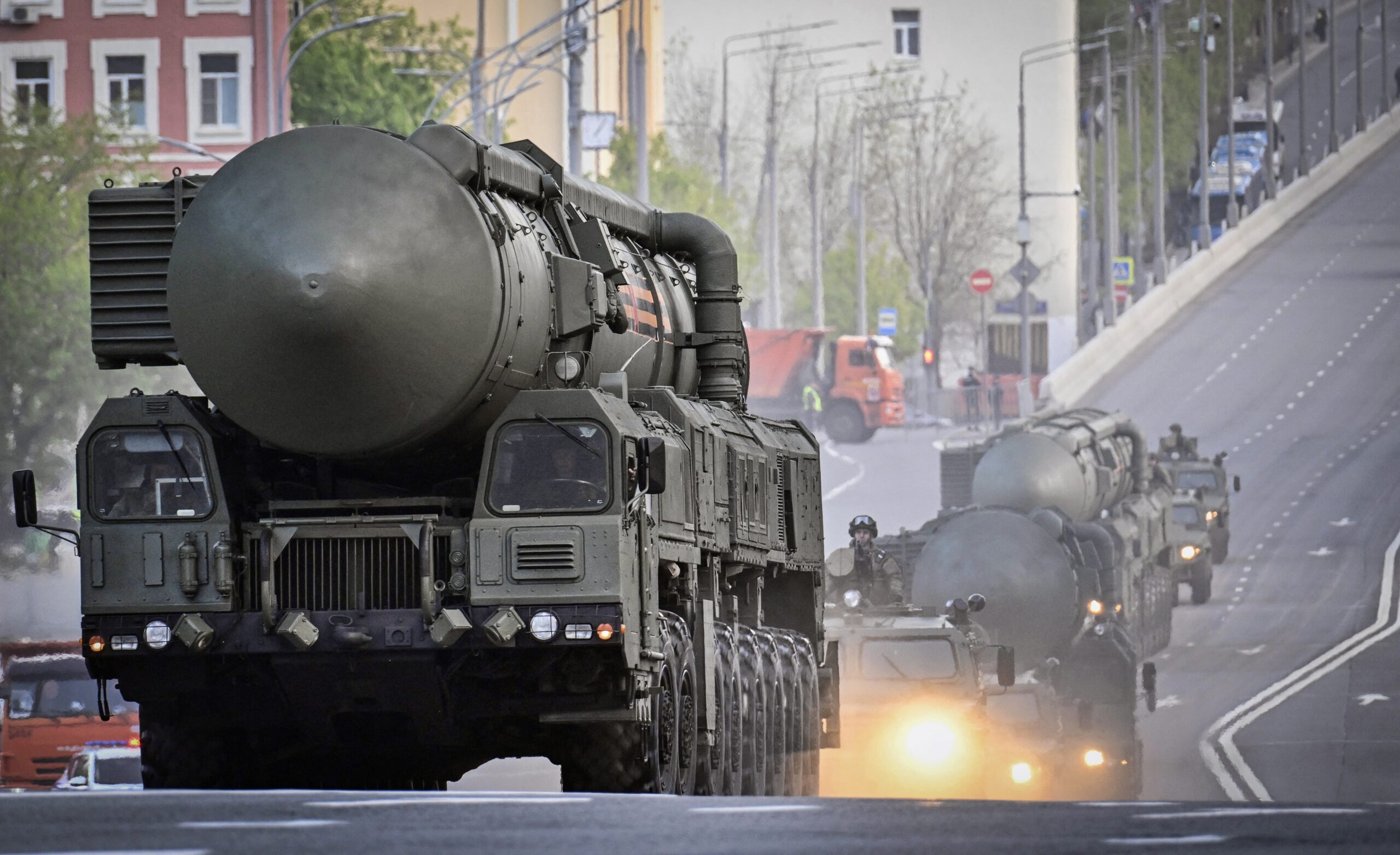
Russia is preparing to test a new ballistic missile with a range of up to 800 kilometers, according to defense experts. They warn that intercepting this new missile may require more advanced interception weapons, further increasing the difficulty of Ukraine’s air defense system.
The Deputy Director of the Defense Intelligence Unit (DIU) of Ukraine, Vadym Skibitskyi, stated on Monday (September 14) that, based on Ukrainian assessments, Russia plans to conduct final tests of its new ballistic missile with an 800-kilometer range by the end of this year.
Skibitskyi, speaking at a Ukraine-NATO Council meeting, mentioned that the missile with an 800-kilometer range may also have the capability of maneuverable flight, posing a serious challenge to Ukraine’s air defense system.
Tom Karako, the director of the Missile Defense Project at the Center for Strategic and International Studies (CSIS), expressed that if the new missile has advanced maneuverability, Ukraine would need more sophisticated interception weapons to shoot it down.
Karako explained, “This means that the missile will undergo some degree of maneuver at the end of its flight, making it difficult for the defense side to accurately determine its direction or flight trajectory.”
He pointed out that Russia may have found a way to produce this 800-kilometer range missile at a lower cost or on a larger scale. Karako believes that modern precision-guided weapons are evolving towards higher mobility and more precise terminal guidance. Future missiles may no longer follow a strictly ballistic flight path throughout but could utilize maneuvers in the terminal phase to change trajectory.
Karako warned that such “terminal surprises” could make it harder for defense systems to determine the missile’s direction and trajectory when reaching the target.
According to the Defense Intelligence Unit of Ukraine, Russian forces may strike targets in western Ukraine during missile testing as a live demonstration. Karako noted that this is a conventional process: extensive research and development tests are conducted first, followed by official deployment, and then operational effectiveness tests.
Karako also highlighted that the range of this 800-kilometer missile had previously been constrained by the Intermediate-Range Nuclear Forces Treaty (INF Treaty) between the United States and Russia.
The INF Treaty was signed in 1987 by President Reagan and former Soviet leader Gorbachev, requiring the destruction of land-based ballistic and cruise missiles with ranges between 500 and 5,500 kilometers.
The United States withdrew from the treaty in 2019, citing accusations of Russian violations.
Karako emphasized that Russia is now developing missiles with this range to fill the capability gap left by past treaty restrictions.
Recently, Ukrainian President Zelensky also emphasized the pressure on the air defense system. During an interview with Deutsche Welle on September 12 at a military base in North Bay, he said, “I hope to have 100 to 120 (interception missiles) in these difficult months, especially in the cold months. We need to see how long this winter will last, whether it will be one month, two months, or three months. We don’t know. This is indeed a huge challenge.”
As Russia continues to increase missile production and develop new weapons with longer ranges and greater maneuverability, whether the Ukrainian air defense system can acquire sufficient high-end interception missiles is becoming a critical factor affecting future aerial defense capabilities.
Karako warned that Russia is not only mass-producing existing weapons but may also be saving new missiles as strategic reserves. “Russia is indeed in a wartime state; they have indeed mobilized their defense industrial base, continuously producing these missiles as if making sausages.”
He mentioned that this trend in Russia is also raising alarms among neighboring countries like Poland, Romania, and Baltic states about maintaining a high level of vigilance.