
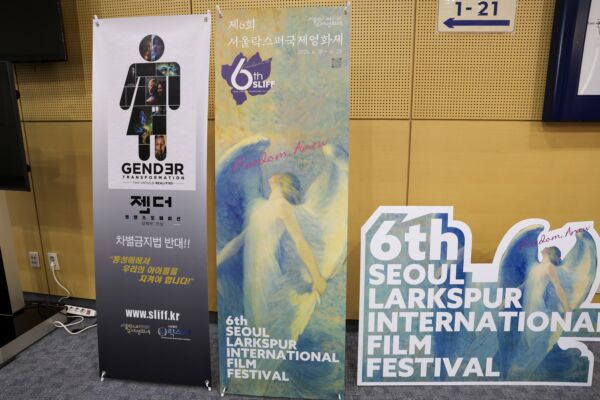
Recently, at the 6th Seoul Liriope Flower International Film Festival (SLIFF) held in South Korea, the English edition of Epoch Times’ original documentary film “Gender Transformation” was selected as the opening film of this year’s film festival. It premiered on June 18 and had an additional screening on June 20.
Many viewers expressed that after watching the film, they were not only deeply moved but also prompted to rethink the social, educational, and business factors behind the issue of gender transformation. Several viewers believed that more students should watch this film to help them encounter different perspectives and avoid being harmed due to lack of information.
“Gender Transformation” focuses on the issue of “adolescent gender transformation” in Western society. Through various cases and testimonies, it portrays the controversies surrounding gender issues and gender transformation that have sparked worldwide attention in recent years. It reveals the real experiences of those undergoing gender transformation, the hidden financial interests behind the transgender movement, and the political and social mechanisms at play.
Professor Gi Won-pyeong, a distinguished professor at Hanseong University in South Korea, who watched the film on the evening of June 18 at Yonsei University’s Centennial Hall, expressed that although he had a general understanding of the related issues before, he still felt profoundly heavy-hearted after viewing the film.
He remarked that the behavior of inducing teenagers to undergo gender transformation is very similar to the behavior of extremist groups. He further added that the total damage to individuals’ lives is immense. He emphasized the importance of protecting children from any harm, notwithstanding the significant financial gains involved in these actions.
Regarding the perspectives of South Korean society on this matter, he explained that the majority still holds a predominantly negative view on such issues, albeit not on a large scale. However, in certain professional fields such as psychological counseling, guidance, and among some medical professionals, these perspectives have gradually gained influence. He stressed the need for continued vigilance due to the potential risks.
He underlined the significant impact culture has and how this film can shed light on deep-seated issues, prompting reflection. He urged people to remain awake and capable of critical thinking, especially in the cultural realm, to awaken the next generation through works like this.
Dr. Lee Myeong-jeon, the first chairman of the Korean Bioethics Research Society and a physician, stated in an interview after viewing the film that it excellently highlights the immense harm that the issue of gender transformation can cause to children globally.
According to Dr. Lee, one of the most critical principles of medical ethics is to “do no harm,” emphasizing the need to protect patients from harm. He condemned the destructive effects of greed and erroneous beliefs among adults, causing harm to children and families. The film portrayed the fragmentation of families and the tremendous distress many individuals endure as a result.
“As shown in the film, individuals often use attractive language to manipulate children, such as ‘I will support you’ or ‘Your parents are oppressing you, controlling you, even harming you’… but these are all false claims because the ones who truly love children are their parents,” said Dr. Lee. He emphasized the need to protect the invaluable values of the family.
He noted that there has been an emergence of transgender-related topics in recent South Korean educational content, leading more parents to oppose such trends. Dr. Lee highlighted the importance of parents becoming actively involved in their children’s education and advocating for appropriate and safe learning environments.
Pastor Lee Dachine, a South Korean minister, expressed deep sentiments after watching the film, emphasizing that supporting transgender claims by using the argument of it being innate is a fallacy. He labeled issues related to minors undergoing gender reassignment surgery as one of the greatest tragedies of modern times.
He warned about the grave consequences that may arise from performing gender reassignment surgery on minors, stressing the irreversible nature of such actions and the potential long-term implications on physical and mental health. He called for greater scrutiny and caution in addressing these complex issues.
Pastor Lee extended heartfelt gratitude to the film’s production team and suggested that more students should watch this film. He emphasized the vital role of educators in facilitating critical thinking among students, advocating for a conscientious society that prioritizes informed decision-making.
Former director of South Korean broadcasters KBS and JTBC, current vice principal of Nangye Art Vocational School, Kim Jae-yeon, reflected on his past experiences encountering a gender transition-related case during his media career.
Kim recalled a case where parents, desiring a son, raised their daughter as a boy from a young age. Influenced by the family environment, the individual eventually became a factory operator and underwent gender reassignment surgery. He highlighted the legal recognition of gender identity for transgender individuals and the vast capital and commercial interests underpinning related industries.
He believed that films addressing similar themes should have been produced decades ago, emphasizing the need for continuous discussion rather than singular screenings. He encouraged individuals with a conscience to speak out and raise awareness, aiming to prevent further harm caused by these issues.
Regarding criticisms from some quarters equating such issues with human rights violations or personal freedoms, Kim stressed that such viewpoints do not capture the full complexities of the matter. He viewed the film as an opportunity to reexamine and reflect on these issues, potentially serving as a catalyst for broader social discussions and contemplation.
At the additional screening of “Gender Transformation” on June 20, a South Korean citizen, Ms. Lee, who is a Christian, expressed her profound sentiments after viewing the film. She emphasized the contemporary societal shift in gender issues and its impacts on the younger generation.
From a Christian perspective, she pointed out that God created only male and female genders, expressing concerns about the increasing confusion surrounding gender in the world. She voiced apprehensions about powerful entities attempting to distance people from God through various means, a trend she observed not just in Western countries but also in South Korean society.
She deeply lamented this trend, especially when encountering cases in her surroundings that resonated with the film’s content. She noted the societal stigma faced by those adhering to traditional values and called for further societal contemplation on this matter.
Discussing the educational significance of the film, she believed it provided an opportunity to reevaluate these issues. By showcasing firsthand testimonies of individuals who have undergone gender transformation, the film allowed audiences to see a different perspective. She encouraged people to consider whether the current direction of society is indeed correct, urging a critical examination of societal influences often taken for granted.
She hoped that teenagers in the midst of gender identity confusion or contemplating gender reassignment surgery could watch this film as a catalyst for critical thinking.
Another citizen, Kim Haeryun, attending the film screening with her first-grade middle school daughter, tearfully expressed her gratitude upon viewing the film. She expressed relief that South Korea has not reached such critical levels in this aspect, advocating for robust legal protections to safeguard children from harm and loss.
Amid discussions of the potential negative impacts of frequent social media usage on adolescent development, Kim acknowledged the need for enhanced protection and parental guidance. She called for more comprehensive education and advocacy efforts in response to the risks posed by these platforms.
She further appealed to individuals with faith to continue playing a protective role in Korean society to ensure the safety and well-being of children. She concluded by stating her commitment to pray for and support these endeavors.