
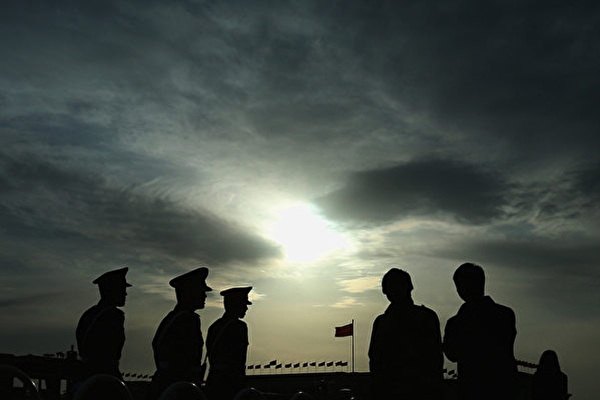
On June 15th, it was the 73rd birthday of Xi Jinping, the leader of the Chinese Communist Party. On that day, the national party building work of the CCP was held in Beijing, where the so-called “Xi Jinping Party Building Thought” was introduced for the first time. Xi’s ideology overseer, Cai Qi, urged the entire party to “read the original works, study the original texts, and comprehend the principles.” Additionally, in the past two years, China has seen the rise of counseling instructor academies, promoting the professionalization, occupationalization, and expertise of university counseling instructors. Experts believe that focusing on party building within the CCP is a new brainwashing movement aimed at strengthening control over students.
Xi Jinping has various ideologies, ranging from economic ideology to ecological civilization ideology, and now there is the introduction of “party building thought.” Officially summarized by fourteen insistences, Xi’s party building thought includes principles like upholding strict governance of the party and not forgetting the original mission. It is claimed that Xi’s party building thought has made significant original contributions to the development of Marxist party-building theory.
In a program called “Cross-Strait Analysis” on New Tang Dynasty Television, the host analyzed that it is not surprising for Xi Jinping to introduce party building thought, as he personally oversees all areas and believes he has his own set of theories. The timing of this introduction, likely in preparation for the 21st National Congress, suggests a need for loyalty as adjustments in leadership are made.
The host continued to express that Xi Jinping’s regime is characterized by internal power struggles and a push for unwavering obedience rather than a clear ideology to follow. This contrasts with Deng Xiaoping’s era, aiming to move away from individual worship towards a more collective leadership style and term limits in an attempt to prevent a return to a leadership-centric system.
The focus on Xi Jinping’s party building thought indicates an effort to reinforce loyalty and unity within the party and set the stage for power positioning in 2027. However, skeptics view this as a sign of internal turmoil and the CCP’s return to a leadership-centric model rather than progressing towards a mature governing party.
(end of part 1, continue in part 2)