
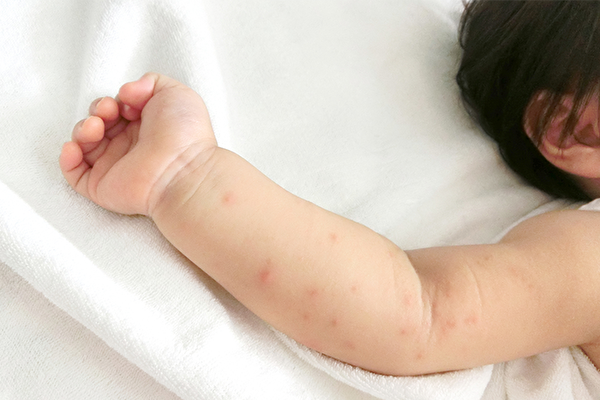
A highly contagious strain of Hand, Foot, and Mouth Disease is currently spreading in Guangdong Province, China. In May alone, there were 27,849 new cases of Hand, Foot, and Mouth Disease reported, with a class in Shenzhen having to suspend classes for 10 days due to the outbreak.
Many parents in mainland China have taken to social media recently to express their concerns. They describe their children suffering from painful ulcers in their mouth, making it difficult to eat and causing them to cry in pain at night. Hospitals can only provide limited treatment options such as light therapy. One parent lamented, “Hand, Foot, and Mouth Disease is torturous this time. My child can’t talk, can’t eat, ulcers cover their tongue and throat. I can’t bear to send her to kindergarten.”
On June 19, a resident of Shenzhen, Mr. Liu, informed the media that he received notice from his child’s school on June 17 that the class would be suspended due to Hand, Foot, and Mouth Disease. All students were required to rest at home for 10 days, with classes resuming on June 29.
Parents were instructed to monitor their children for symptoms at home and report any illness promptly to the class teacher. To return to school, students would need a medical certificate and clearance from the school clinic.
According to the latest data released by the Guangdong Provincial Center for Disease Control and Prevention on June 16, there have been 27,849 new cases of Hand, Foot, and Mouth Disease in the province in May.
Public information indicates that Hand, Foot, and Mouth Disease is an acute infectious disease caused by enteroviruses, primarily Coxsackievirus A16 and Enterovirus 71. 90% of cases occur in children under the age of 5, with the highest incidence under the age of 3. While most cases are mild, a small percentage of children may develop complications such as myocarditis, pulmonary edema, aseptic meningitis, which can lead to death in severe cases.
The main source of transmission for Hand, Foot, and Mouth Disease is infected individuals. Close contact is a significant mode of transmission, along with respiratory droplets and consumption of contaminated water or food. Prevention methods include regular handwashing, cleaning and disinfecting daily objects, drinking boiled water, avoiding crowded places, and vaccination.